
ATO Audit Guide for Melbourne & Sydney Business Owners: Navigating ATO審計 in 2026
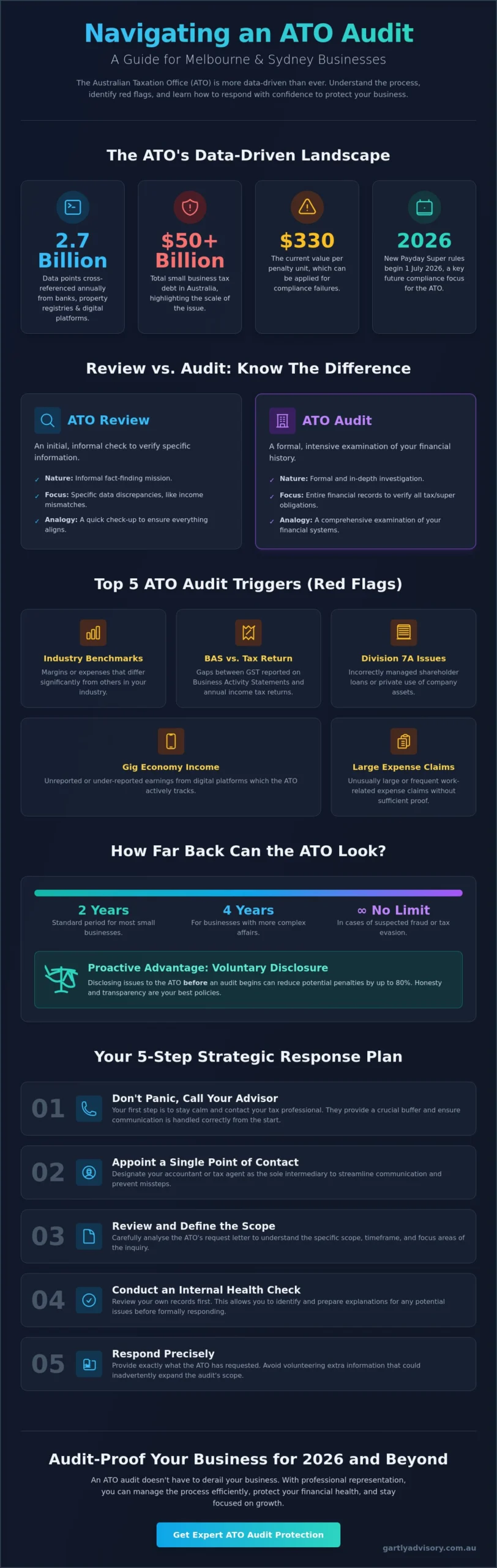
Did you know the ATO now cross-references over 2.7 billion data points every year from banks, digital platforms, and property registries to spot reporting gaps? For Melbourne and Sydney business owners, the prospect of an ato審計 can feel incredibly daunting, especially with small business tax debt in Australia now exceeding $50 billion. You’ve worked hard to build your dream, and the last thing you want is a surprise letter regarding your record-keeping or the new Payday Super rules starting 1 July 2026.
We understand that the tax system feels increasingly complex, and the fear of heavy penalties, like the $330 per penalty unit rate, is a lot to carry. This guide provides a reassuring path forward, offering the professional guidance you need to handle any ATO interaction with calm competence. We’ll walk you through the 2026 audit timeline, help you identify common red flags like work-related expense discrepancies, and show you how to audit-proof your business so you can focus on growth instead of worry.
Key Takeaways
- Learn the vital distinction between an informal ATO review and a comprehensive audit to ensure your response is measured and accurate.
- Discover how to manage an ato審計 with confidence by establishing a single point of contact and carefully defining the audit’s scope.
- Understand why professional representation by a Chartered Accountant is your best defence for protecting your business’s financial and strategic health.
- Get clear, actionable advice on preparing your records for 2026 compliance changes, such as the new Payday Superannuation requirements.
- Identify the common red flags that trigger ATO attention and learn how a “beyond the numbers” approach can audit-proof your future.
Understanding ATO Audits and Reviews for Australian Businesses
Receiving a notification from the Australian Taxation Office (ATO) often triggers immediate stress, but it’s vital to stay calm. Most initial contacts aren’t full-scale investigations. They usually start as a “Review,” which is essentially a fact-finding mission. During a review, the ATO focuses on specific data discrepancies, such as a mismatch between your reported income and the 2.7 billion data points they collect annually from banks, property registries, and even cryptocurrency exchanges. Think of it as a quick check-up to ensure everything aligns correctly.
An ato審計, however, is a more formal and intensive process. This involves a deeper dive into your entire financial history to verify that you’ve met all your tax and superannuation obligations. While a review might look at one specific transaction, an audit examines the systems and records behind your numbers. It’s a serious matter, but it’s also a manageable one. With a proactive approach and the right professional support, you can resolve these inquiries without disrupting your daily operations. We view this as an opportunity to tidy up your compliance and strengthen your business foundations for the future.
Common ATO Audit Red Flags in 2026
The ATO uses sophisticated algorithms to compare your business against others in your industry. If your margins or expenses vary significantly from these industry benchmarks, it can trigger an automated flag. For small businesses in Melbourne and Sydney, common triggers include:
- BAS Reconciliation Gaps: Discrepancies between the GST reported on your Business Activity Statements and the annual income shown on your tax return.
- Division 7A Issues: Incorrectly managed shareholder loans or private use of company assets within family groups.
- Gig Economy Income: Unreported earnings from digital platforms that the ATO now tracks with high precision.
The Look-Back Period: How Far Can the ATO Go?
For most small businesses, the ATO generally has a two year window to amend an assessment after you’ve lodged it. If your business affairs are more complex, this period extends to four years. However, if the ATO suspects fraud or deliberate evasion, there is no time limit at all. This is why honesty and transparency are always the best policies when managing an ato審計. Being proactive with a voluntary disclosure can even reduce potential penalties by up to 80% if done before an audit begins.
Practical Tip: While the legal requirement for many records is five years, we recommend maintaining digital copies of all financial documents for at least seven years. This provides an extra layer of security and ensures you have a clear “paper trail” if the ATO ever questions a past lodgement. Storing these in a secure cloud environment makes them easily accessible for your advisor during any review process.
Strategic Steps to Prepare for an ATO Audit in Melbourne or Sydney
When that official letter arrives, your first instinct might be to panic. Don’t. Managing an ato審計 is a structured process that rewards preparation and calm. Your first step should always be to appoint a single point of contact. We strongly recommend choosing a tax agent to act as your intermediary. This creates a buffer between your business and the tax office, ensuring that communication is handled professionally and accurately from day one.
Next, carefully review the ATO’s request letter. It isn’t a vague fishing expedition; it will outline a specific scope, timeframe, and focus areas. Once you understand what they’re looking for, conduct an internal health check of your small business accounting records. This is your chance to spot any errors, such as missed Payday Superannuation payments due after 1 July 2026, before the ATO does. When it’s time to respond, be precise. Provide exactly what is requested but avoid volunteering unrelated data that might inadvertently expand the audit’s scope.
The First 48 Hours: Managing Initial Communication
If an ATO officer calls you directly, you don’t have to answer complex technical questions on the spot. It’s perfectly okay to politely explain that you’ll need to consult your records and your advisor. Always request that queries be sent in writing. This ensures there’s no confusion about what’s being asked and gives you time to formulate a clear, evidence-based response. Maintaining a cooperative and professional tone is essential; it sets a positive foundation for the entire process.
Leveraging Xero for Audit Readiness
For Melbourne business owners, using cloud software like Xero is a massive advantage. Real-time data allows you to pull reports and verify transactions in seconds rather than days. Digital document storage means your receipts and invoices are already attached to their respective entries, providing instant proof of claims. Using Xero’s audit trail feature is particularly helpful during an ato審計, as it shows total transparency in your bookkeeping and demonstrates that your records haven’t been tampered with. If you’re unsure if your current setup is robust enough, feel free to talk to us and let us help you get your systems audit-ready.
How Professional Advisory Protects Your Business Beyond the Numbers
At Gartly Advisory, we pride ourselves on giving advice that goes beyond the numbers. While compliance is the foundation, our focus is on the strategic health of your entire operation. An ato審計 isn’t just a test of your math; it’s a look at your business systems and decision-making. Having a Chartered Accountant represent you during meetings with ATO officers provides a level of professional protection that’s hard to replicate on your own. We speak their language, understand their protocols, and act as your “safe pair of hands” to ensure the process remains fair and focused.
Proactive tax planning is your best defence against being flagged by the ATO’s 2.7 billion data points. By identifying potential issues in your Sydney or Melbourne business before they become formal inquiries, we significantly reduce your risk profile. We take on the heavy lifting of all ATO correspondence, allowing you to stay focused on running your business while we manage the technical complexities. It’s about building a relationship based on trust and stability, ensuring you never have to face the tax office alone.
Voluntary Disclosures: Turning Problems into Solutions
If we discover an error during our regular reviews, we often recommend a voluntary disclosure. The benefits are substantial. Making a disclosure before an audit begins can reduce your shortfall penalties by up to 80%. It demonstrates a commitment to compliance and often results in a much faster resolution. We suggest scheduling a quarterly compliance review as a proactive way to catch these issues early, especially with the 12% superannuation guarantee rate and new Payday Super rules in effect for 2026.
Navigating Local Business Challenges in Melbourne and Sydney
Every industry faces unique pressures. In Sydney, the ATO often looks closely at property development and capital gains, while in Melbourne, the focus frequently shifts to cash-intensive hospitality businesses. We tailor our compliance strategies to these specific local risks and the economic climate of 2026. Whether you’re dealing with Division 7A complexities or gig economy reporting, we are here to support you. Talk to us and let us help you. We love the opportunity to be your trusted partner on your journey towards success.
Secure Your Business Success with Proactive Guidance
Audit-proofing your enterprise isn’t just about surviving an ato審計; it’s about building a robust foundation for long-term growth. By mastering the difference between a review and an audit and maintaining sharp digital records, you’ve already taken the most vital steps toward peace of mind. Our team of Chartered Accountants and Business Valuebuilder Advisors is here to ensure your strategy is as strong as your compliance, looking at the big picture to protect your assets.
We bring over 35 years of experience in Australian tax law to your side, backed by more than 70 5-star Google reviews from business owners just like you. We handle the technical complexities and ATO correspondence so you can stay focused on what you do best. Let us be your trusted partner, schedule a consultation with Gartly Advisory today. You’ve worked hard to build your dream, and we’re here to help you protect it and move forward with total confidence.
Frequently Asked Questions
What is the difference between an ATO review and a full tax audit?
An ATO review is a targeted check focused on specific data discrepancies, while a full tax audit is a comprehensive examination of your entire financial history. Most contacts begin as a review to verify a single item, such as a rental deduction or a GST mismatch. If the information provided doesn’t resolve the ATO’s concerns, they may escalate the matter to a formal ato審計, which involves a much deeper dive into your business systems and record-keeping.
Can the ATO check my personal bank accounts during a business audit?
The ATO has the legal power to examine your personal bank accounts if they suspect business income is being diverted or if your lifestyle expenses don’t align with your reported earnings. Since the ATO cross-references over 2.7 billion data points from banks and other agencies, they can quickly spot when personal deposits don’t match your tax lodgements. Keeping your business and personal finances strictly separate is the best way to ensure a smooth and transparent process.
How long does an ATO audit typically take for a small business in Australia?
A standard small business audit usually lasts between three and nine months, though more complex cases can extend beyond 12 months. The timeframe depends heavily on the complexity of your affairs and how quickly you provide the requested documents. Having your records organised in a digital system like Xero allows your advisor to respond to queries faster, which can significantly reduce the duration of an ato審計 and the associated stress.
What should I do if I find an error in my past tax returns during an audit?
You should disclose the error to the ATO immediately, as making a voluntary disclosure can reduce your shortfall penalties by up to 80%. Being proactive and transparent about a mistake before the ATO discovers it yourself builds trust and often leads to a more favourable outcome. It’s best to have your tax agent review the error first to ensure your disclosure is accurate and that you have a plan to correct the underlying issue.