
How to Choose the Right Tax Agent: A Complete Guide
Is the thought of tax time filling you with dread? For many business owners, navigating Australia’s complex tax system without the support of a professional tax agent feels overwhelming. The constant worry about making a costly mistake with the ATO, coupled with the nagging feeling that you might be missing out on valuable deductions, can create significant stress when you’re already focused on running your business.
A good firm will be able to clearly articulate their offerings; you can discover more about Accounting & Taxation Services to get an idea of what a full-service package for small businesses can include.
Choosing the right professional is about more than just compliance; it’s about finding a trusted partner for your financial journey. Read our blog as we walk you through the essential steps to find an advisor who will not only ensure you stay compliant but will proactively help you legally minimise your tax. Thereby saving valuable time, and gain the peace of mind that comes from having an expert in your corner.
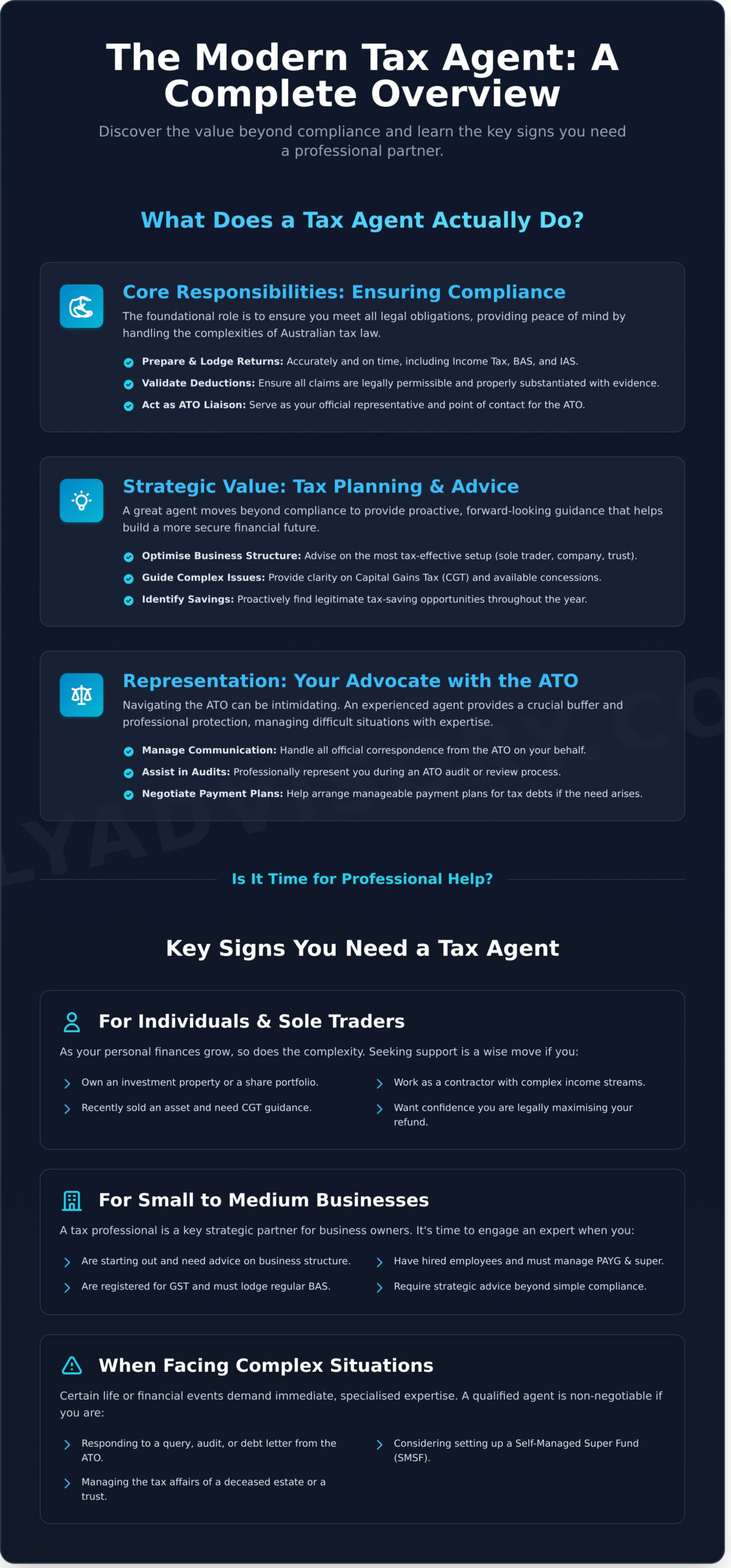
What Does a Tax Agent Actually Do? (Beyond Lodging Your Return)
When most people think of a tax agent, they picture someone who simply lodges their annual tax return. While that is a fundamental part of the job, a exceptionale agent offers so much more.
In Australia, a registered tax agent is a qualified professional authorised by the Tax Practitioners Board (TPB) to manage tax affairs for individuals and businesses. Their primary role is to provide expert guidance and support, ensuring you not only meet your obligations correctly but also optimise your financial position. Understanding what a tax advisor is in this broader sense reveals their potential as a proactive financial partner, not just a once-a-year form-filler.
Core Responsibilities: Ensuring Compliance
At its core, a tax agent’s job is to ensure you are fully compliant with Australian tax law, removing stress and uncertainty from the process. This foundational support goes beyond data entry; it’s about providing peace of mind. Key compliance tasks include:
-
Preparing and lodging tax returns accurately and on time, including Income Tax Returns, Business Activity Statements (BAS), and Instalment Activity Statements (IAS).
-
Ensuring all deductions and claims are legally permissible and properly substantiated with evidence.
-
Acting as your official representative and point of contact for all dealings with the Australian Taxation Office (ATO).
Strategic Value: Tax Planning and Advice
This is where a great professional proves their worth by moving beyond compliance to provide proactive, strategic guidance. Instead of only looking backward at the previous financial year, they look forward to helping you build a more secure financial future. This strategic partnership can include:
-
Advising on the most tax-effective business structure (e.g., sole trader, company, or trust).
-
Providing clear guidance on complex issues like Capital Gains Tax (CGT) and available concessions when selling assets.
-
Identifying opportunities for legitimate tax savings throughout the year, not just in June.
Representation: Your Advocate with the ATO
Navigating the ATO can be intimidating. Having an experienced agent on your side provides a crucial buffer and a layer of professional protection. They act as your advocate, managing difficult situations with expertise and calm authority. This includes:
-
Managing all official communication and correspondence from the ATO on your behalf.
-
Professionally representing you and assisting with information requests during an ATO audit or review.
-
Helping to negotiate manageable payment plans for tax debts if the need arises.
Do You Need a Tax Agent? Key Signs It’s Time for Professional Help
While many Australians lodge their own tax returns, engaging a professional tax agent becomes essential as your financial life grows more complex. The decision often comes down to a simple cost-benefit analysis: the fee for expert guidance versus the potential cost of a mistake, a missed deduction, or a stressful query from the Australian Taxation Office (ATO). As your circumstances change, the value of a trusted advisor increases exponentially. Recognising the right time to seek help is the first step towards financial clarity and peace of mind. Using a structured guide, such as these Tips for Choosing a Tax Preparer, can help you vet potential advisors effectively.
For Individuals and Sole Traders
Your personal financial situation can quickly evolve beyond a simple tax return. Seeking professional support is a wise move if you:
-
Own an investment property or a share portfolio, requiring you to navigate rental deductions, dividends, and franking credits.
-
Have recently sold an asset, such as property or shares, and need guidance on calculating and minimising Capital Gains Tax (CGT).
-
Work as a contractor or sole trader with complex income streams and a wide range of work-related expenses to claim correctly.
-
Simply want the confidence that you are legally maximising your refund and meeting all your obligations without error.
For Small to Medium Businesses
For business owners, a tax professional is more than a compliance officer; they are a strategic partner. It’s time to engage an expert when you:
-
Are just starting out and need advice on the right business structure (sole trader, company, trust) for asset protection and tax efficiency.
-
Are registered for GST and must lodge regular Business Activity Statements (BAS) accurately and on time.
-
Have hired employees and need to manage complex obligations like PAYG withholding, superannuation, and payroll tax.
-
Require strategic advice that goes beyond the numbers, focusing on cash flow management, growth strategies, and long-term business health.
When Facing Complex Situations
Certain events demand immediate, specialised expertise. A qualified tax agent is non-negotiable if you are:
-
Responding to a query, audit notice, or debt letter from the ATO.
-
Managing the tax affairs of a deceased estate or a trust, which have unique and stringent tax laws.
-
Considering the significant financial and legal commitment of setting up a Self-Managed Super Fund (SMSF).
How to Choose the Right Tax Agent: A 5-Step Vetting Process
Finding a qualified tax professional goes far beyond a quick online search. You are not just looking for someone to fill out forms; you are seeking a trusted partner who understands your financial situation and supports your long-term goals. A methodical approach is key to finding an advisor who provides genuine value. Follow this structured process to compare your options and choose with confidence.
Step 1: Verify Their Credentials and Registration
The most critical first step is to confirm their legal standing. In Australia, any professional providing tax agent services for a fee must be registered with the Tax Practitioners Board (TPB). The TPB ensures agents meet strict standards for qualifications, experience, and professional conduct. You can-and should-use the free public TPB Register to verify an agent’s status is active and unrestricted before proceeding.
Step 2: Assess Their Experience and Specialisation
Not all tax professionals have the same expertise. Look for a track record that aligns with your specific needs. Are you a property investor, a small business owner in the trades, or running a complex family trust? Ask directly about their experience with clients like you. Broader qualifications, such as being a Chartered Accountant, often indicate a deeper level of strategic business and financial advisory expertise that goes beyond simple tax compliance.
Step 3: Evaluate Their Communication and Approach
The right tax agent should be a clear and proactive communicator. During your initial consultation, assess their approach. Do they listen and ask questions to understand your goals? Can they explain complex tax laws in plain English? This principle is universally recognised; even the IRS guidance on choosing a tax professional highlights the importance of asking questions and feeling comfortable. A true partner provides guidance throughout the year, not just at tax time.
Step 4: Understand Their Fee Structure
Transparency around fees is a hallmark of a professional firm. Ask for a clear explanation of their fee structure before engaging their services. Common models include fixed fees for specific tasks, hourly rates, or value-based pricing. Be cautious of any agent who promises unusually large refunds or bases their fee on a percentage of your refund. The goal is to find an advisor who delivers maximum value and accuracy, not just the cheapest price.
Step 5: Check Reviews and Seek Referrals
Finally, review what others are saying. Check for independent online reviews on platforms like Google to gauge client satisfaction. A history of positive, detailed feedback is a strong indicator of reliability and quality service. Don’t hesitate to ask for testimonials or references from clients in a similar industry or situation to your own. Hearing directly from others provides invaluable insight into their real-world performance.
Key Questions to Ask a Potential Tax Agent
Your initial consultation is more than just a meet-and-greet; it’s a two-way interview. Preparing a list of smart questions helps you compare different firms and find a trusted partner who truly understands your goals. The answers you receive will reveal a great deal about their expertise, processes, and approach to client service. We encourage you to speak with two or three potential advisors to ensure you find the perfect fit for your financial journey.
Questions About Their Practice and Experience
Understanding a firm’s background ensures they have the right skills for your needs. A good tax agent should have relevant experience that aligns with your personal or business situation.
-
What types of clients and industries do you typically work with? (This confirms they understand the specific challenges and opportunities in your sector).
-
Who will be my main point of contact at your firm? (Will you be working directly with a senior partner or a junior accountant?).
-
What accounting software are you most familiar with? (Essential for ensuring seamless integration with your systems, like Xero or MYOB).
Questions About Your Specific Needs
These questions help you gauge whether an advisor is proactive and can offer strategic guidance beyond simple compliance. You want a partner who looks for opportunities to add value.
-
Based on my situation, what are the biggest challenges or opportunities you see? (This tests their ability to think strategically from the outset).
-
How can you support me beyond just lodging my tax return? (Look for value-add services like business advisory, cash flow forecasting, or structuring advice).
-
What is your process for gathering information and preparing my return? (This clarifies their workflow and what will be required of you).
Questions About Fees and Communication
Clear communication and transparent pricing are the foundations of a strong professional relationship. These questions help set clear expectations from the start.
-
What is included in your fee structure, and are there extra charges I should be aware of? (This helps you avoid surprise bills for phone calls or minor queries).
-
How often should I expect to hear from you during the year? (This establishes whether they provide proactive guidance or only make contact at tax time).
Ready to ask these questions and find a supportive partner for your financial success? Schedule a consultation with our team. We would be glad to provide the answers and guidance you need.
Your Next Step: Partnering with a Trusted Tax Advisor
Choosing the right tax agent is a significant decision for your financial future. As we’ve explored, the best advisors do far more than simply lodge your return; they offer strategic guidance to help you navigate Australia’s complex tax landscape. By following a clear vetting process and asking insightful questions, you can find a partner who truly understands your goals and is committed to your success.
At Gartly Advisory, we embody this partnership approach. As Chartered Accountants with over 25 years of trust, we have earned the reputation of providing proactive advice that goes ‘beyond the numbers’. Our commitment is reflected in over 70+ 5-Star Google Reviews from Melbourne business owners who value our dedicated support and expert guidance.
If you’re ready for financial clarity and a supportive partner on your journey, we’re here to help. Let us be your trusted partner. Schedule a complimentary consultation today. Take the first step towards a more secure and prosperous financial future.
Frequently Asked Questions About Tax Professionals
What’s the difference between a tax agent and an accountant?
A registered tax agent is a specific legal designation in Australia, authorised by the Tax Practitioners Board (TPB) to handle tax lodgements. While many qualified accountants are also registered tax agents, not all are. An accountant can provide broader financial advice, from budgeting to business strategy. A tax agent specialises specifically in applying tax law to ensure your returns are compliant and accurate. At Gartly Advisory, our professionals hold both qualifications to offer comprehensive support.
How much does a tax agent cost in Australia?
The cost for a standard individual tax return in Australia typically ranges from A$150 to A$400, depending on its complexity. Fees will be higher for returns involving investment properties, capital gains, or business income. It is important to remember that this fee is also tax-deductible on your next return. We provide clear, upfront fee structures so you always understand the value you are receiving for our professional guidance and support.
What documents do I need to give to my tax agent?
To ensure we can prepare your return accurately, you’ll need key documents like your income statement (PAYG summary), details of any other income, and receipts for work-related expenses. You should also provide private health insurance statements and records for any investments or rental properties. Having this information organised helps us provide efficient and thorough support, ensuring no detail is overlooked on your journey to financial clarity and compliance.
Can a tax agent get me a bigger tax refund?
A professional tax agent uses their deep understanding of tax law to ensure you claim every legitimate deduction you are entitled to. While they cannot create a refund out of thin air, their expertise often identifies opportunities and deductions that individuals might otherwise miss, leading to a better overall tax outcome. Our proactive approach is to provide guidance that not only ensures compliance but also helps optimise your financial position within the law.
When is the tax return deadline if I use a tax agent?
If you lodge your own tax return, the deadline is typically 31 October. However, by engaging a registered tax agent, you generally receive an extended deadline, often until 15 May of the following year, provided you are on their client list by the October deadline. This provides valuable extra time to gather your documents and for your agent to thoroughly review your situation. This extension is a key benefit of partnering with a professional for your tax needs.
Is it safe to give my financial information to a tax agent?
Absolutely. Registered tax agents in Australia are bound by a strict code of professional conduct, which includes stringent confidentiality and privacy obligations under the Tax Agent Services Act 2009 (TASA). Your security is our highest priority. We use secure systems and adhere to professional standards to protect your sensitive financial data, ensuring you can trust us completely as your dedicated partner in managing your tax and financial affairs.