
Exit Planning: The Ultimate Guide for Australian Business Owners
You’ve poured years of your life, countless late nights, and immeasurable passion into building your business. But what happens when it’s time to step away? For many Australian business owners, the thought of selling or transitioning their life’s work is filled with more questions than answers: Am I getting the right price? Will my legacy and employees be protected? The key to navigating this complexity isn’t luck; it’s strategy. A well-executed exit planning process is what transforms uncertainty into confidence and turns your hard work into tangible financial security.
While tax laws differ by region, the importance of integrating tax planning with long-term wealth management is a universal principle for a successful exit. As an example of the type of comprehensive support available, you can visit their website to see how firms like Timothy Roberts & Associates structure these services to protect an owner’s financial future post-sale.
This comprehensive guide is designed to be your trusted partner on this critical journey. We’ll provide a clear, step-by-step roadmap specifically for Australian business owners, helping you master the process of strategically exiting your business. You will learn how to maximise its value, ensure a smooth transition for everyone involved, and ultimately secure the financial future you’ve worked so hard to achieve. Let’s build a plan that gives you true peace of mind.
Key Takeaways
- A successful exit starts years in advance by viewing your business not just as a source of income, but as a valuable asset ready for its next chapter.
- Discover key strategies to proactively increase your business’s value, ensuring you command the highest possible price when you decide to sell.
- Understand the distinct advantages and disadvantages of common Australian exit routes-from a trade sale to a management buyout-to choose the right path for your goals.
- Navigating a successful exit is a team effort; learn the crucial roles of your advisors in a structured exit planning process to protect your legacy and financial future.
What is Exit Planning? (And Why Every Business Owner Needs It Sooner)
For many Australian business owners, the company they’ve built is more than just a job-it’s their life’s work and their most significant financial asset. Yet, when it comes to leaving that business, the approach is often reactive rather than strategic. Exit planning is the comprehensive roadmap that prepares you and your business for a successful departure. It’s not merely a retirement plan; it’s a proactive strategy to build a transferable, valuable company that is ‘always ready for sale’, ensuring you can leave on your own terms, whenever you choose. This process involves a holistic look at your business operations, finances, and personal goals, as detailed in foundational definitions of Exit planning.
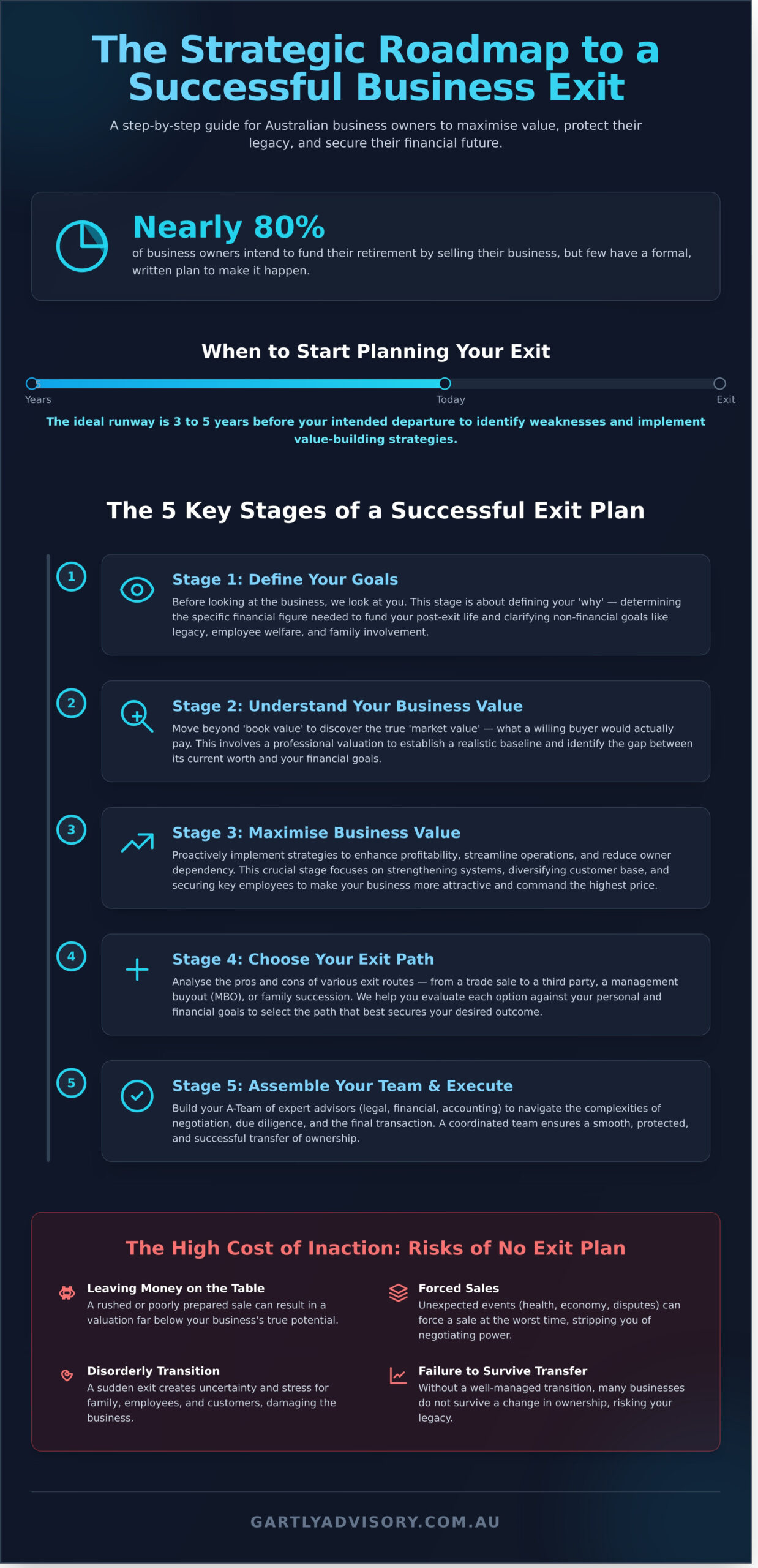
The stakes are incredibly high. Studies show that nearly 80% of business owners intend to fund their retirement with the proceeds from selling their business. However, a startlingly small number have a formal, written plan to make that happen. This gap between intention and action can have profound financial consequences.
To better understand this crucial concept, the video below provides an excellent overview of the essentials.
It’s also important to distinguish this process from succession planning. While related, they are not the same. Succession planning focuses on who will take over leadership and management roles within the company. Exit planning, on the other hand, is about the owner’s strategic and financial departure from the business, regardless of who takes the helm.
The Cost of Not Having an Exit Plan
Failing to plan your exit is not a neutral choice; it actively puts your legacy at risk. Without a clear strategy, you may face significant and avoidable challenges:
- Leaving money on the table: A rushed or poorly prepared sale can result in a valuation far below your business’s true potential, costing you hundreds of thousands, if not millions, of dollars.
- Forced sales: Unexpected events like a health crisis, economic downturn, or partner dispute can force you into a sale at the worst possible time, stripping you of all negotiating power.
- Disorderly transition: A sudden exit creates uncertainty and stress for your family, employees, and customers, potentially damaging the very business you worked so hard to build.
- Failure to survive the transfer: Many businesses do not survive a change in ownership without a well-managed transition, risking the collapse of your legacy.
When Should You Start Planning Your Exit?
The ideal time to begin your formal exit planning is three to five years before your intended departure. This may seem early, but this timeframe is crucial. It provides the necessary runway to identify and strengthen weaknesses, streamline operations, and implement value-building strategies. Starting early transforms your exit from a single, stressful event into a controlled, strategic process. It allows you to dictate the timing and terms of your departure, ensuring you are in the driver’s seat. Think of it not as an end-of-career task, but as one of the most important business strategies you will ever implement.
The 5 Key Stages of a Successful Exit Plan
Embarking on your business exit can feel overwhelming, but it doesn’t have to be. Successful exit planning is not a single event, but a structured journey. By breaking it down into five manageable stages, we can demystify the process and build a comprehensive strategy together. This framework provides the clarity and control you need, ensuring each step logically builds upon the last. As your trusted partner, we are here to provide the guidance and support you need at every stage.
Stage 1: Setting Your Personal and Financial Goals
Before looking at the business, we must first look at you. This foundational stage is about defining your ‘why’. What do you want your life to look like after you step away? We help you determine the specific financial figure required to fund this vision, while also considering crucial non-financial goals, such as securing your legacy, ensuring employee welfare, or planning for family involvement.
Stage 2: Understanding Your Business’s True Value
Many owners mistake their company’s ‘book value’ for its ‘market value’-what a willing buyer would actually pay. This stage involves an objective, third-party valuation to understand your business’s true worth. We identify the key drivers that add value (like recurring revenue and strong systems) and the detractors (like owner dependency) that could reduce it, giving us a realistic starting point.
Stage 3: Choosing the Right Exit Strategy
With your goals and business value clearly defined, we can align them with the right exit path. There are many options, from a third-party sale or management buyout to a family succession. Each carries different financial, operational, and tax implications. For a detailed overview, CPA Australia’s Guide to exiting your business offers excellent insights into evaluating these paths.
Stage 4 & 5: Preparation, Execution, and Post-Exit Life
This is where strategy becomes action. We implement initiatives to increase your business’s value and attractiveness to potential buyers. This involves preparing meticulous due diligence documents, confidentially marketing the business, and navigating the complexities of negotiations and sale agreements. Once the deal is closed, our support continues as we help you manage your wealth and transition smoothly into your next chapter.
Exploring Your Exit Options: Which Path is Right for You?
A core component of your exit planning is choosing the right departure path. There is no one-size-fits-all answer; the best strategy is one that aligns perfectly with your personal, financial, and legacy goals. Understanding the most common routes available to Australian SME owners is the first step toward making an informed and confident decision for your future.
Sale to a Third Party (Strategic or Financial Buyer)
This path is often pursued by owners seeking to maximise their financial return. The process involves preparing the business for sale, confidentially finding and vetting potential buyers, and navigating complex negotiations. Market timing and professional guidance are critical to achieving the best outcome.
- Pros: Typically yields the highest sale price. A strategic buyer may pay a premium for your market share or unique technology.
- Cons: The due diligence process can be intense and disruptive. Maintaining confidentiality is crucial, and your company culture and legacy may be completely transformed under new ownership.
Management or Employee Buyout (MBO/EBO)
An MBO or EBO allows you to transition ownership to the people who know your business best. This path is ideal for owners who want to preserve the company’s culture and reward the loyal team that helped build it from the ground up.
- Pros: Ensures continuity for staff and customers, leading to a smoother transition. It rewards key employees for their dedication.
- Cons: The final sale price may be lower than a third-party sale. Financing is often complex and may require you to provide vendor finance, extending your financial risk.
Family Succession: Passing the Business to the Next Generation
For many founders, seeing their business continue under family leadership is the ultimate legacy. This path focuses on preserving family wealth and values, but it requires meticulous, long-term planning to navigate the unique emotional and financial challenges involved.
- Pros: Keeps the business and its legacy within the family, creating the potential for multi-generational wealth and purpose.
- Cons: The potential for family conflict is high. It requires a clear governance structure, fair treatment of all children, and rigorous training for the incoming leader.
Liquidation or Orderly Wind-Down
An orderly wind-down is a practical and responsible exit strategy for businesses with few transferable assets or those that are no longer viable. The goal is to cease operations efficiently while maximising value from remaining assets and meeting all obligations.
- Pros: Offers a clean and definitive end, allowing you to meet all legal duties to creditors, employees, and the ATO in a structured way.
- Cons: Provides no ongoing legacy or goodwill value. The financial return is limited to the net value of liquidated assets after all debts are settled.
How to Maximise Your Business’s Value Before You Sell
The most successful business exits begin years before the ‘For Sale’ sign goes up. The key is to shift your mindset from simply ‘selling your business’ to ‘building a valuable asset to sell’. This proactive approach puts you in control, allowing you to command a higher price and ensure a smoother transition. Effective exit planning is not about winding down; it’s about strategically building up, ensuring your business is attractive, resilient, and ready for its next chapter.
Strengthening Your Financial Foundations
A potential buyer’s first look will be at your financials. Clean, accurate, and up-to-date records are non-negotiable. We help our clients demonstrate consistent profitability and strong cash flow, which builds immediate trust and proves the business’s viability. It’s also crucial to reduce the business’s reliance on your personal finances, showing it can stand firmly on its own two feet.
De-Risking Your Operations
A business that cannot function without its owner is a risky investment. We provide guidance on reducing ‘key person risk’ by documenting systems and processes, creating a business that can operate smoothly under new leadership. Securing long-term contracts with key customers and suppliers further de-risks the operation, providing a new owner with predictable revenue and a stable supply chain from day one.
Building a Diverse and Stable Customer Base
Is a significant portion of your revenue tied to a few large clients? This concentration is a major red flag for buyers. Our advisory services focus on strategies to diversify your customer base and develop recurring revenue streams, such as subscriptions or service contracts. Proving high customer satisfaction and loyalty transforms your client list from a simple database into a tangible, valuable asset.
These strategies are fundamental to building a business that is ‘exit ready’. At Gartly Advisory, we go beyond the numbers to provide the strategic support you need. We love the opportunity to be your trusted partner on this journey, ensuring your years of hard work are fully realised. Let us help you prepare for a successful future. Talk to a business advisor today.
Assembling Your A-Team: The Experts You Need for a Smooth Exit
Selling your business is one of the most significant financial events of your life. Attempting to navigate this complex process alone is a common but potentially costly mistake. Successful exit planning is a team sport, requiring a coordinated group of specialists dedicated to protecting your interests and maximising your outcome. Assembling this A-Team early ensures every decision is strategic, compliant, and aligned with your personal and financial goals.
The Business Advisor / Chartered Accountant
Think of your business advisor or Chartered Accountant as the quarterback of your exit team. They provide the central strategic guidance needed to prepare your business for sale and coordinate the efforts of other professionals. Their role is to offer comprehensive support, ensuring your financial foundations are solid and appealing to potential buyers. A trusted advisor is your first and most crucial partner in the exit planning process.
- Valuation and Financial Clean-up: They help establish a realistic valuation and ensure your financial records are transparent and accurate for due diligence.
- Value Enhancement: They provide proactive advice on strategies to increase your business’s value before it goes to market.
- Tax Planning: They structure the sale to legally minimise tax obligations, such as Capital Gains Tax (CGT), maximising the net proceeds you receive.
The Commercial Lawyer
While your accountant focuses on the numbers, your commercial lawyer focuses on mitigating risk and ensuring legal compliance. They are your shield during negotiations, ensuring all agreements are structured to protect your interests now and in the future. Their expertise is non-negotiable for a secure and legally sound transaction.
- Legal Documentation: Drafts, reviews, and negotiates the Sale and Purchase Agreement and all other critical legal documents.
- Due Diligence: Manages the legal due diligence process, addressing any compliance issues or potential liabilities.
- Negotiation Support: Protects your legal position during negotiations with buyers and their legal counsel.
The Business Broker or M&A Advisor
A good business broker or M&A advisor is your market connection. Their job is to find the right buyer at the right price while you continue to run your business. They manage the entire sales process, from marketing to negotiation, ensuring confidentiality is maintained and only qualified, serious buyers are brought to the table.
- Buyer Sourcing: Actively markets your business to a network of potential buyers and screens them for suitability.
- Marketing Materials: Creates professional documents, like an Information Memorandum, to present your business effectively.
- Deal Negotiation: Manages negotiations to secure the best possible price and terms on your behalf.
As your trusted partner, a firm like Gartly Advisory can provide the strategic guidance to lead this team, ensuring a seamless and profitable exit.
Secure Your Legacy: Your Next Steps in Exit Planning
Your business represents years of hard work, dedication, and sacrifice. As we’ve outlined, ensuring you reap the full rewards of that effort requires a strategic approach. It begins with understanding that your exit is not a single event, but a journey that starts years in advance. By identifying the right exit path, systematically maximising your business’s value, and assembling a team of trusted experts, you can take control of your future. This proactive approach to exit planning is what separates a stressful, uncertain departure from a smooth, profitable, and fulfilling one.
You don’t have to navigate this complex and emotional journey alone. At Gartly Advisory, we have been a trusted partner to Melbourne business owners for over 35 years. Our team of Chartered Accountants and certified Business Valuebuilder Advisors provides the expert, forward-thinking guidance needed to protect your legacy. We are committed to going beyond the numbers to help you achieve your goals, a dedication reflected in over 70 5-star Google reviews from business owners just like you.
Take the first confident step towards the future you’ve earned. Schedule a complimentary consultation to discuss your business and exit goals.
Frequently Asked Questions
How long does the exit planning process typically take?
The exit planning process is a journey, not a single event. Ideally, it should unfold over three to five years, or even longer. This timeframe allows for strategic improvements to maximise business value, address operational dependencies, and ensure a smooth transition. Rushing the process can significantly reduce your final sale price and limit your options. We provide the guidance to help you create a realistic and effective timeline that aligns with your personal and financial goals.
When is the best time to start thinking about exit planning?
The best time to start planning your exit is now, regardless of when you intend to leave. Thinking about your business with the end in mind from day one helps you build a more valuable and saleable asset. At a minimum, you should begin the formal process at least five years before your target exit date. This proactive approach gives you the control to shape your legacy and achieve the future you envision for yourself and your business.
What are the biggest mistakes business owners make when they try to exit?
One of the biggest mistakes is leaving it too late. A rushed exit often leads to a lower valuation and fewer interested buyers. Other common errors include having an unrealistic expectation of the business’s worth, failing to make the business less dependent on the owner, and poor tax structuring. Proper exit planning with a trusted partner helps you avoid these costly pitfalls and ensures you are fully prepared for a successful transition.
How much does it cost to get professional help with exit planning?
The cost of professional help varies depending on the complexity of your business and the depth of advice required. A formal business valuation in Australia can range from A$5,000 to A$15,000+. Comprehensive advisory is a tailored investment in your future. We encourage an initial consultation to discuss your needs and provide a clear fee structure. Think of it not as a cost, but as an essential investment to maximise your final return.
Can I still sell my business if it isn’t currently profitable?
Yes, it is possible to sell a business that isn’t currently profitable. Buyers may see value in your intellectual property, customer database, established brand, or strategic market position. The sale would focus on the potential for future profitability under new ownership or the value of its core assets. We can support you in identifying these hidden assets and positioning your business to attract the right kind of strategic buyer, even during challenging times.
What is a business valuation and why do I need one?
A business valuation is a comprehensive process to determine the economic worth of your business. It is a critical first step in any exit planning strategy because it provides an objective, defensible baseline for your asking price. Beyond just a number, a thorough valuation identifies the key drivers of value in your business and highlights areas for improvement. This insight empowers you to make strategic decisions to grow your company’s worth before you go to market.