
ATO Taxation Statistics 2022-23: Individual Income Tax Revenue Trends for Melbourne & Sydney Professionals
What if the very deductions you rely on to lower your tax bill are the exact same ones flagging your return for an ATO audit this year? It’s a common worry for many professionals in Melbourne and Sydney who feel like they’re flying blind when tax season rolls around. We know that trying to make sense of the latest ato taxation statistics 2022-23 individual income tax revenue feels like a full-time job in itself, especially when you’re already busy managing a high-pressure career. You probably suspect that the tax landscape is shifting. You’re right; the June 2024 data release shows a clear evolution in how income is reported and exactly what the authorities are watching.
In this guide, we’ll help you discover what the latest ATO data reveals about individual tax revenue and how these trends impact your 2026 tax strategy. You’ll learn how to benchmark your own income and deductions against national averages so you can stop feeling like an outlier. We’ve also included actionable tips to help you stay compliant while ensuring you aren’t paying a cent more than your fair share. Let’s look beyond the numbers to give you a clear, supportive path forward.
Key Takeaways
- Understand why individuals contribute over half of Australia’s tax revenue and how this ‘heavy lifter’ status impacts your reporting requirements.
- Gain insights into the top-earning occupations and why the ATO is now taking a much closer look at standard work-related deduction claims.
- Discover what the latest ato taxation statistics 2022-23 individual income tax revenue figures reveal about shifting trends and future ATO compliance focus.
- Learn proactive tax planning strategies for Melbourne and Sydney professionals to help you stay ahead of benchmarks and optimise your financial position.
Unpacking ATO Taxation Statistics 2022-23: Individual Income Tax Revenue
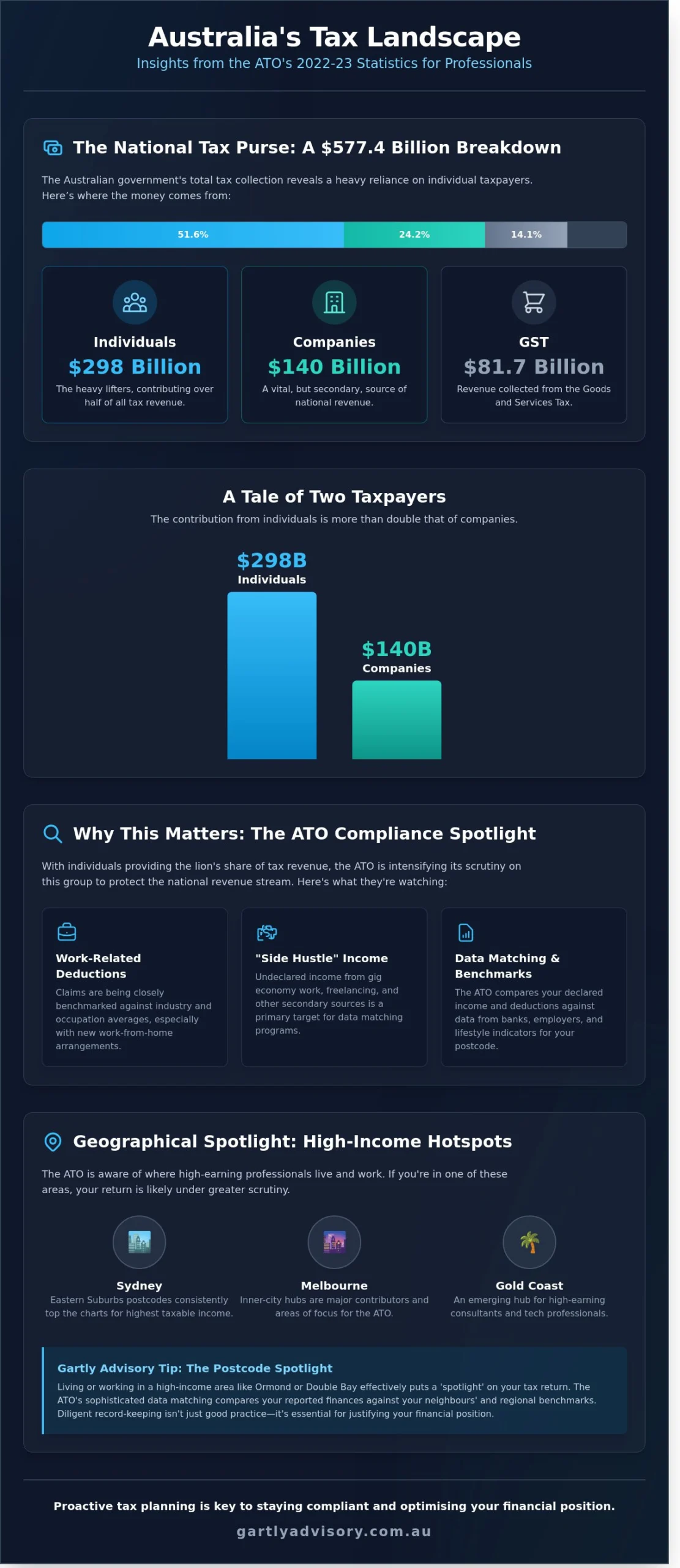
Every year, the Australian Taxation Office (ATO) pulls back the curtain on where the nation’s money comes from. The latest ato taxation statistics 2022-23 individual income tax revenue data shows a record-breaking year for the treasury. Total tax collections hit $577.4 billion, a jump that reflects both wage growth and a tightening net on compliance. Out of that massive sum, individuals contributed $298 billion. This means everyday workers and professionals provided 51.6% of the government’s total tax pool.
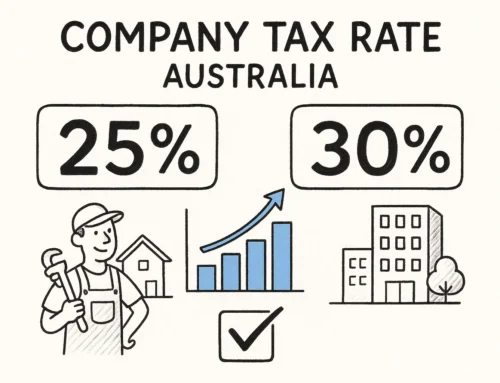
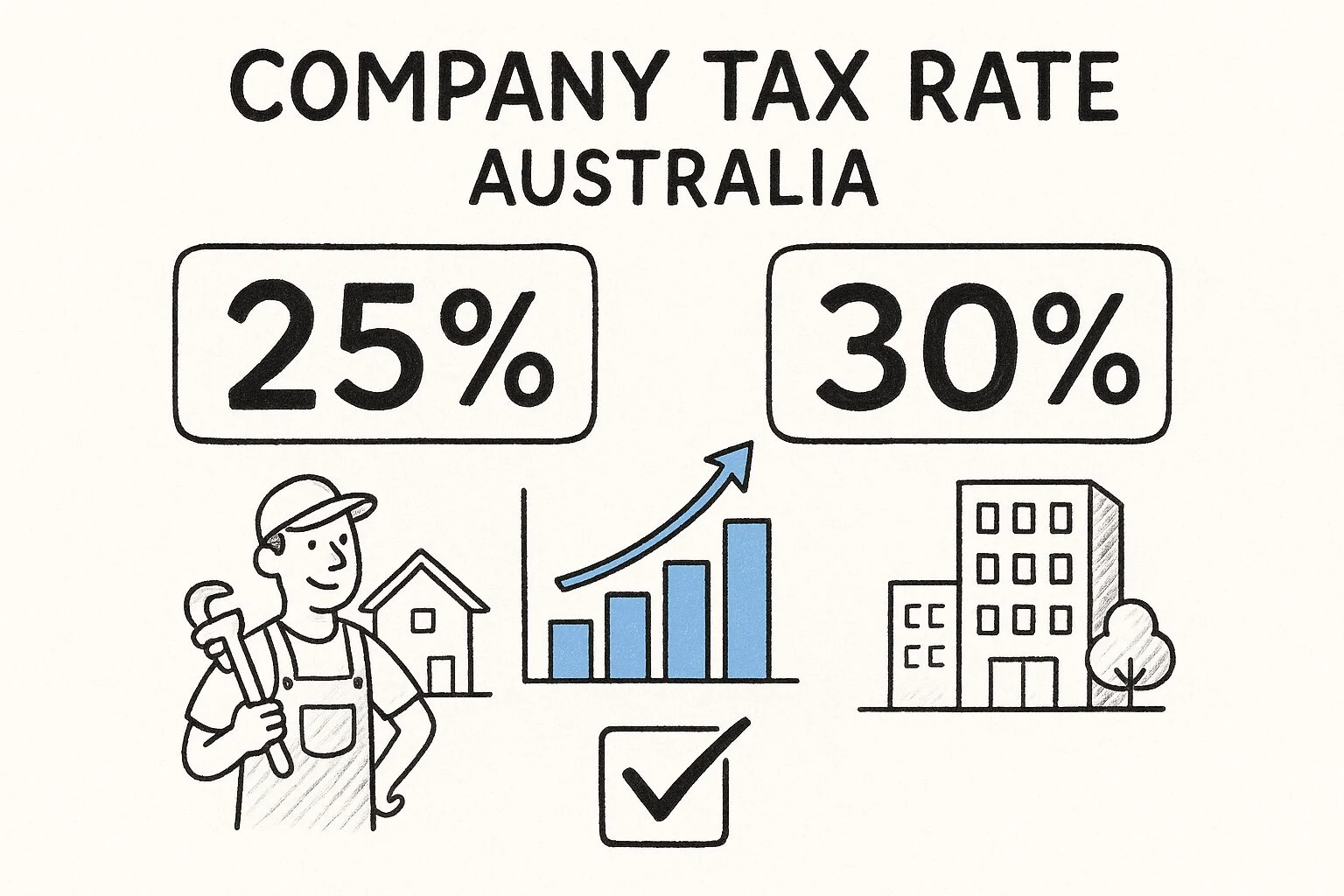
Why do individuals pay so much more than corporations? While corporate tax remains vital, the Australian income tax system relies heavily on a progressive scale for people. Companies contributed $140 billion this year. That is less than half of what individuals paid. It’s a clear sign that you, as a professional or business owner, are doing the heavy lifting for the country’s economy. This shift in collection patterns shows the ATO is leaning more on personal earnings than ever before.
The Composition of Australia’s Tax Purse
The numbers tell a story of reliance. Here is how the $577.4 billion breaks down across the major categories:
- Individuals: $298 billion (51.6% of the total)
- Companies: $140 billion (24.2% of the total)
- GST: $81.7 billion (14.1% of the total)
The “Individuals” category serves as the primary driver of national infrastructure funding, paying for everything from hospitals in Melbourne to major rail projects in Sydney. It’s the engine room of the federal budget. Because individuals contribute the lion’s share, the ATO focuses heavily on ensuring this group stays compliant. We’ve seen a massive increase in data matching to ensure every dollar is accounted for.
Local Impact: From Ormond to the Gold Coast
If you live in Sydney or Melbourne, you’re likely in the thick of it. Postcodes in Sydney’s Eastern Suburbs and Melbourne’s inner-city hubs consistently dominate the top 10 highest taxable income charts. These areas are home to the financial and legal professionals who generate significant portions of the ato taxation statistics 2022-23 individual income tax revenue. However, we’re seeing a shift. The Gold Coast is no longer just a holiday spot. It’s a growing hub for professional services. High-earning consultants and tech professionals are moving north, bringing their tax contributions with them. This geographical spread changes how the ATO monitors regional wealth and spending patterns.
For professionals in these high-growth areas, the pressure is on. The ATO knows where the money is. They use benchmarks to compare people in similar roles and postcodes. If your reported income or deductions look like an outlier for your suburb, it might trigger a review. We’ve helped many clients navigate these comparisons by ensuring their records are bulletproof.
Trends in Individual Statistics: Deductions and Income Brackets
The latest ATO Taxation Statistics 2022-23 reveal a fascinating shift in how Australians earn and claim. While the ato taxation statistics 2022-23 individual income tax revenue shows steady growth, the distribution of that wealth tells a deeper story for professionals in Melbourne and Sydney. We’ve seen a clear trend where the gap between median and average incomes continues to widen, particularly in high-density professional hubs. This suggests that while most people are seeing modest gains, a small percentage of high earners are driving the bulk of the tax revenue increases.
Work-Related Deductions: The 2022-23 Benchmark
The ATO is looking closer at “standard” deduction claims than ever before. In the 2022-23 period, work-related expenses remained a primary focus for the regulator, especially as work-from-home arrangements became permanent for many Sydney and Melbourne firms. If your claims fall outside the “normal” range for your specific occupation, it’s likely to trigger a review. You can find more detail on how to stay compliant in our guide to Understanding Common Business Tax Deductions in Australia. Consistency is your best friend when it involves the tax office.
Occupation and Income Insights
Surgeons, Anaesthetists, and Financial Dealers remain at the very top of the income charts. In the 2022-23 data, Surgeons recorded an average taxable income of $460,356, while Anaesthetists followed closely at $431,193. These roles require immense skill and years of study, so their position isn’t surprising. However, the gender pay gap remains a talking point. In the top 10 occupations, men still consistently outearn women, though the gap is slowly narrowing in the legal and financial dealer sectors compared to five years ago.
The ato taxation statistics 2022-23 individual income tax revenue also highlights a concentration of wealth in specific postcodes. In Victoria, Toorak (3142) continues to lead, while Double Bay (2028) dominates in NSW. For those earning in these top brackets, tax efficiency is about more than just deductions; it’s about structure. If your income places you in the top 5%, you might find that a Self-Managed Super Fund (SMSF) provides the control and tax benefits you need to grow your wealth effectively.
Superannuation balances are also showing healthy growth in the latest release. The data shows that more professionals are making voluntary contributions to offset their taxable income. This proactive approach is exactly what we encourage. If you’re wondering how your current income and deduction strategy stacks up against these national benchmarks, feel free to reach out for a chat about your specific situation.
Applying 2022-23 Lessons to Your 2026 Tax Strategy
The ATO doesn’t collect data just for historical records. They use the ato taxation statistics 2022-23 individual income tax revenue to build the risk profiles they’ll use for years to come. With individual tax revenue hitting $298.6 billion, the pressure to maintain and grow these levels is high. This leads to increased scrutiny for high-wealth individuals and professional business owners in Melbourne and Sydney. If your 2026 tax return deviates significantly from the benchmarks established in the 2022-23 period, it could trigger an automated review.
Proactive tax planning is the only way to stay ahead. For small business owners, this means looking at the 2022-23 data as a baseline for what the ATO considers “normal.” We’ve seen a shift where the tax office uses sophisticated data matching to compare your lifestyle, asset purchases, and reported income. If you’re a professional in a high-earning Sydney suburb but report income below the 2022-23 average for your postcode, you’re likely to be flagged for further investigation.
Avoiding Audit Red Flags in 2026
The ATO’s data matching capabilities have grown exponentially. They now compare your reported income and expenses against thousands of other professionals in your exact industry. If your travel expenses or work-from-home claims sit outside the average for a Melbourne-based consultant or a Sydney engineer, it triggers an alert. You need to understand ATO Audit Red Flags: How to Keep Your Business Safe before you lodge your next return. It’s about staying within the safe zone of established benchmarks while still claiming your legitimate entitlements. Accuracy is your best defence.
Partnering for Success Beyond the Numbers
Compliance is just the baseline for any successful business. Truly successful professionals use these statistics as a roadmap for growth. By looking at the 2022-23 trends, we can see where the economy is shifting and where the tax burdens are heaviest. A qualified Tax Agent doesn’t just look at what happened last year. They help you project what’s coming next. We believe in being your trusted partner on your journey towards success, which means moving beyond simple tax returns to strategic advisory. We look at the story behind the statistics to help you seize opportunities that others might miss.
- Identify industry outliers before the ATO does.
- Adjust your drawings and dividends based on current revenue trends.
- Use historical data to forecast future tax liabilities and cash flow needs.
Mastering Your Tax Strategy for the Years Ahead
The latest data from the ato taxation statistics 2022-23 individual income tax revenue report reveals significant shifts for professionals across Melbourne and Sydney. We’ve seen how income brackets are evolving and why staying proactive with your deductions is essential for long-term wealth. By applying the lessons from the 2022-23 financial year, you can better position your finances for 2026 and beyond. It’s not just about meeting deadlines; it’s about building a sustainable plan that works for your specific career path.
Navigating the Australian tax system requires more than just a spreadsheet. As Chartered Accountants with 35 years of experience and over 70 5-star Google reviews, we pride ourselves on being a safe pair of hands for your financial journey. We provide advice that goes beyond the numbers to help you solve problems and grow your dreams. Talk to us at Gartly Advisory and let us help you navigate your tax journey today. Our team is here to offer the professional, reassuring support you need to feel confident in every financial decision you make.
Frequently Asked Questions
What was the total individual income tax revenue for 2022-23?
The total individual income tax revenue for the 2022-23 financial year reached $305.5 billion. This figure represents a 10.2% increase from the previous year, driven by strong employment growth and rising wages across Australia. These ato taxation statistics 2022-23 individual income tax revenue figures highlight how much the federal government relies on personal earnings to fund public services. If you’re a high-earning professional, your contribution is a significant part of this national total.
Which occupations had the highest average taxable income in the 2022-23 ATO stats?
Surgeons topped the list with an average taxable income of $460,356 according to the latest data. They were followed by anaesthetists at $431,193 and internal medicine specialists who averaged $334,267. Outside of the medical field, financial dealers earned an average of $373,733, while legal professionals also ranked highly. Understanding these benchmarks helps you see where your earnings sit compared to other elite professionals in Melbourne and Sydney.
How does the ATO use taxation statistics to find audit targets?
The ATO uses sophisticated data-matching technology to compare your return against the “nearest neighbour” benchmarks for your specific occupation. They collect information from over 40 external sources, including banks, health funds, and state land titles offices, to spot inconsistencies. If your work-related deductions are 20% higher than the average for your peer group, it may trigger an automated review. We suggest keeping digital copies of all receipts to stay prepared for any queries.
Why is individual income tax such a high percentage of total revenue?
Individual income tax accounts for 50.8% of the Commonwealth’s total tax revenue because of Australia’s progressive tax system. With workforce participation reaching 66.8% in mid-2023, the sheer volume of taxpayers provides a stable funding base. Higher earners in the top tax bracket contribute a disproportionate share of this total. This is why it’s so important to have a trusted partner who can help you manage your obligations while protecting your hard-earned wealth.
What is the average tax refund for professionals in the 2022-23 period?
The average tax refund for the 2022-23 year was approximately $2,800, though this varies widely for professionals in Sydney and Melbourne. Many high-income earners found their refunds were smaller than previous years due to the end of the Low and Middle Income Tax Offset. To maximise your return, ensure you claim every legitimate work-related expense, such as professional memberships or home office costs. Don’t leave money on the table by overlooking small, recurring professional expenses.
How much did the top 1% of taxpayers contribute to the total revenue?
The top 1% of Australian earners contributed roughly 17% of the total individual income tax revenue for the 2022-23 financial year. This group generally includes individuals with a taxable income exceeding $388,000 per year. These ato taxation statistics 2022-23 individual income tax revenue trends show that the tax burden is heavily concentrated among high-level professionals. If you fall into this category, proactive tax planning is essential to ensure you aren’t paying more than your fair share.
What are the current thresholds for the Medicare Levy Surcharge?
For the 2022-23 year, the Medicare Levy Surcharge applies to individuals earning over $90,000 and families earning over $180,000 who don’t have private hospital cover. The surcharge rate scales from 1% to 1.5% depending on your exact income level. For a professional earning $200,000, this could mean an extra $3,000 in tax if you aren’t covered. We recommend reviewing your health insurance status before June 30 every year to avoid this unnecessary cost.
How does the ATO track rental property income and deductions?
The ATO uses a sophisticated residential investment property service that matches data from property management software and bank records. In the 2022-23 period, they identified that 9 out of 10 rental property owners made errors on their tax returns. They specifically look for over-claimed interest deductions and incorrect capital works claims. It’s vital to provide your accountant with accurate settlement statements and annual summary reports from your property manager to avoid these common mistakes.
What were the most common work-related deductions for 2022-23?
Car expenses and home office costs remained the most frequent claims, with millions of Australians using the revised fixed-rate method of 67 cents per hour. For Melbourne and Sydney professionals, professional development and self-education expenses also made up a large portion of total deductions. You must keep a diary for at least four weeks to justify your home office hours under the new rules. Small habits like logging your hours weekly can save you thousands during tax season.
How does Division 293 tax affect high-income professionals?
Division 293 tax applies an additional 15% tax on your concessional superannuation contributions if your combined income and contributions exceed $250,000. This effectively doubles the tax on your super contributions from 15% to 30%. The ATO issues these assessments automatically based on your lodged tax return and super fund data. If you receive a Division 293 notice, you can choose to pay it out of pocket or have the amount released from your superannuation balance.
What is the impact of capital gains on the 2022-23 statistics?
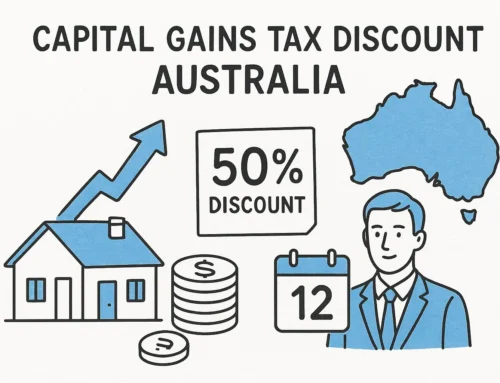
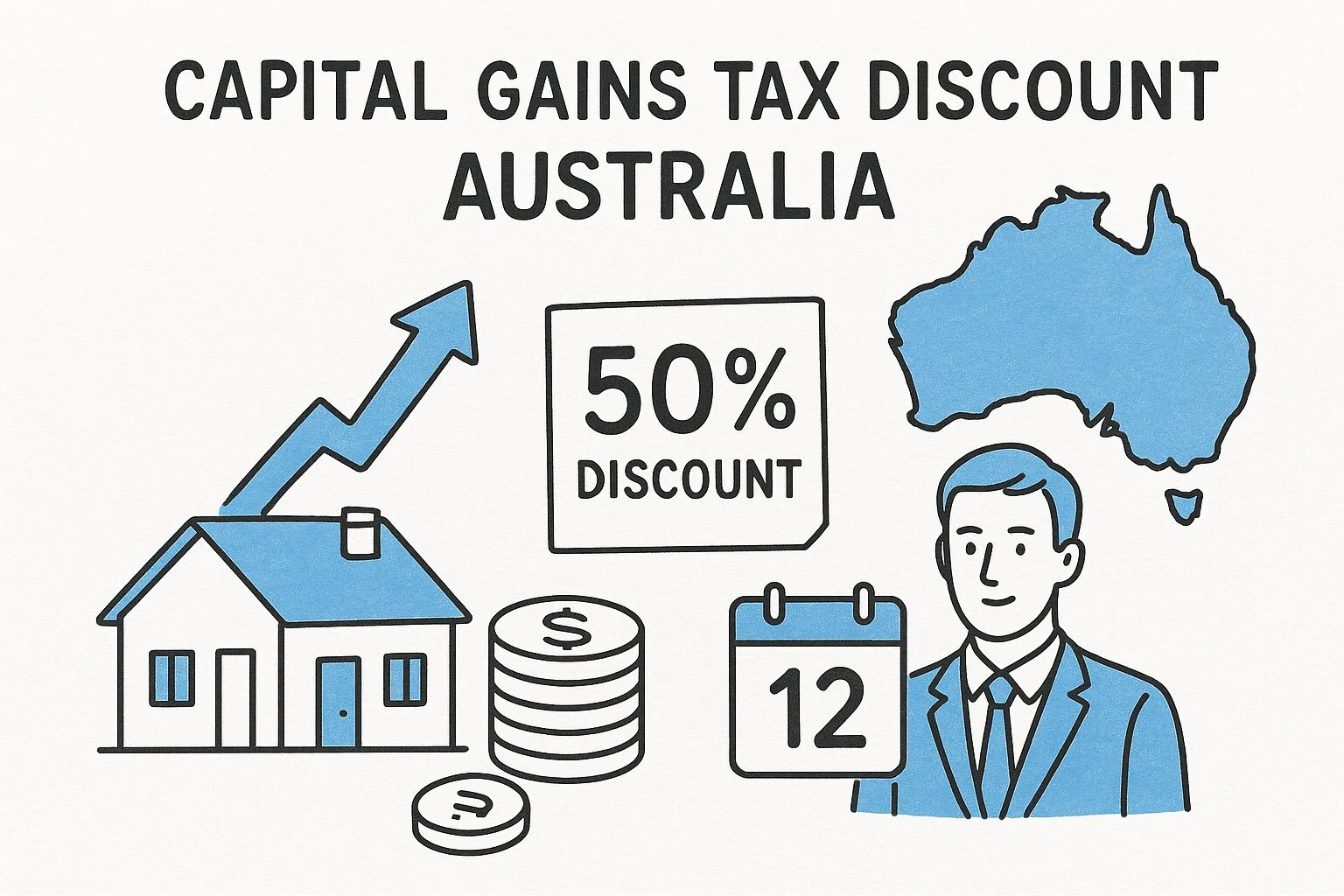
Capital gains tax revenue saw a shift in 2022-23 as the property market stabilised and share market volatility increased. The ATO receives data directly from share registries and the land titles office to track every asset sale you make. If you held an asset for longer than 12 months, you’re generally entitled to a 50% discount on the capital gain. We suggest timing the sale of assets during years where your other income might be lower to reduce the overall tax impact.
How does the ATO monitor cryptocurrency transactions?
The ATO has data-matching protocols with Australian digital currency exchanges to track the purchase and sale of crypto assets. They have identified between 600,000 and 1 million Australians who have traded crypto in the 2022-23 financial year. Every time you swap one coin for another, it’s considered a disposal for capital gains tax purposes. You should use dedicated crypto accounting software to track your trades, as manual spreadsheets often lead to expensive errors during an audit.
What is the “Nearest Neighbour” benchmark used by the ATO?
The “Nearest Neighbour” benchmark is a statistical tool that groups taxpayers by their occupation and income range to determine average deduction levels. If your claims for “other” expenses are significantly higher than the $1,200 average for your specific role, the ATO’s system flags you for a closer look. This doesn’t mean you can’t claim legitimate expenses, but it does mean you need robust evidence. Always ensure your claims are directly related to earning your income and aren’t private in nature.
How do PAYG instalments work for high-income earners?
If you earn more than $4,000 in investment or business income, the ATO may enter you into the PAYG instalment system to help you pay tax as you earn. This prevents a large, unexpected tax bill at the end of the year. For professionals with significant dividend or rental income, these quarterly payments are mandatory. You can vary these instalments if you expect your income to drop, but be careful not to underpay by more than 15% to avoid penalties.
Why should I use a Chartered Accountant instead of doing it myself?
A Chartered Accountant provides advice that goes beyond the numbers, helping you navigate the complex world of business matters and tax law. While the ATO’s myTax system is simple for basic returns, it doesn’t offer strategic advice on wealth protection or tax minimisation. We’ve spent 25 years building trust with clients by finding opportunities they might have missed, such as specific industry incentives or trust structures. Having a professional in your corner gives you peace of mind and more time to focus on your career.
What are the rules for claiming self-education expenses?
You can claim self-education expenses if the course maintains or improves the specific skills required for your current work. For 2022-23, the previous $250 non-deductible threshold was removed, meaning you can claim the full cost of eligible courses. This includes tuition fees, textbooks, and travel to and from the place of education. However, you cannot claim courses that are intended to help you get a new job or start a different career path entirely.
How does the ATO handle trust distributions in their statistics?
Trust distributions are a major focus for the ATO, specifically regarding Section 100A, which targets arrangements where trust income is diverted to lower-taxed beneficiaries. In 2022-23, the ATO increased its scrutiny of family trust elections to ensure tax isn’t being unfairly avoided. If you use a trust structure, it’s essential that the beneficiaries actually receive the benefit of the funds. We can help you review your trust deeds to ensure you’re compliant with the latest ATO rulings and guidelines.
What should I do if I can’t pay my tax bill on time?
If you’re facing a large tax bill from the 2022-23 year, the most important step is to contact the ATO or your tax agent before the due date. The ATO offers payment plans for individuals and small businesses, often with interest-free periods if you have a good compliance history. Ignoring the debt leads to General Interest Charge penalties, which are currently calculated at a high daily rate. We often help our clients negotiate these plans to ensure their cash flow remains stable during the process.