
Tax Deductions Checklist for Small Business 2026: A Melbourne Guide
Last July, a retail business owner in Melbourne’s South Yarra realised she’d missed over A$4,350 in legitimate claims simply because she wasn’t aware of how the latest ATO asset write-off rules applied to her shop fit-out. It’s a stressful situation we see often at Gartly Advisory, where the fear of an audit or the complexity of changing regulations leads to missed opportunities. We’ve developed this tax deductions checklist for small business 2026 to ensure you don’t leave your hard-earned money on the table. Our goal is to act as your trusted partner, providing the calm competence you need to navigate your 2026 obligations with total confidence.
You likely started your business to pursue a passion, not to become a tax expert, and the constant stream of updates can feel overwhelming. We agree that your focus should be on growth and strategy rather than getting lost in a sea of receipts. This guide promises to simplify the process by offering a clear, actionable roadmap tailored for businesses across Melbourne. We’ll walk you through everything from motor vehicle expenses to the latest digital energy incentives, giving you the peace of mind that your compliance is handled and your cash flow is protected.
Key Takeaways
- Master the ATO’s three golden rules to ensure your claims are strictly business-related and backed by the solid records needed for a stress-free tax season.
- Utilise our comprehensive tax deductions checklist for small business 2026 to capture essential operating costs for your Melbourne office, from rent to utilities.
- Understand the critical timing for superannuation payments to ensure your business remains compliant and your personnel deductions are fully protected.
- Learn how to shift your focus from simple compliance to strategic tax planning, uncovering hidden opportunities to grow your Australian business.
Understanding the 2026 Small Business Tax Landscape in Australia
Running a business in the bustling lanes of Melbourne or the competitive harbour districts of Melbourne requires more than just grit; it takes a proactive approach to your finances. As we look toward the end of the 2026 financial year, staying ahead of the Australian Taxation Office (ATO) requirements is the best way to protect your hard earned cash. A small business tax deduction is simply an expense you’ve incurred that’s directly related to earning your assessable income. Think of it as the government’s way of acknowledging the costs you shoulder to keep the economy moving.
Waiting until June 30 to sort through a shoebox of receipts is a recipe for stress. In the high pressure markets of Victoria, the most successful operators treat tax planning as a year round strategy. By using a comprehensive tax deductions checklist for small business 2026, you can identify opportunities to reinvest in your growth rather than just paying what’s left over. Understanding how the system works starts with a clear Overview of Australian Taxation, which provides the framework for every claim you make.
The Three Golden Rules for 2026 Claims
The ATO hasn’t changed its core expectations, but it’s becoming much more precise in how it monitors them. To stay in their good books, you must follow three simple rules: the money must have been spent for your business, it cannot be for private use, and you must have a record to prove it. For many Melbourne freelancers, the “private use” rule is where things get tricky. If you’re using your mobile phone or internet for both work and streaming movies, you must apportion the expense. This means only claiming the percentage that’s actually used for business activities.
Timing is everything. You need to have “incurred” the expense before June 30, 2026, to see the benefit in your 2026 tax return. This doesn’t always mean the cash has left your bank account, but you must be legally obligated to pay it. In the context of Australian tax law, assessable income is the total of all gross income your business receives that’s subject to tax before any deductions or offsets are applied.
Proactive Tip: Use a dedicated cloud accounting app to snap photos of receipts the moment you get them. This ensures you never lose a deduction to a faded piece of thermal paper.
New for 2026: Thresholds and ATO Focus Areas

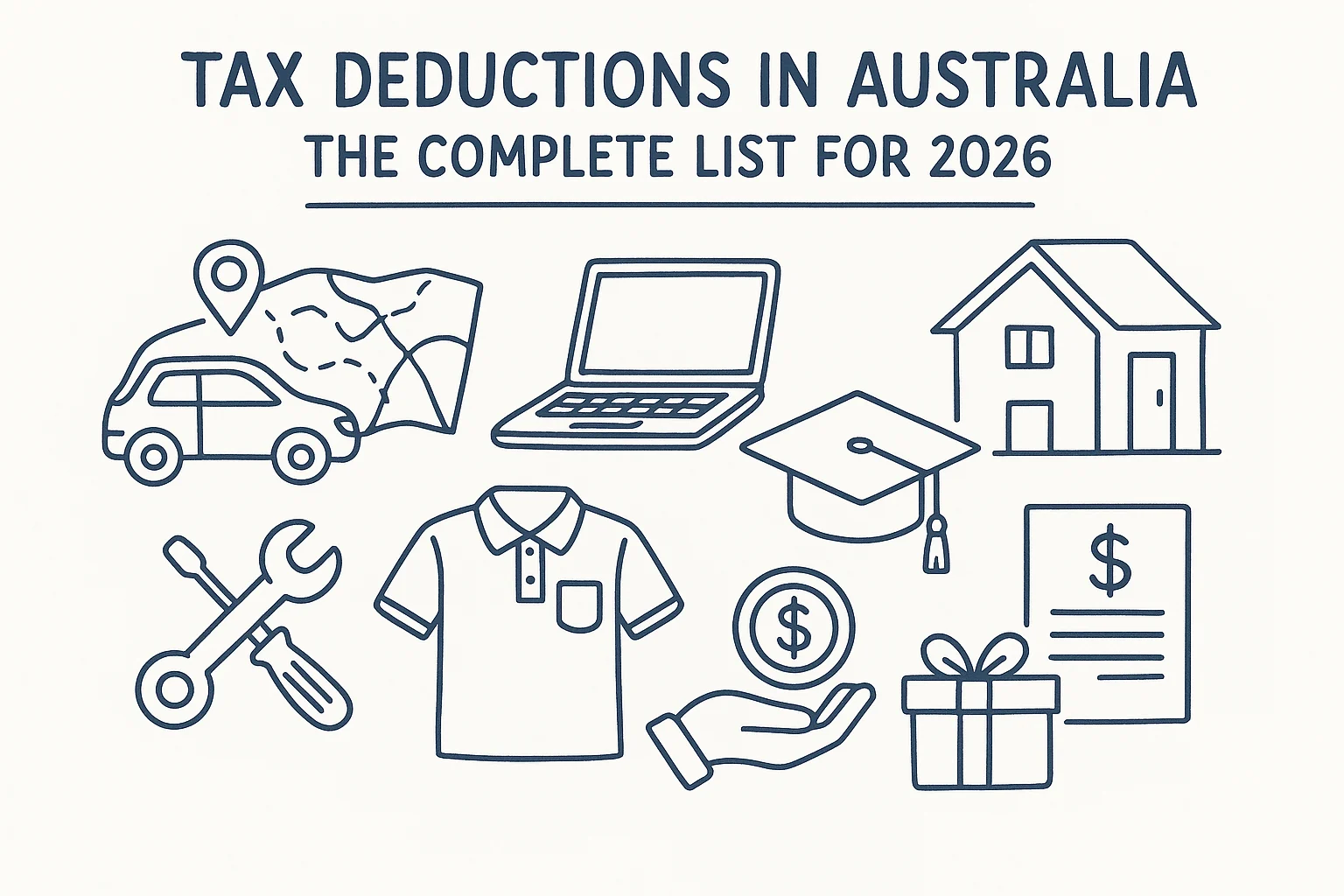
The Ultimate 2026 Small Business Tax Deductions Checklist
Staying on top of your financial obligations in a fast-paced environment like the Melbourne CBD or Melbourne’s Surry Hills requires more than just hard work. It requires a strategic approach to your annual return. This tax deductions checklist for small business 2026 is designed to help you identify every legitimate claim available to your enterprise. By capturing these costs accurately, you keep more capital in your business to fuel future growth.
Personnel costs are often a business’s largest expense. Wages paid to employees are deductible, but you must be diligent with Superannuation Guarantee Charge (SGC) payments. For the 2026 financial year, the super guarantee rate remains at 12%. You only get a tax deduction for super if it’s paid on time and received by the clearing house by the quarterly deadlines. Late payments are not deductible and trigger a complex SGC statement process. We often find that proactive management of these deadlines is what separates a smooth tax season from a stressful one.
Professional fees are another significant area for savings. The cost of engaging experts to manage your compliance and strategy is fully deductible. This includes your small business accounting fees and any legal advice sought for business operations. For a detailed breakdown of what the government allows, you can refer to the ATO guide to business deductions to ensure your claims align with current regulations.
Home Office and Travel Deductions
Many Melbourne entrepreneurs now operate under hybrid models. In 2026, you can choose between the “actual cost” method and the “fixed rate” method for home office claims. The fixed rate method is often simpler, covering electricity, gas, and internet at a set cents-per-hour rate, but it requires a representative record of hours worked. For those with high-usage requirements, the actual cost method might yield a higher deduction, provided you have a dedicated work area and meticulous records.
Travel between sites, such as visiting a client on Melbourne or moving between Melbourne offices, provides further opportunities. If you use a personal vehicle, you can choose the logbook method or the cents per km method. The logbook method usually results in a larger claim for heavy road users, but you must maintain a digital logbook for a continuous 12-week period to meet the ATO’s strict requirements. This logbook remains valid for five years unless your business usage changes by more than 10%.
Asset Depreciation and Capital Expenses
Understanding the difference between a repair and an improvement is vital for your 2026 tax planning. A repair, such as fixing a broken window in your Melbourne warehouse, is usually deductible in the year the expense occurs. An improvement, like installing a new mezzanine floor, is considered a capital expense and must be depreciated over several years. This distinction prevents costly errors during an audit.
For larger assets, keep the $20,000 instant write-off threshold in mind. If your business purchases equipment or machinery above this amount, the asset must be placed into the small business simplified depreciation pool. We love the opportunity to support our clients in navigating these thresholds to maximise their cash flow. If you feel you need a trusted partner on your journey towards success, our team is ready to help you review your asset register before the financial year ends.
Beyond the Numbers: Strategic Tax Planning for Growth
Tax shouldn’t be a source of stress or a simple end-of-year chore. Think of it as a roadmap for your business. While your tax deductions checklist for small business 2026 helps you save money in the short term, strategic planning builds long-term wealth. Many Melbourne entrepreneurs find that shifting their focus from simple compliance to proactive strategy opens doors they didn’t know existed. This is where business advisory in Melbourne makes a real difference. It’s about finding the “hidden” wins in your balance sheet and using them to fuel your next stage of growth.
Maximising CGT Concessions and SMSF Benefits
If you’re looking to exit your business or sell off assets in 2026, you need to understand the four Small Business CGT concessions. These include the 15-year exemption, the 50% active asset reduction, the retirement exemption, and the rollover provision. To qualify, your business usually needs an annual turnover of less than A$2 million or total net assets under A$6 million. You can find more detailed eligibility criteria via Australian Government business resources. These rules are complex; however, they can save you hundreds of thousands of dollars during a sale if structured correctly.
A popular strategy for Melbourne business owners involves using a Self-Managed Super Fund (SMSF) to purchase business premises. Your business then pays market-rate rent directly to your super fund. This creates a tax-effective loop. Your business receives a tax deduction for the rent paid, while your super fund grows in a low-tax environment. It’s a clever way to turn a standard business expense into a powerful retirement asset.
Passing the “active asset” test is the most important part of claiming these benefits. It requires a detailed look at how you’ve used your assets over the life of the business. Choosing the right tax agent ensures you don’t miss out on these life-changing concessions. We help you document everything correctly to stay on the right side of the ATO while minimising your liability.
Why a Trusted Partner Matters
Geoff Gartly brings over 35 years of experience to every client meeting. As a Business Valuebuilder Advisor, he offers advice beyond the numbers. We don’t just tick boxes; we act as a trusted partner on your journey towards success. Whether you’re refining your tax deductions checklist for small business 2026 or planning a major transition, having a proactive team behind you is a game-changer. We’ve helped businesses navigate every market cycle since the mid-80s with calm competence.
We love the opportunity to support our clients and solve their most complex problems. Contact us today for a complimentary appointment to discuss your specific 2026 tax position. Let’s make sure your business isn’t just surviving, but thriving in the years to come.
Taking Control of Your Business Future Beyond 2026
Navigating the Australian tax system doesn’t have to be a source of stress for Melbourne business owners. By staying proactive and using our tax deductions checklist for small business 2026, you’ll ensure no eligible expense is overlooked when tax time arrives. This process is about much more than just compliance; it’s a strategic tool designed to fuel your long-term growth and protect your business cash flow.
Gartly Advisory brings 35 years of Chartered Accounting experience to the table, and our 70+ 5-star Google reviews reflect our commitment to seeing our clients succeed. Whether you need specialised SMSF advice or a clear roadmap for business growth, we pride ourselves on giving advice that goes way beyond the numbers. Don’t leave your hard-earned money on the table by waiting until the last minute to get organised.
We’d love to help you navigate these changes with confidence. Book a complimentary appointment with our Melbourne team to discuss your 2026 tax strategy today. Let’s work together to make 2026 your most successful year yet.
Frequently Asked Questions
Is the $20,000 instant asset write-off still available in 2026?
The availability of the A$20,000 threshold depends on whether the Federal Government extended the temporary measure beyond the June 30, 2025, deadline. If no extension occurred in the 2025 Budget, the instant asset write-off threshold may have reverted to the standard A$1,000 for small businesses. You should review your tax deductions checklist for small business 2026 against the latest Treasury laws to see which limit applies to your equipment and vehicle purchases this year.
Can I claim my home internet if I only work from home two days a week?
You can definitely claim a portion of your home internet expenses even if you only work from home two days a week. The ATO allows you to use the fixed rate method, which is currently 67 cents per hour, or the actual cost method. For the actual cost method, you’ll need to track your work usage for a 4 week period to determine the business percentage. This ensures you’re claiming the right amount accurately for your specific situation.
What records do I need to keep to satisfy an ATO audit in 2026?
You need to keep all your business records for 5 years after you lodge your tax return to stay safe during an ATO audit. These records include tax invoices, bank statements, and motor vehicle logbooks. Using digital storage for your tax deductions checklist for small business 2026 helps prevent lost or faded paperwork. We suggest keeping a clean digital trail to make any potential audit process stress free and fast for everyone involved.
Are accounting and bookkeeping fees tax deductible for my business?
Professional accounting and bookkeeping fees are fully tax deductible for your business. You’re able to claim these costs in the financial year you pay them as part of managing your tax affairs. This includes fees for preparing your tax return, BAS lodgements, and strategic business advice. At Gartly Advisory, we believe this deduction makes professional guidance more accessible, allowing you to focus on growth while we handle the complex compliance and numbers for you.