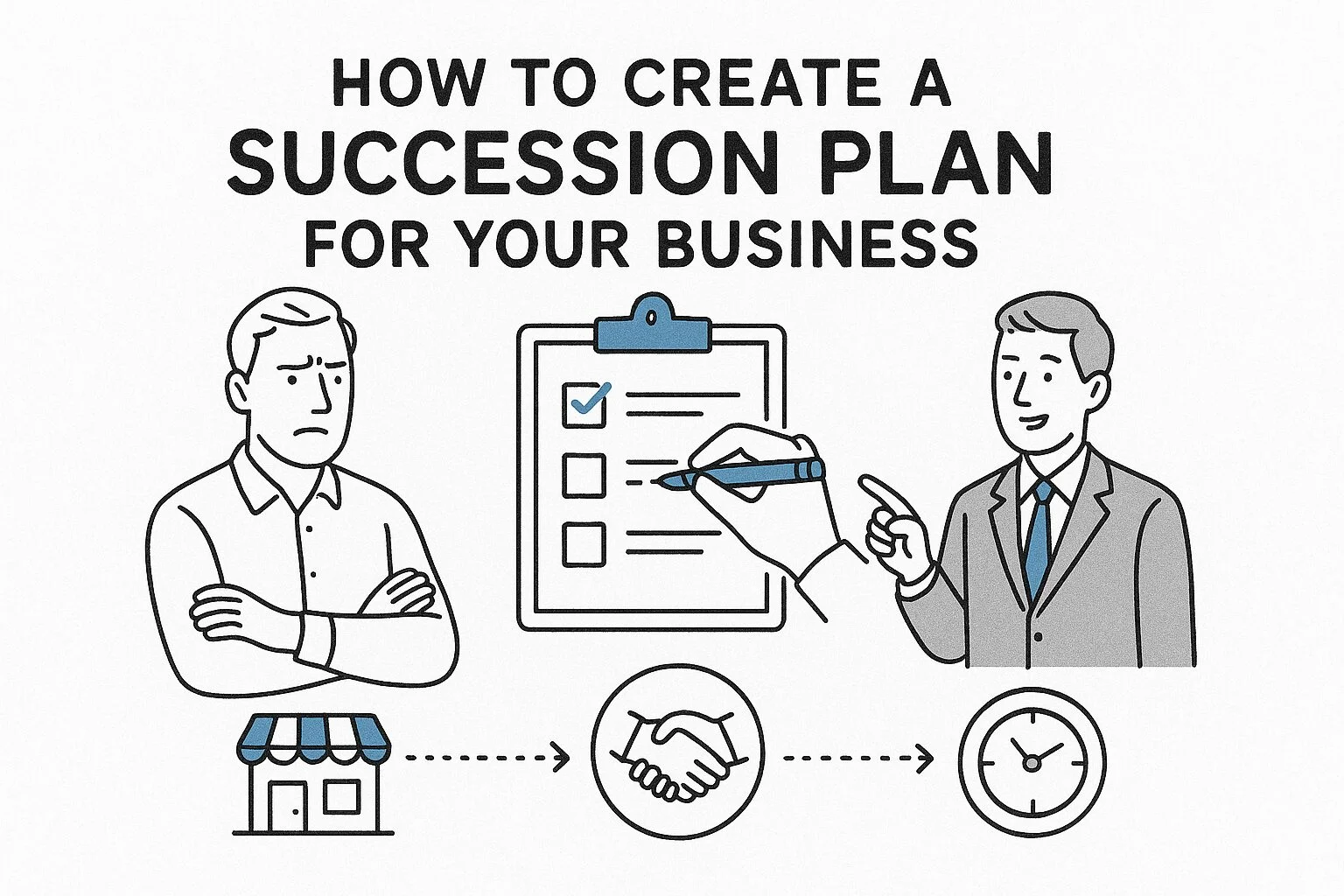
How to Create a Dynamic Succession Plan for Your Business
Most business owners know they need a plan for what happens after them, yet succession planning business decisions keep getting pushed back year after year. You’re busy running the place today, and picking a successor, valuing the business, and sorting out tax feels like a problem for future you. The trouble is, future you eventually becomes present you, often faster than expected, through illness, an unexpected offer, or simple burnout.
Let’s explore how to build a succession plan that actually works, not just a document that sits in a drawer. You’ll get a practical, step-by-step process for identifying and preparing a successor, structuring the ownership transfer, and timing the handover so the business keeps performing while leadership changes hands.
We’ll walk through the groundwork most owners skip, including business valuation, tax structuring, and family or partner communication, then move into the mechanics of transition timelines and contingency planning. Drawing on decades of hands-on advisory work with Melbourne business owners across trades, franchises, and property, we’ll show you where succession plans usually fail and how to avoid those traps, so your exit strategy protects the value you’ve spent years building.
Why succession planning matters for your business
The real cost of doing nothing
Australian business owners lose more value through poor exits than through bad years of trading. When there’s no plan, a sudden departure forces a fire sale, a rushed handover to an unprepared family member, or worse, a business that simply winds down because nobody knows how to keep it running. The Australian Bureau of Statistics has flagged an ageing cohort of small business owners heading toward retirement, meaning thousands of Melbourne businesses will change hands in the next decade, whether their owners are ready or not.
A business without a succession plan isn’t really an asset, it’s a liability waiting for a trigger event.
It protects people, not just profit
Beyond the balance sheet, succession planning safeguards relationships. Staff who’ve worked for you for years want certainty about their jobs. Clients want to know service won’t drop off the moment you step back. Family members, especially in multi-generational businesses, need clarity to avoid disputes that end up costing more in legal fees and broken relationships than the business is worth.
Consider what’s actually at stake when there’s no roadmap:
- Business value: unplanned exits typically sell for 20 to 30 percent less than planned ones.
- Continuity: staff and clients defect during uncertain transitions.
- Tax exposure: rushed sales miss concessions like the small business CGT concessions.
- Family harmony: unclear succession is a common driver of family business disputes.
Step 1. Clarify your goals and ideal timeline
Decide what you actually want
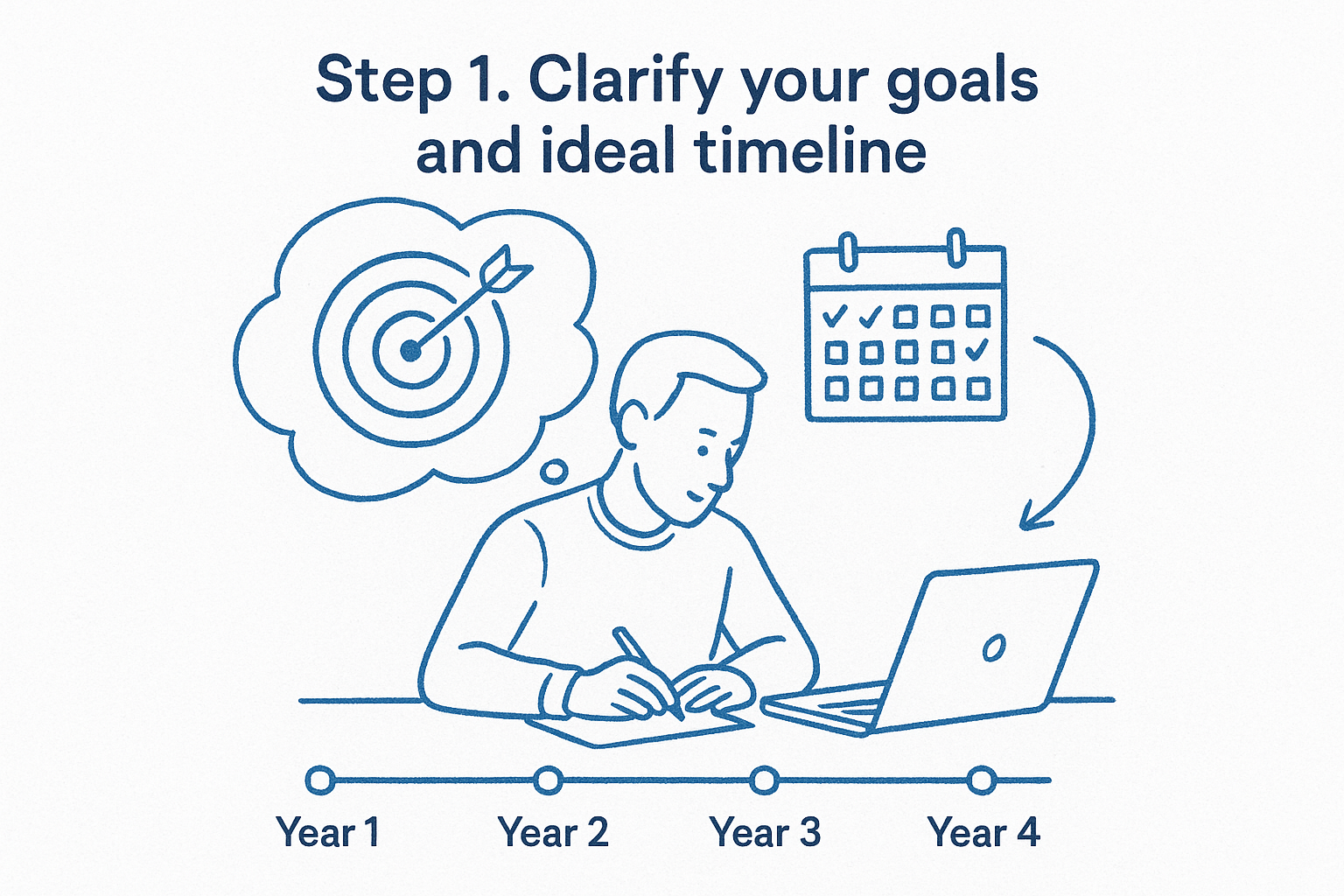
Before you talk to lawyers or successors, sit down and work out what you want from the exit. Do you want to retire fully, step back to a part-time advisory role, or sell and walk away with cash in hand? Geoff Gartly’s clients who skip this step end up with plans built around someone else’s assumptions, usually a family member’s or a business partner’s, rather than their own goals.
Your succession plan should reflect your goals first, not everyone else’s expectations of you.
Set a realistic timeline
Good transitions rarely happen in under three years, and five is more realistic for a smooth handover that lets a successor build credibility with staff and clients. Map out rough milestones now:
- Year 1: define goals, start valuation and financial clean-up
- Year 2 to 3: identify and train successor
- Year 4 to 5: formal transfer of ownership and leadership
Write these dates down. Vague intentions rarely survive a busy trading year.
Step 2. Value your business and strengthen its financials
Get a proper valuation
You can’t plan a handover without knowing what you’re handing over. Get an independent business valuation done early, not the year you plan to sell. A qualified adviser will look at earnings, assets, goodwill and industry multiples, giving you a realistic number rather than the figure you’ve been carrying around in your head. This becomes your baseline for every decision that follows, from successor negotiations to tax structuring.
You can’t negotiate a fair exit if you don’t know what the business is actually worth.
Clean up the numbers before anyone looks
Buyers and successors scrutinise financials hard, so tidy them up now. Focus on:
- Separating personal expenses from business accounts
- Reducing reliance on you personally for key client relationships
- Improving profit margins and cash flow consistency
- Documenting processes so the business runs without you
Strong, clean financials directly lift your sale price and make due diligence far less painful when the time comes.
Step 3. Identify and prepare your successor – very important for Family businesses
Weigh up your options
Your next leader for your business maybe a family member, a business partner, a senior employee, or an outside buyer. Each path carries different tax treatment, timelines and emotional weight, so don’t default to the obvious choice just because it feels easier to raise. Family succession works when the next generation actually wants the business, not when it’s assumed. Employee succession often preserves culture and client relationships better than a sale to a stranger.
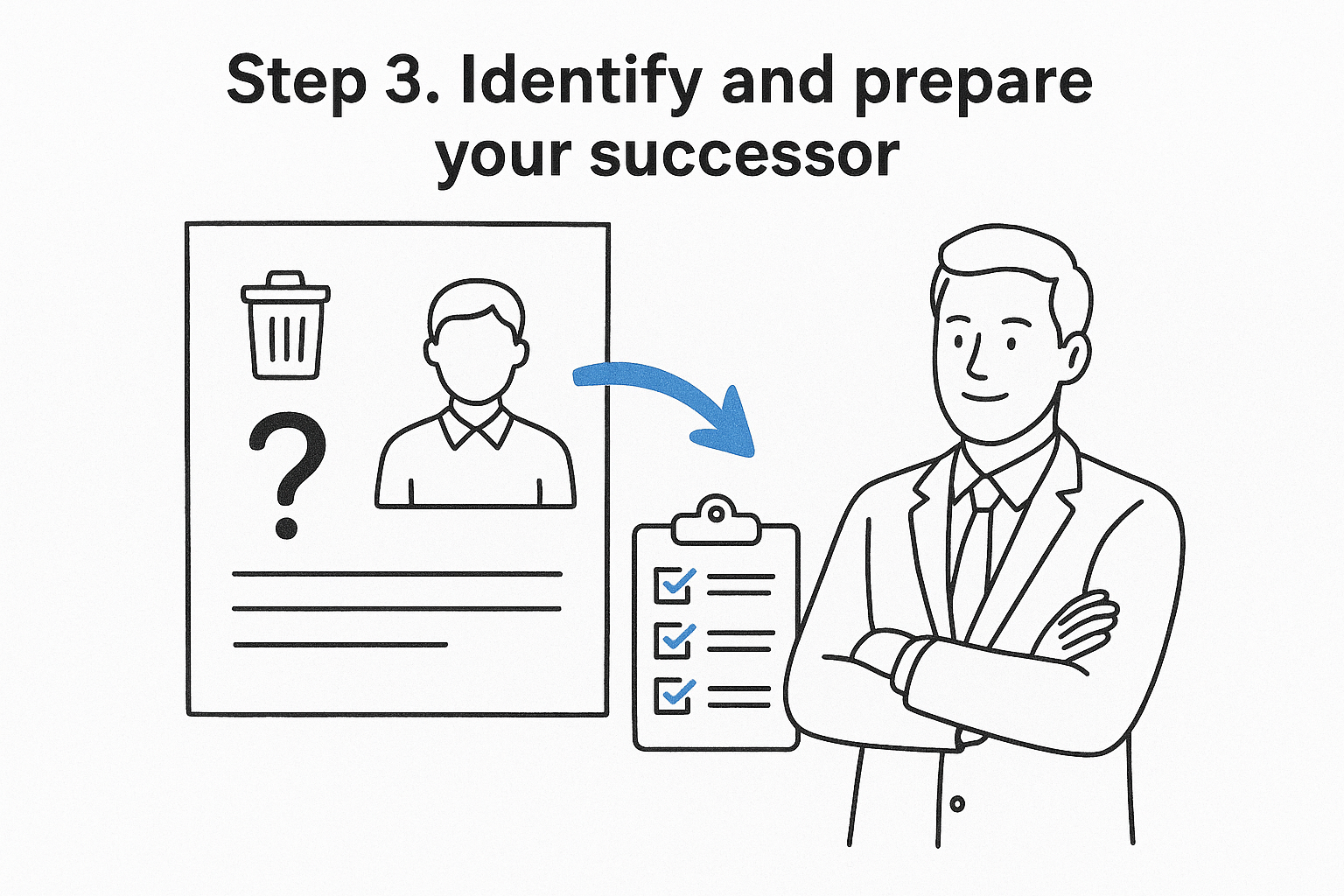
The best successor is whoever can run the business well, not just whoever expects to inherit it.
Build their capability, not just their title
Capability beats bloodline every time, so test your chosen successor before you commit. Give them real authority over decisions, not token responsibilities.
- Hand over supplier and client relationships gradually
- Let them lead financial decisions with oversight
- Involve them in strategy discussions, not just daily operations
- Get honest feedback from staff on their readiness
Running this properly protects business continuity and gives you a genuine successor readiness check before signing anything.
Step 4. Formalise the plan with legal and governance documents
Put it in writing, properly
Good intentions don’t survive probate or a family dispute, so your succession plan needs proper legal documentation. Work with your accountant and a solicitor to draft a buy-sell agreement, updated shareholder or partnership agreement, and a will that actually reflects your business wishes rather than one written a decade ago before the business existed in its current form.
A verbal understanding isn’t a succession plan, it’s a family argument waiting to happen.
Cover the documents that actually matter
Most owners underestimate how many documents a proper transition needs. At minimum, get these reviewed or drafted:
- Buy-sell agreement with clear valuation and trigger events
- Updated company constitution or partnership deed
- Power of attorney and enduring guardianship
- SMSF and estate planning documents aligned with the transfer
- Employment contracts for the incoming successor
Getting this governance framework right now prevents costly disputes and keeps the transition legally watertight later.
Step 5. Review, test and update your plan regularly
Treat it as a living document
A succession plan drafted years ago rarely fits today’s business. Things change like Revenue , successors mature or lose interest, tax law shifts, and family circumstances evolve. Take the opportunity to schedule a formal review every 12 months! Not just when something forces the issue. Many of our clients treat this review like a board meeting, checking the plan against current valuations, successor readiness and any new trigger events.
A succession plan you haven’t reviewed this year is already out of date.
Stress-test before you need it
Run a practical test rather than trusting paperwork alone:
- Step away for two weeks and see what breaks
- Ask your successor to run a key client meeting solo
- Check whether staff still follow processes without your input
- Confirm insurance and buy-sell triggers still match current values
These small tests reveal weak spots in your exit strategy long before a real crisis forces the transition on your terms, not theirs.
Getting started on your succession plan
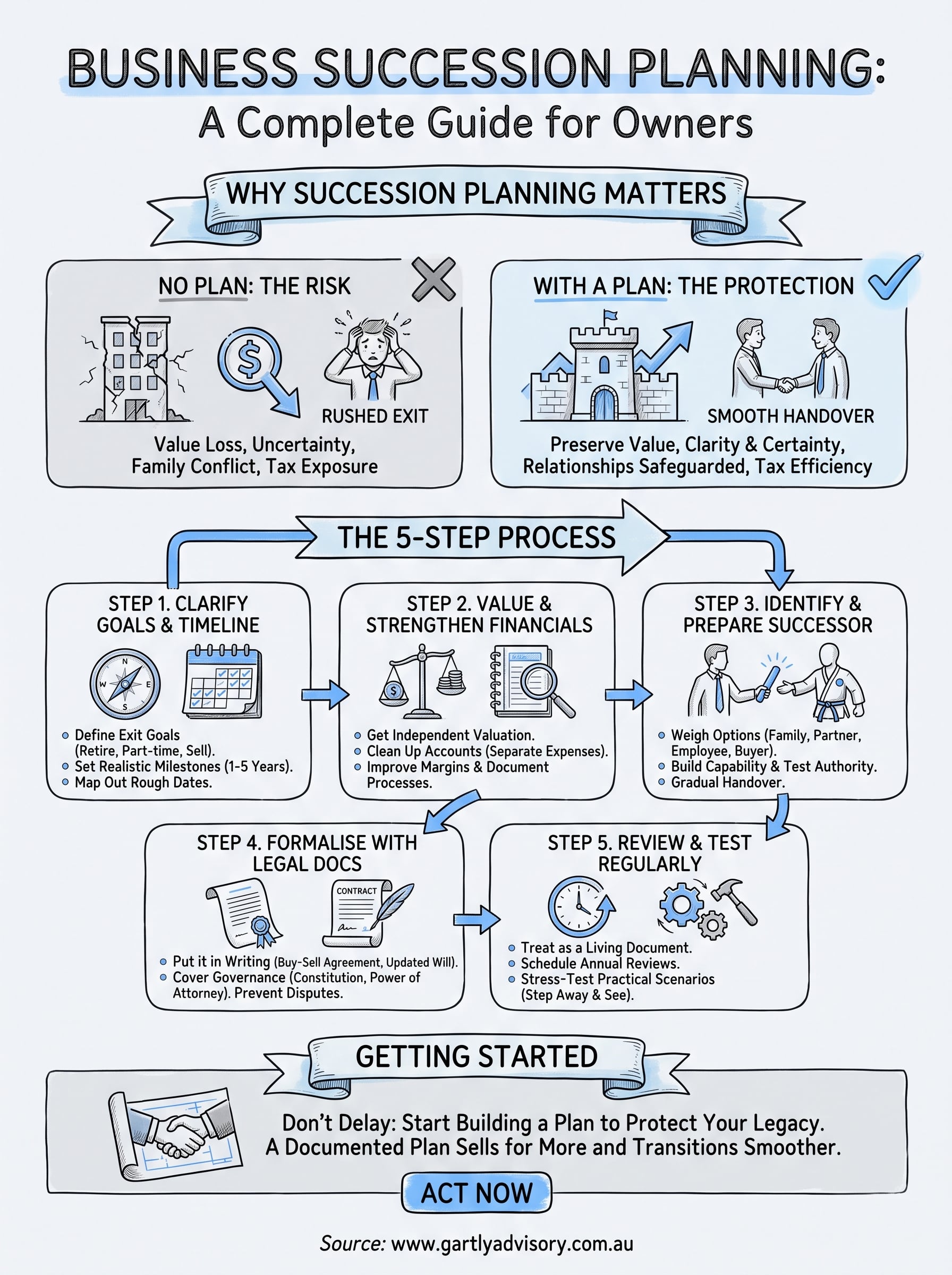
A solid succession plan isn’t built in a weekend, but it doesn’t need to stay a vague intention either. Start with your goals, get a proper valuation, prepare your successor properly, formalise the paperwork, then review it every year like clockwork. Skip any of these steps, and you’re gambling with something you’ve spent decades building.
Delaying won’t make the decisions easier; it just narrows your options when a trigger event forces your hand. Businesses with a documented plan sell for more, transition smoother, and cause far less family friction than those without one. That gap is entirely within your control right now.
Geoff Gartly and the team have guided hundreds of Melbourne business owners through exactly this process, from valuation through to the final handover. If you’re ready to stop putting it off, get in touch with Gartly Advisory and start building a plan that actually protects what you’ve built.