
Business Succession Planning Melbourne: A Complete Guide for Owners
For decades, you’ve poured your heart and soul into building your Melbourne business. It’s more than just an asset; it’s your life’s work. As you look towards the future, the questions can feel overwhelming: How do you exit without sacrificing the value you’ve created? How do you protect your team and family through the transition, and navigate the complex tax implications?
These are the critical challenges that a comprehensive plan for business succession planning Melbourne owners can solve. It’s about more than just an exit strategy; it’s about securing your financial future and ensuring the business you built continues to thrive long after you’ve stepped away. A well-considered plan provides the roadmap you need to move forward with confidence and peace of mind.
In this complete guide, we provide a clear, step-by-step framework designed to support you on this important journey. Discover how to create a plan that maximises your return, protects your legacy, and provides a smooth, stress-free transition for everyone involved.
Key Takeaways
- Proactive planning is your most important growth strategy, safeguarding your business’s value and preventing potential family disputes or forced sales.
- Follow a proven five-stage framework that removes guesswork and provides a clear, step-by-step path from initial thoughts to a successful handover.
- Understanding the different exit options is the critical first step for any effective business succession planning Melbourne owners undertake to align the outcome with their personal goals.
- Navigating Victoria’s complex tax and legal landscape requires expert guidance to protect your wealth and ensure a smooth, compliant business transfer.
- The right advisor acts as a strategic partner, offering support beyond the numbers to help you secure your legacy and financial future.
Why Proactive Succession Planning is Critical for Melbourne Business Owners
As a dedicated Melbourne business owner, your focus is naturally on daily operations, cash flow, and immediate growth. However, the single most important strategic plan you can develop is for your eventual exit. Far from being a sign of winding down, proactive succession planning is a powerful tool for growth. It forces you to build a resilient, efficient, and valuable business that can thrive independently of you, ultimately securing your financial future and protecting the legacy you’ve worked so hard to create.
To explore this concept further, the following workshop provides valuable insights into building a legacy beyond your ownership:
Thinking about your exit 3-5 years in advance provides the crucial time needed to maximise your business’s value. A well-structured plan goes beyond a basic understanding of What is Succession Planning?; it actively prepares your business for a smooth transition. In Melbourne’s competitive and dynamic market, a business with a clear succession strategy is significantly more attractive to potential buyers, family successors, or management teams. It demonstrates stability, foresight, and reduced risk-key factors that command a premium valuation.
The Dangers of a Last-Minute Exit
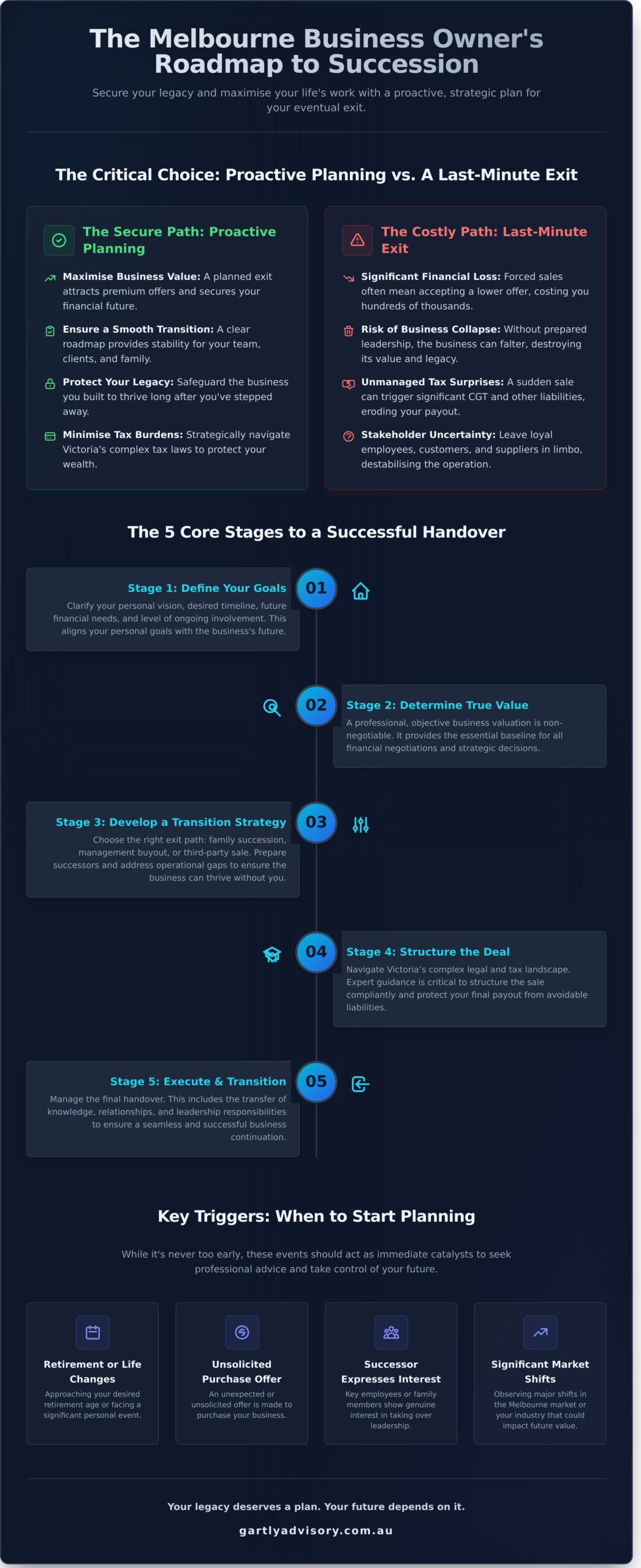
Failing to plan is planning to fail, and nowhere is this truer than in a business exit. A rushed or forced sale almost always leads to painful consequences that can be easily avoided with expert guidance. The primary risks include:
- Leaving significant money on the table: A forced sale often means accepting a lower offer, potentially costing you hundreds of thousands of dollars in lost value.
- Risk of business collapse: Without a prepared leadership team, the business you built can quickly falter, damaging its legacy and value.
- Unmanaged tax burdens: A sudden sale can trigger significant Capital Gains Tax (CGT) and other liabilities, eroding your final payout.
- Creating uncertainty: Your loyal employees, customers, and suppliers are left in limbo, which can destabilise the entire operation.
Key Triggers: When to Start Planning Your Succession
While it’s never too early to start, certain events should act as immediate catalysts for seeking professional advice on business succession planning Melbourne. Being proactive when these triggers appear allows you to remain in control of the process. Key moments to begin the conversation include:
- Approaching your desired retirement age or facing significant personal life changes.
- Receiving an unexpected or unsolicited offer to purchase your business.
- Key employees or family members expressing a genuine interest in taking over leadership roles.
- Observing significant shifts in the Melbourne market or your specific industry that could impact future value.
The 5 Core Stages of a Successful Business Succession Plan
A successful handover doesn’t happen by chance; it’s the result of a deliberate, structured process. At Gartly Advisory, we provide a proven framework to guide you from initial thoughts to a seamless transition. This methodical approach removes guesswork, ensures all critical aspects are covered, and builds a business that is ‘exit-ready’ at all times. Each stage builds upon the last, creating the comprehensive and robust strategy you need for effective business succession planning in Melbourne.
Stage 1: Defining Your Personal and Business Goals
The journey begins with you. What does a successful exit look like on your terms? We partner with you to clarify your desired timeline, future financial needs, and level of ongoing involvement, if any. Aligning your personal vision with a realistic future for the business is the essential first step, providing a clear destination for the entire planning process.
Stage 2: Understanding Your Business’s True Value
A professional business valuation is non-negotiable; it provides the objective baseline for all financial negotiations. We help you understand the key drivers that increase the value of a Melbourne-based SME, such as recurring revenue streams, strong systems, and a diverse client base. We also identify and provide guidance to mitigate weaknesses that could decrease value, ensuring your financial records are meticulously prepared for due diligence.
Stage 3: Identifying and Preparing Your Successor(s)
Whether your successor is a family member, a key manager, or an external buyer, their readiness is paramount. This stage involves an honest assessment of potential candidates and the development of a clear transition and training plan. Communicating the plan to key stakeholders at the right time is crucial for maintaining morale, client confidence, and operational stability throughout the handover.
Stage 4: Structuring the Financial and Legal Transition
Here, we translate the plan into a binding agreement. This involves outlining the deal structure, including payment terms, financing, and any conditions of sale. We provide expert guidance on creating essential legal documents like Buy-Sell Agreements and help structure the deal to minimise your tax obligations, navigating the complexities of Capital Gains Tax to protect your wealth.
Stage 5: Executing the Handover and Review
A plan is only as good as its execution. This final stage involves implementing the handover, finalising the transfer of ownership, and managing the transition of leadership. As your trusted partner, our support doesn’t end on settlement day. We recommend regular reviews to ensure the plan remains relevant and continues to serve the interests of you and the business long into the future.
Exploring Your Exit Options: Which Path is Right for Your Business?
Choosing how to exit your business is one of the most significant decisions you will ever make. There is no one-size-fits-all solution; the right path depends entirely on your personal, financial, and legacy goals. A successful transition is built on understanding the distinct opportunities and challenges each option presents. As trusted partners in business succession planning in Melbourne, we help owners navigate this complex landscape to find the strategy that best aligns with their vision for the future.
Internal Succession: Passing the Torch to Family or Management
For many SME owners, keeping the business in trusted hands is a priority. An internal succession, either to family members or through a Management Buyout (MBO), offers unique advantages.
- Pros: Preserves your legacy and the company culture you built. It ensures continuity for employees and customers and rewards the loyalty of key team members or family.
- Cons: The potential for family conflict is high if not managed carefully. Successors, particularly management, may also face significant challenges securing the necessary funding to buy you out.
External Sale: Selling to a Third Party
An external sale to a strategic buyer, competitor, or private equity firm is often the most direct route to maximising the financial value of your life’s work.
- Pros: Typically yields the highest financial return and provides a clean break, allowing you to move on to your next chapter without ongoing business responsibilities.
- Cons: The sale process can be lengthy and demanding, involving rigorous due diligence. There is also a risk that a new owner will drastically change the company culture or direction.
Other Strategies: Gradual Sale and Winding Down
Sometimes, a more creative or pragmatic approach is required. A gradual sale using an ‘earn-out’ structure allows you to stay involved for a defined period, helping ensure a smooth transition while tying a portion of the sale price to future performance. This can bridge valuation gaps and maximise your final return. In other circumstances, where a sale isn’t viable, a structured liquidation or asset sale may be the most orderly and financially sound way to close the business, pay off liabilities, and extract remaining value.
Navigating the Financial and Legal Maze in Victoria
Transferring a business is far more than a simple handover. It is a significant financial transaction with complex tax and legal implications specific to Victoria and Australia. Proactive advice is not just beneficial; it’s essential to protect the wealth you’ve worked so hard to build. As your trusted Chartered Accountant and advisor, we provide the expert guidance needed to navigate this maze, ensuring your transition is both seamless and tax-effective. A core component of effective business succession planning in Melbourne is addressing these details from the very beginning.
Maximising Small Business CGT Concessions
One of the most significant opportunities for wealth protection lies within the Small Business Capital Gains Tax (CGT) concessions. The Australian Taxation Office provides four key concessions that can substantially reduce or even eliminate the tax payable on the sale of your business assets. These include:
- The 15-Year Exemption: Potentially eliminate the entire capital gain if you have owned the asset for 15 years and are over 55 and retiring.
- The 50% Active Asset Reduction: Reduce the capital gain by 50% on active business assets.
- The Retirement Exemption: Apply a lifetime CGT exemption up to a certain limit on the sale proceeds.
- The Rollover: Defer the capital gain by purchasing a replacement asset or putting the funds into superannuation.
However, the eligibility criteria are strict. We provide the proactive support to ensure your business is structured correctly long before a sale to maximise your access to these valuable concessions.
Essential Legal Agreements and Structures
Sound financial strategy must be supported by robust legal frameworks. A comprehensive Buy-Sell Agreement is fundamental, acting as a pre-agreed contract that dictates how a transition will occur in specific events like retirement, disability, or death. This provides certainty for all parties and avoids damaging disputes. Furthermore, using structures like Family Trusts can be pivotal for asset protection, tax management, and facilitating a smooth transfer of ownership to the next generation, ensuring your legacy is secure.
Funding the Transition: How the Deal Gets Done
Structuring the financial deal is where many succession plans succeed or fail. We help explore practical funding solutions that work for both the outgoing owner and the successor. Options can include vendor financing, where you, the seller, provide a loan to the buyer to facilitate the purchase. We can also assist successors in preparing the financial documentation needed to secure bank loans or attract investors. Aligning payment structures with the business’s ongoing cash flow is key to ensuring a stable and successful transition. Our expert guidance ensures your business succession planning in Melbourne is built on a solid financial foundation.
How to Choose the Right Succession Planning Partner in Melbourne
Planning your business exit is one of the most significant financial and emotional journeys you will ever undertake. This process requires more than a standard accountant focused on compliance; you need a strategic partner who understands the intricate details of your business, your personal goals, and the local market. The right advisor acts as a project manager for your future, looking beyond the balance sheet to understand family dynamics, potential tax implications, and your ultimate vision for the business’s legacy.
Choosing a local firm for your business succession planning in Melbourne provides a distinct advantage. They possess an innate understanding of the local economic climate, industry benchmarks, and have established relationships with other key Melbourne-based professionals, such as commercial lawyers and valuers. This local expertise ensures a smoother, more integrated process. Above all, experience is non-negotiable. An advisor who has guided countless owners through this complex transition can provide the calm, proactive guidance needed to navigate challenges and seize opportunities.
Key Questions to Ask a Potential Advisor
To ensure you find the right fit, it’s crucial to ask targeted questions that reveal an advisor’s experience, process, and approach. Before engaging a firm, be sure to ask:
- Have you guided businesses like mine through a successful exit? Look for specific, relevant experience in your industry and business size.
- What is your specific process for succession planning? A proven, structured methodology demonstrates expertise and ensures no detail is overlooked.
- How do you coordinate with other professionals like lawyers and financial planners? A successful plan requires a collaborative team effort, and your advisor should be able to lead it.
- What are your fees and how do you structure them? Transparency from the outset is a hallmark of a trustworthy partner.
Why Melbourne SMEs Trust Gartly Advisory
For Melbourne business owners, finding a partner who combines deep expertise with genuine support is key. With over 35 years of experience, Gartly Advisory has a proven track record of guiding local business owners through every stage of their journey. Our proactive, ‘beyond the numbers’ approach means we focus on your long-term goals, not just the immediate figures. We act as your trusted partner, working collaboratively to create a clear, actionable plan that secures your financial future and protects the legacy you’ve worked so hard to build.
Let us support you through this critical process. Schedule a complimentary consultation today to discuss your future and learn how our expert guidance on business succession planning in Melbourne can help you achieve a successful transition.
Secure Your Legacy with a Trusted Partner in Melbourne
As we’ve explored, creating a robust succession plan is one of the most critical steps you can take as a business owner. It’s about more than just an exit; it’s about proactively protecting the value you’ve built and ensuring a smooth transition for your team and family. Successfully navigating the complexities of business succession planning Melbourne business owners face, from valuation to legal compliance, requires a clear, strategic approach.
You don’t have to navigate this journey alone. With over 35 years of specialised experience, the team at Gartly Advisory is here to provide the expert guidance you need. As Chartered Accountants and certified Business Valuebuilder Advisors, we have a proven track record of helping owners secure their futures, a commitment reflected in over 70 5-Star Google Reviews from local business owners just like you.
The future of your business is too important to leave to chance. Let’s start planning your successful exit. Contact us for a complimentary, no-obligation consultation. Let us be your trusted partner on this journey, ensuring your legacy is secure and your transition is seamless.
Frequently Asked Questions About Business Succession Planning
What is the difference between business succession planning and estate planning?
Think of succession planning as the strategic roadmap for your business’s future leadership and ownership, focusing on continuity and a smooth transition while you are still involved. Estate planning, on the other hand, deals with the distribution of all your personal assets, including your business interests, after your death. While they are connected, succession planning is a proactive business strategy, whereas estate planning is about managing your personal legacy and wealth transfer.
How long does the business succession planning process typically take?
A thorough succession plan is a journey, not a single event. For most Melbourne businesses, the process takes between two to five years to develop and implement properly. This timeline allows for comprehensive valuation, identifying and training successors, structuring the transition to be tax-effective, and ensuring the business can thrive without you. Starting early is the single most important factor for a successful outcome, providing the flexibility to adapt to changing circumstances and opportunities.
What is the average cost of developing a business succession plan?
The cost is an investment in securing your business’s future value and your own financial security. In Australia, a foundational plan may start from A$5,000, while more complex plans involving detailed business valuations, legal agreements, and intricate tax advice can range from A$20,000 to A$50,000 or more. At Gartly Advisory, we provide a clear scope of work and a fee proposal after an initial complimentary consultation to ensure there are no surprises.
My business is not profitable right now. Can I still create a succession plan?
Absolutely. In fact, this is often a critical time to plan. A succession plan isn’t just about selling a profitable entity; it’s about creating an orderly transition strategy. This could involve a turnaround plan to build value for a future sale, a management buyout structure, or even a managed wind-down that protects your personal assets. A clear plan provides stability and a forward-looking path for you, your employees, and your family, regardless of current profitability.
How do I start a conversation about succession with my family or key managers?
Starting this conversation requires care. We advise framing it around the long-term security and future of the business, rather than your departure. For family, you might say, “I want to begin planning for the next chapter of our business to ensure it continues to support our family.” For managers, try, “As we look ahead, I want to discuss your long-term career path and potential leadership role here.” A neutral, third-party advisor can help facilitate these crucial discussions.
What are the biggest mistakes business owners make when exiting?
The most common mistake is starting the process too late, which limits options and reduces the final sale value. Other significant pitfalls include having an unrealistic valuation of the business, failing to prepare the next layer of management, and not having a documented plan. Many owners also underestimate the significant tax implications, such as Capital Gains Tax. A key goal of our business succession planning Melbourne service is to help our clients proactively avoid these costly errors.