What Is Negative Gearing? A Plain-English Definition
If you have ever asked a real estate agent, a mate at a barbecue, or Google what is negative gearing, you have probably walked away more confused than when you started. It gets tossed around as though it is a single magic trick that makes property investment profitable, when really it is a specific tax outcome that only works in certain circumstances.
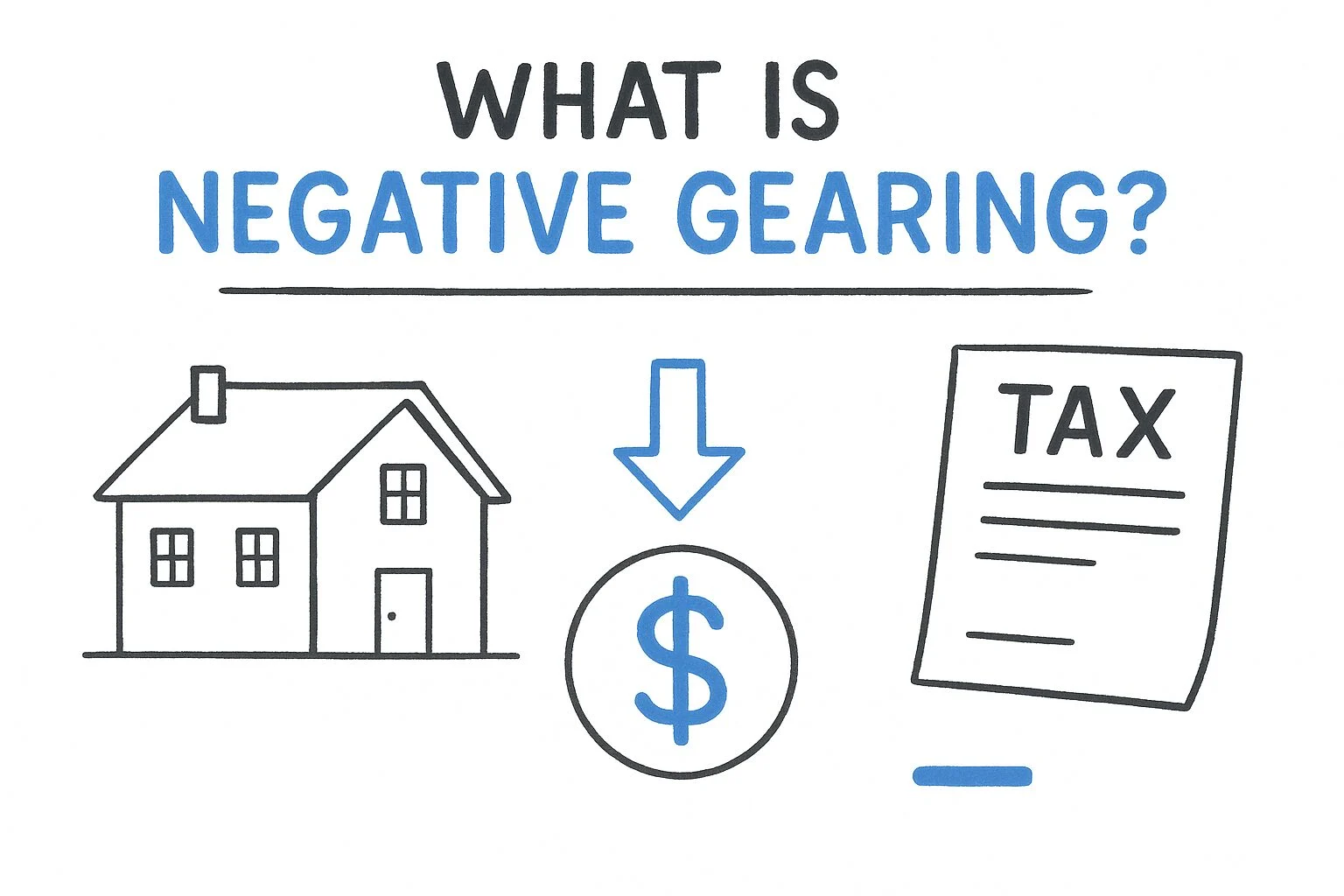
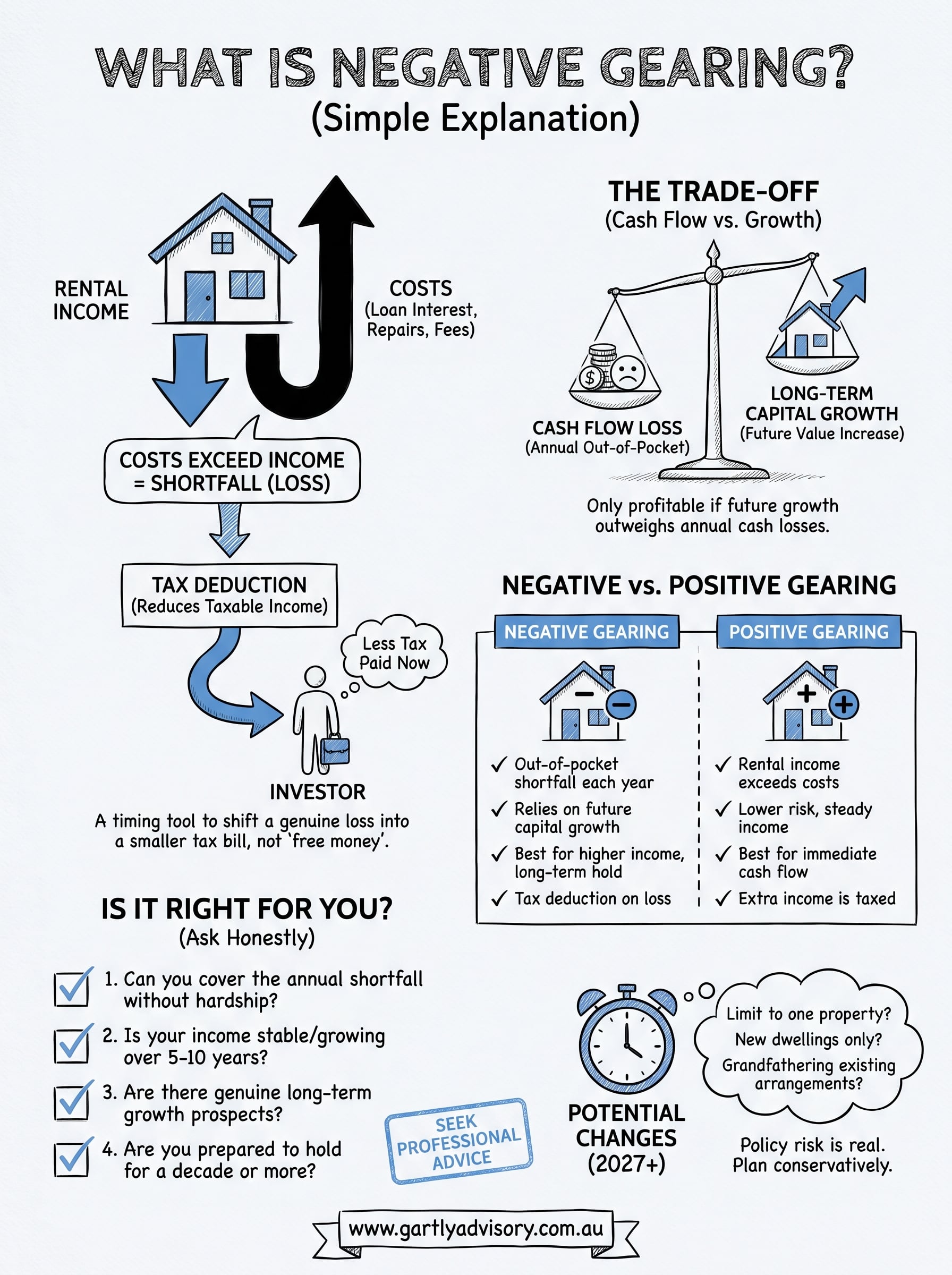
In plain terms, negative gearing happens when the costs of owning an investment property, things like loan interest, repairs, and management fees, exceed the rental income it generates. That shortfall becomes a tax deduction against your other income, which is why so many Australian investors structure their portfolios this way. But it only makes financial sense if the long-term capital growth outweighs the cash you are losing each year.
This article breaks down how negative gearing actually works, what you can and cannot claim, and where it fits alongside positive gearing and other investment strategies. We work with property investors across Melbourne every day at Gartly Advisory, and we will flag the common mistakes we see before you make a decision that affects your tax return for years.
Why negative gearing matters for property investors
Negative gearing sits at the centre of how most Australians build a property portfolio, and understanding it properly can save you from a costly mistake. Roughly one in ten Australian taxpayers own a negatively geared property, according to Australian Taxation Office data, which tells you this isn’t some niche loophole. It’s a mainstream strategy that shapes how investors choose loans, select properties, and plan their tax returns each July.
The tax deduction appeal
The reason negative gearing matters comes down to timing. When your rental property loses money on paper each year, that loss reduces your taxable income, which means you pay less tax on your salary or business earnings. For someone on a high marginal tax rate, this deduction can be substantial. A investor earning $150,000 a year and running a $15,000 annual shortfall on a rental property could see their tax bill drop by several thousand dollars, depending on their bracket.
Negative gearing isn’t free money. It’s a discount on a loss you’re still paying out of your own pocket.
Cash flow versus long-term growth
Here’s where investors get tripped up. The tax deduction only softens the blow of a property that’s already losing money month to month. You’re still writing a cheque to cover the gap between rent and expenses. The strategy only pays off if the property’s value rises enough over time to outweigh those accumulated losses. That’s a bet on capital growth, not a guaranteed outcome, and it depends heavily on location, timing, and how long you can hold the asset.
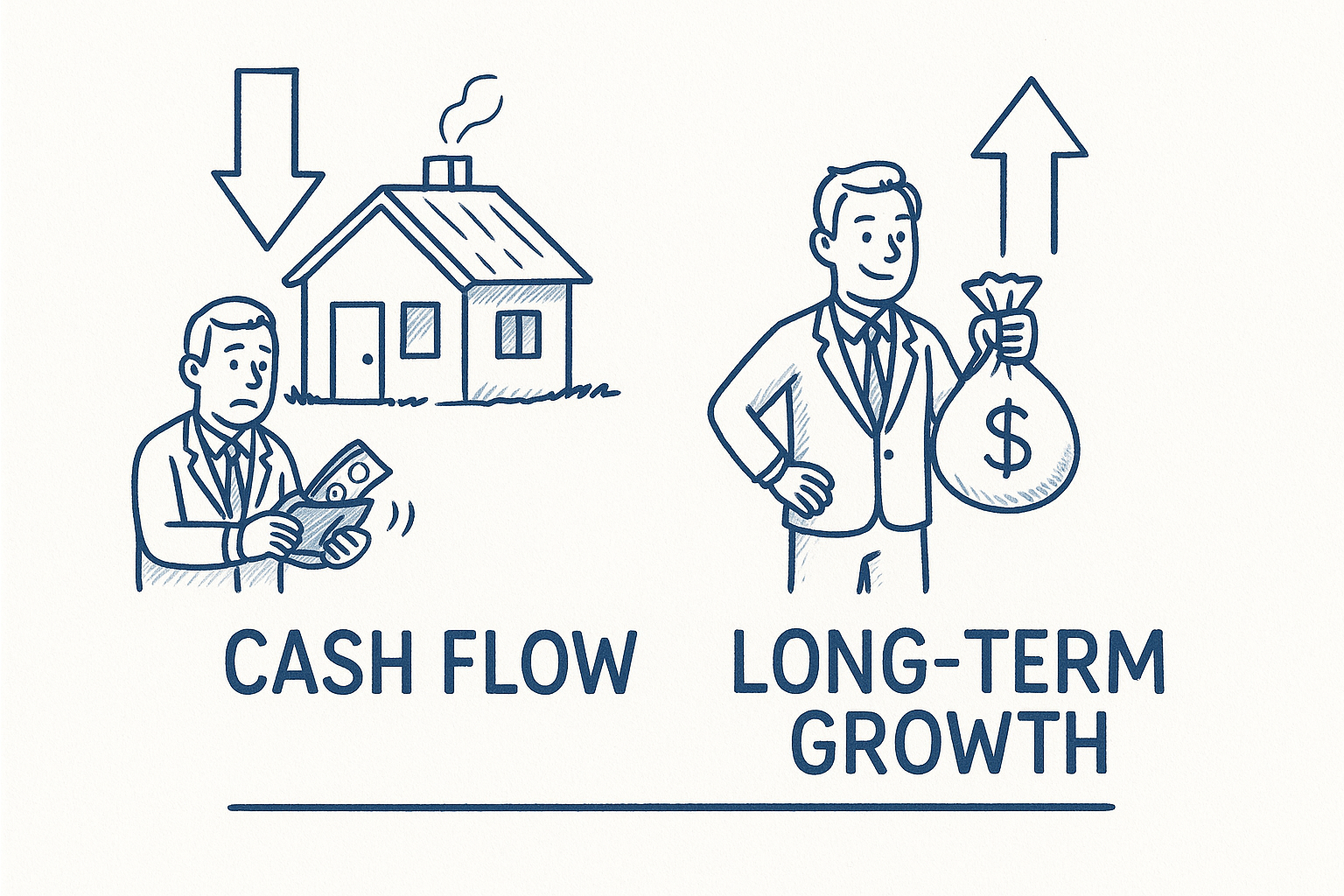
| Factor | Negative gearing | Positive gearing |
|---|---|---|
| Cash flow | Out-of-pocket shortfall each year | Rental income exceeds costs |
| Tax outcome | Deduction reduces taxable income | Extra income is taxed |
| Risk profile | Relies on future capital growth | Lower risk, steady income |
| Best suited to | Higher income earners, long-term hold | Investors wanting immediate cash flow |
For business owners and higher-income professionals we work with at Gartly Advisory, negative gearing often forms one piece of a broader wealth strategy rather than the whole plan. It works best when paired with a realistic view of your borrowing capacity, your income stability, and how long you genuinely intend to hold the property. Get that wrong, and the tax saving becomes small comfort against years of negative cash flow.
How negative gearing works in practice
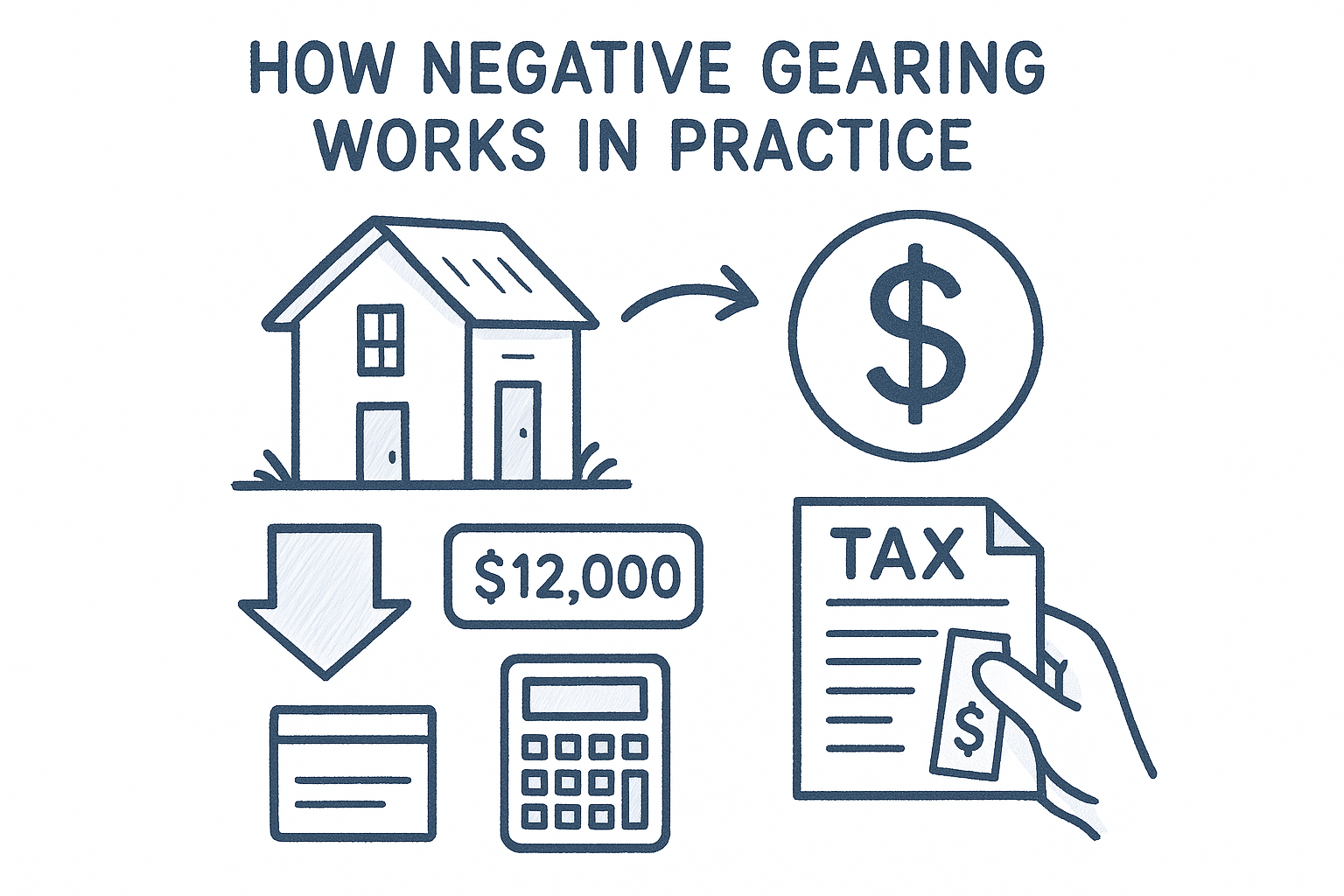
Running the numbers helps more than any theory ever will. Say you buy an investment property for $600,000, borrow $500,000, and collect $22,000 in annual rent. Your loan interest, council rates, insurance, and property management fees add up to $34,000 for the year. That leaves a $12,000 shortfall, which you can claim as a deduction against your other taxable income.
What you can actually claim
Specific costs qualify for the deduction, and the Australian Taxation Office is strict about the difference between repairs and improvements. Here’s what typically counts:
- Loan interest on the investment property
- Property management and letting fees
- Council rates, water rates, and land tax
- Landlord insurance premiums
- Repairs and maintenance, not capital improvements
- Depreciation on eligible fixtures and fittings
The deduction only exists because you’re genuinely out of pocket first, not the other way around.
The cash flow reality
That $12,000 loss doesn’t vanish. You still cover it from your salary or business income throughout the year, then claim it back at tax time via your annual tax return. Depending on your marginal rate, the refund might cover $4,000 to $5,500 of that shortfall, leaving you to fund the rest yourself while waiting for the property’s value to climb. For further detail on what counts as a legitimate rental deduction, the Australian Taxation Office’s rental properties guidance sets out the rules plainly, and it’s worth reading before you commit to a purchase built around this strategy.
How to decide if negative gearing suits you
Negative gearing isn’t a strategy you adopt because it sounds smart at a dinner party. It suits a specific financial position, and getting that wrong can leave you stretched thin for years. Before you sign a contract, work through your income stability, your borrowing capacity, and how long you can realistically hold the asset without needing the cash tied up in it.
Questions worth answering honestly
Start with these before you commit to a negatively geared purchase:
- Can you cover the annual shortfall from your income without hardship, even if interest rates rise?
- Is your income likely to stay stable, or even grow, over the next five to ten years?
- Are you buying in a location with genuine long-term growth prospects, not just current hype?
- Do you have a clear exit timeframe, or are you happy to hold for a decade or more?
- Have you modelled what happens if the property sits vacant for a few months?
If you can’t answer these questions confidently, negative gearing is a risk dressed up as a tax strategy.
Where professional advice pays off
Higher income earners generally get more value from the deduction, simply because their marginal tax rate is higher. But that same group often has more complex finances, trusts, business income, other investments, so the numbers rarely work the same way twice. At Gartly Advisory, we run the actual figures against your full financial picture before you buy, rather than after, because unwinding a poor decision costs far more than planning one properly from the start.
Key changes to negative gearing from 2027
Negative gearing has been a political football for years, and the debate resurfaced hard during the 2024 housing affordability discussions when the federal government asked Treasury to model changes to both negative gearing and the capital gains tax discount. Nothing has passed into law as a blanket reform, but the proposals on the table give you a sense of where policy could shift, and smart investors are already planning around that uncertainty rather than ignoring it.
What’s actually been proposed
The options floated by Treasury and various crossbench parties over recent years include a few recurring themes:
- Limiting negative gearing to one investment property per taxpayer
- Grandfathering existing arrangements while restricting the benefit for new purchases
- Applying the deduction only to newly built dwellings, not established housing
- Reducing the capital gains tax discount alongside any gearing changes
None of these have become legislation as of writing, and government policy on this front has shifted with each election cycle. That’s worth remembering before you make a purchase decision based on rumours rather than confirmed law.
Don’t buy a property today based on a policy that might exist tomorrow.
Why this matters for your next purchase
If reforms do land, grandfathering clauses have historically protected existing investors, which means the property you buy now likely keeps its current tax treatment even if the rules change later for new purchases. That said, policy risk is real, and it’s one more reason to structure your portfolio conservatively rather than betting everything on the deduction holding steady for the next twenty years. We keep a close eye on federal budget announcements at Gartly Advisory precisely because these shifts affect the advice we give clients months before the changes take effect.
Where to from here
Negative gearing is a legitimate strategy, not a shortcut to wealth. It works when the shortfall is manageable, the growth is realistic, and you have run the numbers before signing anything. It fails when investors chase the tax deduction without asking whether the property, or their income, can actually sustain it.
The honest answer to what is negative gearing is this: it is a timing tool that shifts a genuine loss into a smaller tax bill, nothing more. Whether it suits you depends entirely on your income, your borrowing capacity, and how long you can hold the asset through market cycles and policy changes alike.
If you are weighing up a negatively geared purchase, or already own one and want to check it still stacks up under your full financial picture, talk to the team at Gartly Advisory before you make your next move. We would rather run the figures with you now than help you unwind a poor decision later.