5 Best Small Business Bookkeeping Services in Australia
Choosing from the many small business bookkeeping services in Australia is harder than it looks. Every provider promises clean books and on-time lodgements. However, few explain what you actually get, who does the work, or what happens when the ATO sends a letter.
The short answer: the best bookkeeper is the one that fits your software, your industry and your size. Look for Xero or MYOB expertise, reliable payroll and super handling, and accurate BAS preparation every quarter. Fixed monthly pricing and a named contact matter too, because chasing a different person each month wastes your time.
Below, we compare five services against those criteria, covering what each offers, who it suits and where it falls short. We are Gartly Advisory, a Chartered Accounting firm in Ormond, Melbourne, with 25+ years of supporting local owners and 500+ active clients, so we have seen what good bookkeeping looks like. We have also seen the cost of bad bookkeeping. Use this list to shortlist with confidence.
1. Gartly Advisory
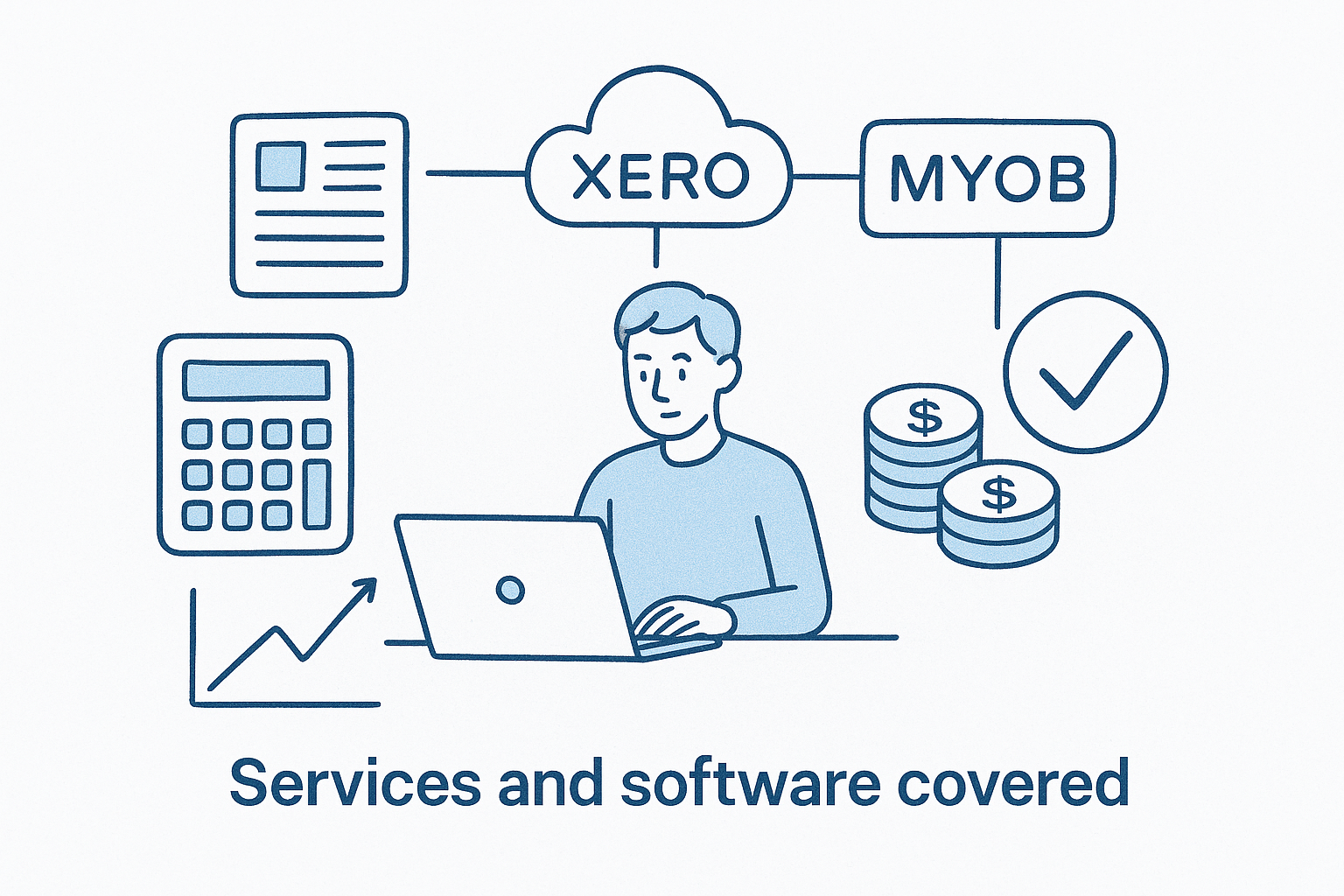
Services and software covered
Gartly Advisory is a Chartered Accounting firm, so your bookkeeping sits alongside tax and advisory work under one roof. That is rare among small business bookkeeping services, where the books and the tax advice often sit with different people. We work in Xero and MYOB and cover:
- Software setup, bank feeds and chart of accounts clean-up
- Monthly or quarterly bookkeeping and reconciliations
- BAS and GST preparation, plus compliance guidance
- Tax planning, outsourced CFO and management reporting
Bookkeeping is most valuable when the person reading your books can also advise you on tax and growth.
Who it suits best
Owners who want more than data entry get the most from us. Franchisees, tradies, property managers and caravan park operators are a natural fit, because we know how their numbers behave. Geoff Gartly has 35+ years as a Chartered Accountant and has run businesses himself, so the advice is commercial, not just technical.

Small businesses planning an exit, buying property or setting up an SMSF also benefit, since the bookkeeping feeds straight into those decisions. If you only want the cheapest transaction processing available, we are probably not your best match.
2. Cloud-based small business bookkeeping services
Services and software covered
These bookkeepers build everything around Xero, MYOB or QuickBooks Online. First, they set up your file, connect bank feeds and add apps for invoicing, expenses and stock. Typical scope:
- Bank feed rules and weekly reconciliations
- Receipt capture with tools like Dext or Hubdoc
- Invoicing, bill payments and BAS-ready GST coding
A cloud bookkeeper is only as good as the software they know well.
Who it suits best
Startups and owners who are comfortable with software get the most from these small business bookkeeping services. You see live numbers on your phone, and your reconciliations stay current instead of piling up before BAS time.
Online retailers, consultants and service businesses with steady transactions suit this option well. The gap is advice, since many specialists stop at the books and leave tax planning and growth strategy to someone else.
3. Virtual small business bookkeeping services
Services and software covered
Virtual providers deliver small business bookkeeping services entirely remotely, usually in Xero, MYOB or QuickBooks Online. You connect bank feeds and upload documents through a portal, and they handle the rest. Most cover:
- Data entry, reconciliations and BAS lodgement support
- Payroll processing and Single Touch Payroll reporting
- Accounts payable and receivable follow-up
Remote bookkeeping works when your paperwork flows digitally and someone senior checks the numbers.
Who it suits best
Regional owners, sole traders and home-based businesses get the most from this model, because location does not matter. It also suits owners who want flexible turnaround, since much of the work happens outside office hours.
However, anyone needing face-to-face advice should look elsewhere. Many online providers do not offer tax planning or industry knowledge, so you may still need an accountant on top.
Choosing the right small business bookkeeping service
Every option above solves a different problem. Cloud specialists keep your software current, virtual providers keep costs low, payroll firms protect your lodgements, and industry firms understand your sector. The pattern is simple: match the provider to your biggest pain point, then check who reviews the work and who answers the phone.
Most owners end up needing more than data entry, though. The best small business bookkeeping services connect your books to tax, cash flow and long-term plans, so numbers lead to decisions instead of sitting in a file. Ask for a named contact and references from similar businesses before you sign.
Ready to talk it through? We pair Chartered Accountant expertise with practical bookkeeping in Xero and MYOB. Talk to Gartly Advisory about your bookkeeping, and ask our small business accounting team for a clear, fixed-fee quote for your business.
Frequently asked questions about small business bookkeeping services
Look for Xero or MYOB expertise, reliable payroll and super handling, and accurate BAS preparation. Fixed monthly pricing and a named contact matter too.
Yes. Virtual providers work entirely remotely. You connect bank feeds and upload documents through a portal, and they handle the rest.
Many bookkeeping specialists stop at the books and leave tax planning to someone else. An accounting firm can keep bookkeeping and tax under one roof.
Most work in Xero, MYOB or QuickBooks Online. They often add apps for invoicing, expenses and receipt capture, such as Dext or Hubdoc.