
Estate Planning Australia: What It Is and Why It Matters
Most business owners we meet have a will. Few have an actual estate plan. That gap is where families end up in disputes, assets get stuck in probate for months, and business succession turns into a mess nobody prepared for. If you have built up property, super, or a company, this distinction matters more than you might think.
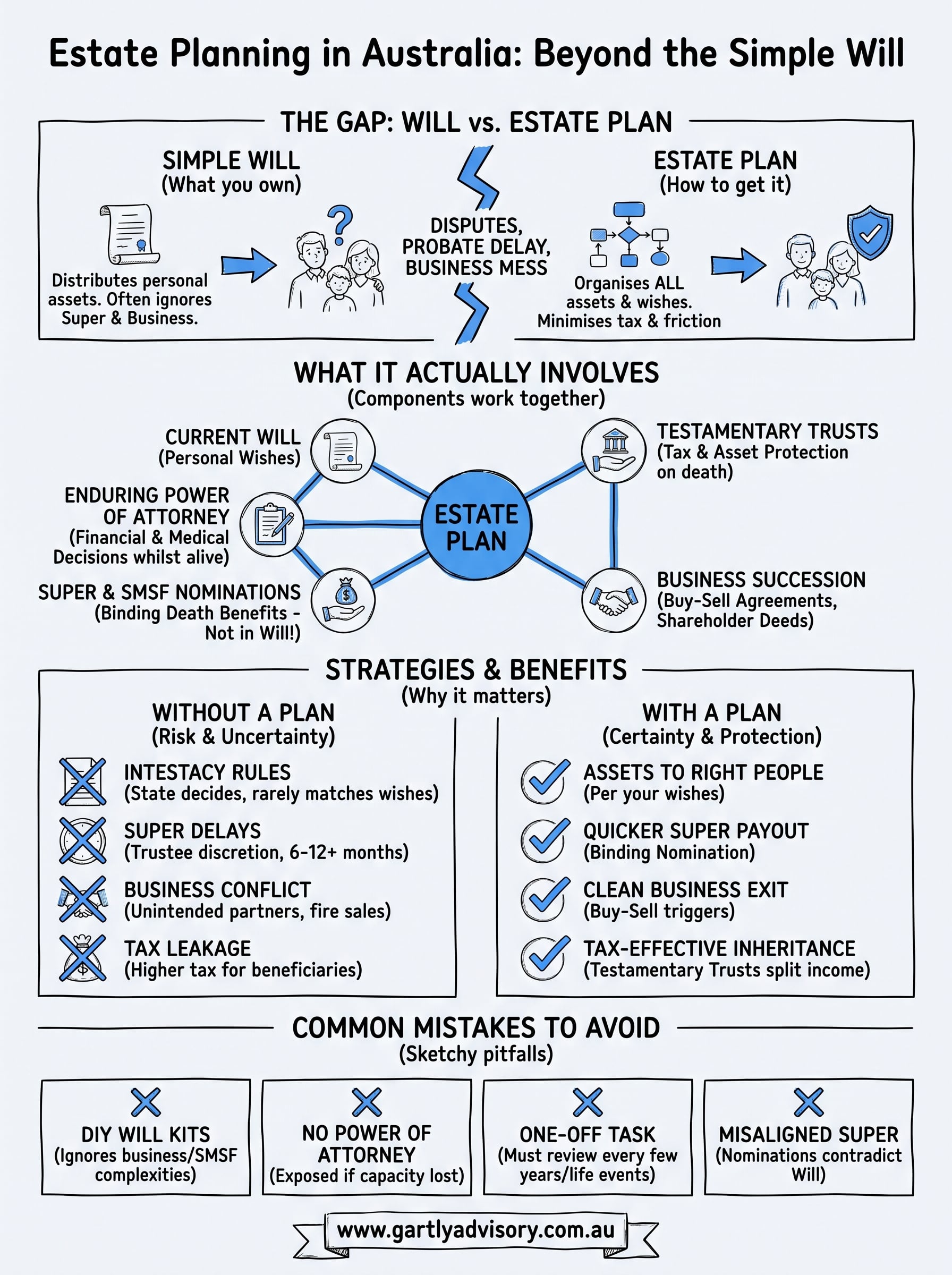
So what is estate planning australia actually involves? It is the process of organising your assets, superannuation, business interests, and personal wishes so they transfer to the right people, with minimal tax and legal friction, when you die or lose capacity. It goes well beyond a simple will, covering power of attorney arrangements, testamentary trusts, and SMSF binding nominations.
In this guide, we walk through the core components of a proper estate plan, the real benefits of estate planning for business owners and families, and practical strategies we use with clients across Melbourne to protect assets and provide certainty for the people who matter most.
Why estate planning matters for Australians
Dying without a proper plan does not mean your assets vanish. It means the rules of intestacy in your state decide who gets what, and those rules rarely match what you actually wanted. In Victoria, that can mean a spouse sharing your estate with children from a previous relationship, or a business partner left negotiating with people who have never run a company. Every year we see families spend tens of thousands of dollars in legal fees fighting over an estate that a few documents could have settled cleanly.
A will tells people what you own. An estate plan tells them how to actually get it, without a court fight.
Superannuation does not follow your will
Most Australians assume their super forms part of their estate automatically. It does not. Your superannuation balance, including any SMSF you control, is held in trust and paid out according to how superannuation death benefits are taxed and distributed, not your will. Without a valid, current nomination, the trustee decides who receives the payout, and that decision can take months while your family waits. Given how much wealth now sits inside super, particularly for business owners running an SMSF, this single gap causes more disputes than almost anything else in an estate.
Business succession needs its own plan
Owning a company, trust, or partnership adds a layer that a basic will was never designed to handle. Testamentary structures, buy-sell agreements, and shareholder deeds all need to work together, or your co-owners could end up in business with your spouse or an executor who has never read a balance sheet, which is worth understanding before you ask what happens to my business when I die. We regularly work alongside business exit planning engagements precisely because succession and estate planning solve the same problem from different angles: what happens to the business when you are no longer running it.
The real cost of getting it wrong
Here is what typically happens with and without a proper plan in place.

| Situation | Without an estate plan | With an estate plan |
|---|---|---|
| Super death benefit | Trustee decides, can take 6-12 months | Paid quickly per binding nomination |
| Business ownership | Co-owners left with unintended partner | Buy-sell agreement triggers cleanly |
| Blended family assets | Intestacy rules apply, disputes common | Assets directed per your wishes |
| Minor beneficiaries | Funds released at 18, no protection | Testamentary trust controls timing |
Government guidance from the Australian Government’s Moneysmart service confirms that a will alone rarely covers superannuation, jointly held property, or trust assets, which is exactly why estate planning in Australia has to be broader than a single document. Getting this right protects your family from delay, tax leakage, and conflict at the worst possible time.
How to create an estate plan in Australia
Building a proper estate plan is not a single afternoon at a solicitor’s office. It is a sequence of decisions that need to work together, starting with a clear picture of what you actually own and who should end up with it. Most people we work with are surprised by how much sits outside their will once you count super, business interests, and jointly held property.
Start with a full asset audit
Getting this estate planning guide into practice starts with listing everything you control, not just what is in your name. That means bank accounts, property, SMSF and super balances, business shareholdings, trust interests, and any life insurance held inside super. Once you have that list, you can work out which assets pass through your will and which need separate arrangements like binding nominations or buy-sell agreements.
Put the right documents in place
A solid plan, as our guide to getting started with an estate plan and will sets out, usually includes the following, built together rather than one at a time:
- A current will that reflects your actual wishes and family situation
- Enduring power of attorney for financial and medical decisions
- Binding death benefit nominations for super and SMSF accounts
- A testamentary trust if you have young children or vulnerable beneficiaries
- Buy-sell agreements or shareholder deeds if you own a business
An estate plan is only as strong as its weakest document, so review all of them together, not one at a time.
Review it every few years
Every estate plan needs revisiting after major life events, marriage, divorce, a new business, or the birth of a grandchild. Superannuation nominations in particular lapse every three years for most funds, so a plan you set up a decade ago may already be void. Working with an accountant who understands both the tax and legal side, alongside your solicitor, keeps everything aligned as your circumstances change. If your situation involves a business or SMSF, our guide to protecting your legacy as a company owner walks through the structure before you sign anything.
Key estate planning strategies to protect your assets
Getting the documents right is only half the job. The other half is choosing estate planning strategies that actually reduce tax, protect vulnerable beneficiaries, and keep assets out of reach of creditors or an ex-partner. Most of these strategies work quietly in the background until the day they matter, which is exactly when you want them already in place.
Use testamentary trusts for tax and protection
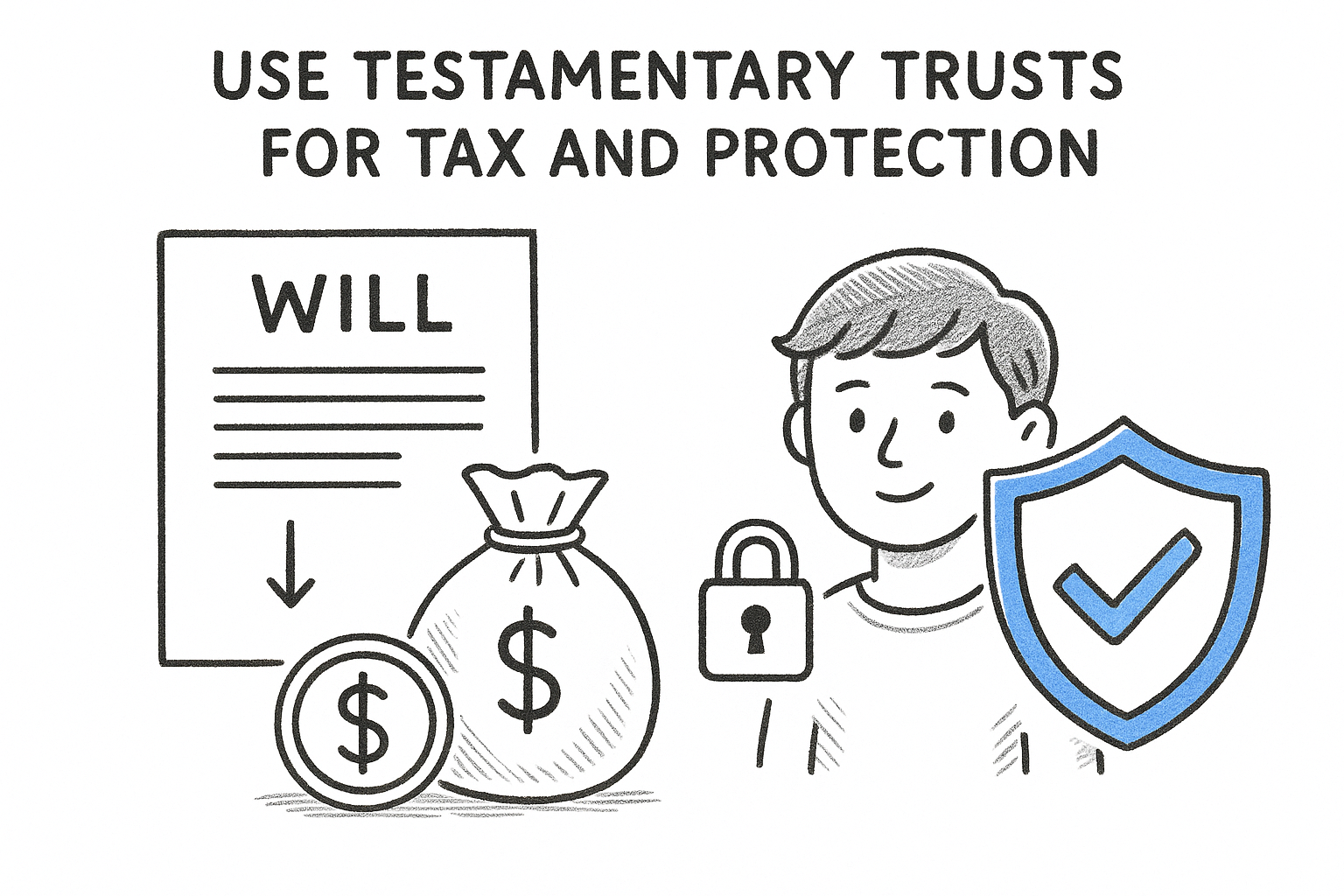
A testamentary trust in Australia is created through your will and only activates on death, letting income and capital be distributed to beneficiaries in a way that can significantly cut tax, particularly for minor children who would otherwise pay adult tax rates on trust income. It also shields inherited assets from a beneficiary’s divorce settlement or business creditors, which a straight cash inheritance never does.
The strategy that saves the most tax and the most conflict is usually the testamentary trust nobody thought they needed.
Align your SMSF and super nominations
Binding nominations should mirror your will’s intent, not contradict it. If your SMSF holds property or business real property, plan for how the fund pays out without forcing a fire sale of an asset the fund cannot easily divide, which is where leveraging the power of an SMSF in your estate plan pays off.
Structure business assets deliberately
Holding company shares personally rather than through a family trust explained in plain English or another holding structure often creates unnecessary tax exposure and probate delays. Review structuring alongside your accountant well before any exit or succession event, not after.
Compare the common protection tools
| Strategy | Main benefit |
|---|---|
| Testamentary trust | Tax splitting, asset protection for beneficiaries |
| Binding SMSF nomination | Fast, certain super payout |
| Buy-sell agreement | Clean business succession |
| Family trust holding shares | Reduced probate exposure |
Used together, these tools form the backbone of practical estate planning strategies australia business owners rely on to keep wealth intact across generations.
Common estate planning mistakes to avoid
Even careful business owners repeat the same errors when they sit down to sort out their affairs, and most of these mistakes cost far more to fix later than they would have to prevent. Working through this checklist before you finalise anything catches the gaps that a rushed estate planning guide or a template will kit almost always misses.
Relying on a DIY will kit
Generic will kits rarely account for business ownership, blended families, or SMSF assets, and a will that ignores those realities can be challenged or simply fail to achieve what you intended, as our complete guide to wills for Australians explains. Templates also skip clauses that protect a testamentary trust from being contested, which is exactly the protection a business owner needs most.
Skipping enduring power of attorney
Focusing only on what happens after death leaves you exposed if you lose capacity while still alive. Without a valid power of attorney, your family may need to apply to a tribunal just to pay your bills or make medical decisions on your behalf, a slow and public process nobody wants during a crisis.
The biggest estate planning mistake is not the missing document, it is assuming there is time to fix it later.
Treating it as a one-off task
Estate plans go stale fast. Common oversights we see include:
- Nominations left unrenewed after the standard three-year lapse
- Wills that still name an ex-spouse or a business partner who has since exited
- No plan for a business bought or sold since the last review
- Trust deeds never checked against current tax rules
Revisiting your plan every few years, and after any major life or business change, is what actually delivers the benefits of estate planning rather than a document that quietly stops matching your circumstances.
Bringing your estate plan together
Getting estate planning right in Australia means treating it as a system, not a single document. Your will, super nominations, power of attorney, and business succession arrangements all need to point in the same direction, otherwise one gap undoes the rest. Handled properly, the payoff is real: faster payouts for your family, less exposure to tax, and none of the disputes that drag out for years and cost far more than any advice fee.
Jumping straight to a template or a rushed solicitor visit skips the part that actually protects your family and your business, the coordination between tax, super, and legal structure. That is the work we do every day with business owners across Melbourne who want certainty rather than guesswork.
Keen to get your affairs properly sorted rather than leaving it to chance? Talk to Gartly Advisory about estate planning advice for Melbourne business owners and we will walk you through what your plan actually needs.