Negative Gearing in Australia: What It Is and How It Works
If you’ve ever heard a property investor say their rental is losing money and somehow that’s a good thing, you’ve bumped into negative gearing australia in the wild. It’s one of the most talked about, and least understood, features of the Australian tax system, and it shapes decisions for everyone from first-time landlords to seasoned property portfolios.
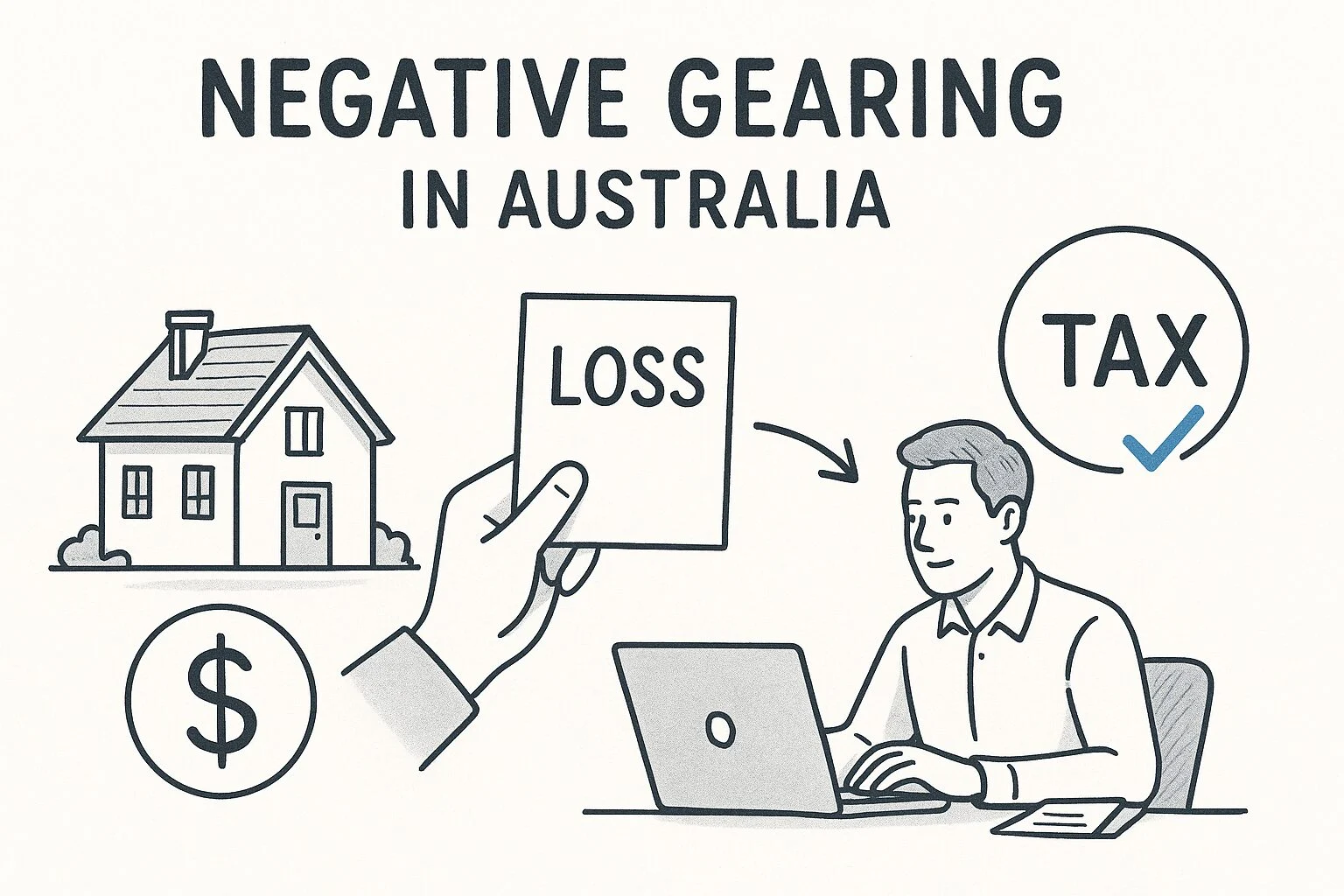
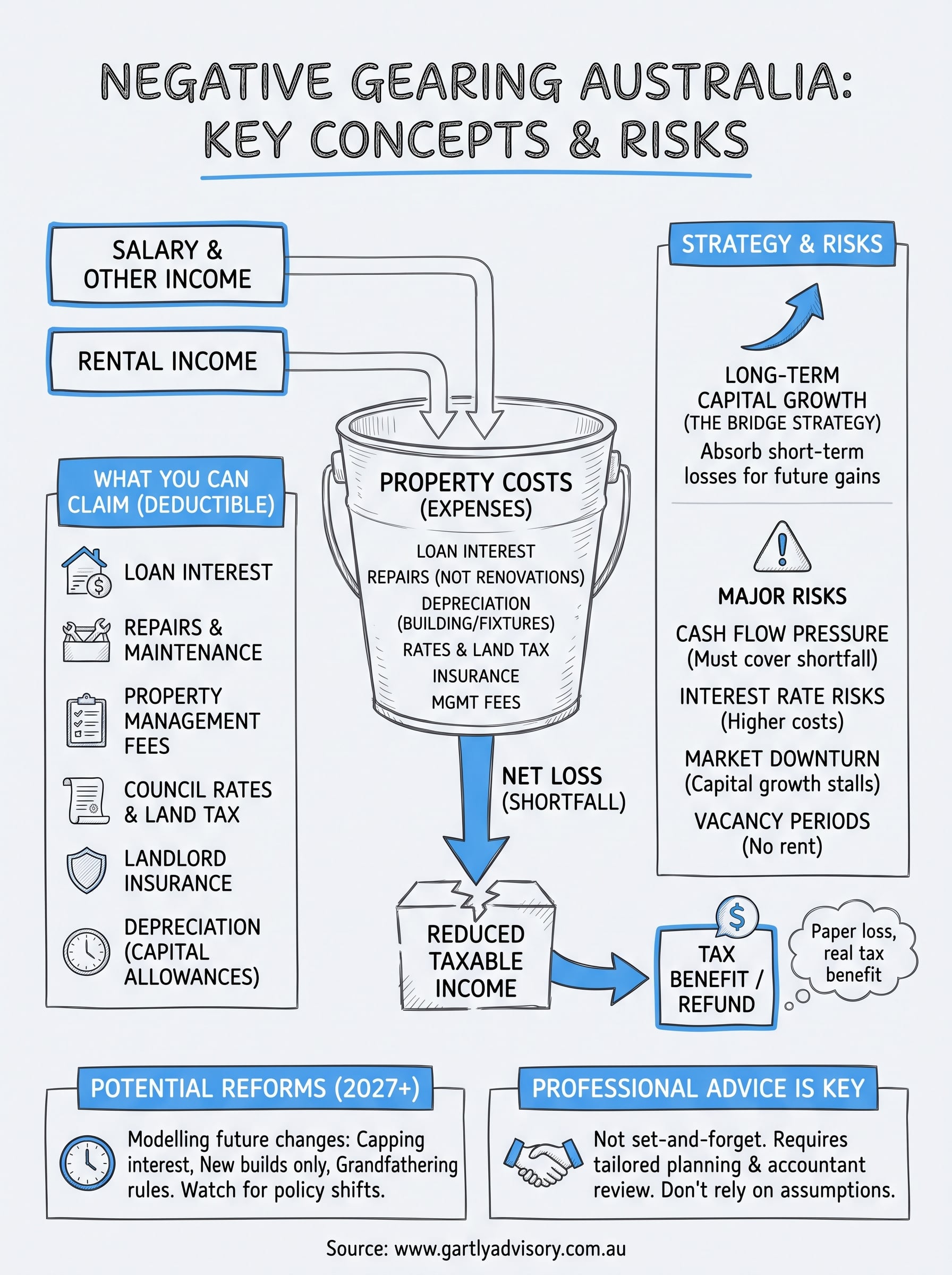
In plain terms, negative gearing happens when the costs of owning an investment property, think loan interest, repairs, and depreciation, exceed the rental income it generates. That shortfall becomes a tax deduction you can offset against your other income, such as your salary, which reduces your overall tax bill. It sounds simple, but the mechanics and the timing matter more than most investors realise.
In this article, we’ll walk through exactly how negative gearing works, what expenses actually qualify, and how it plays into the broader housing market debate. If you’re weighing up an investment property or already own one, understanding this properly is the difference between a smart tax strategy and a costly guess. And if the numbers get complicated, that’s exactly where a good accountant earns their fee.
Why negative gearing matters to property investors
Investors chase negative gearing because it turns a paper loss into a real tax benefit. Rather than watching a shortfall between rent and expenses eat into your cash flow with nothing to show for it, that loss reduces your taxable income, often pulling you into a lower tax bracket. For someone earning a solid salary and holding a mortgaged rental property, this can mean thousands of dollars back at tax time, money that helps cover the very costs that created the loss in the first place.
The appeal beyond the tax return
Beyond the immediate deduction, negative gearing lets investors hold onto property through the early years of ownership, when interest costs are highest and rental yields haven’t caught up. Many Australians see it as a bridge strategy, absorbing short-term losses while banking on long-term capital growth when the property is eventually sold. Property remains one of the few asset classes where Australians can borrow heavily, deduct the interest, and still benefit from tax-free gains on their family home elsewhere in their portfolio.
Negative gearing works because it turns today’s loss into tomorrow’s tax refund, with the real payoff expected down the track through capital growth.
Why it shapes the housing market debate
This is also why negative gearing sits at the centre of Australia’s housing affordability debate. Critics argue it encourages investors to outbid first-home buyers, particularly in established suburbs, because the tax system effectively subsidises losses that owner-occupiers can’t claim. Supporters counter that it boosts rental supply by giving landlords an incentive to hold and maintain investment stock rather than sell up. Whichever side you land on, the policy has real consequences for property prices, rental availability, and how much of your income the tax office ultimately takes.
Understanding this context matters even if you’re not chasing headlines. Whether you’re buying your first rental or reviewing an existing portfolio, knowing why negative gearing exists, and why governments keep revisiting it, helps you make decisions based on strategy rather than assumption.
How negative gearing works in practice
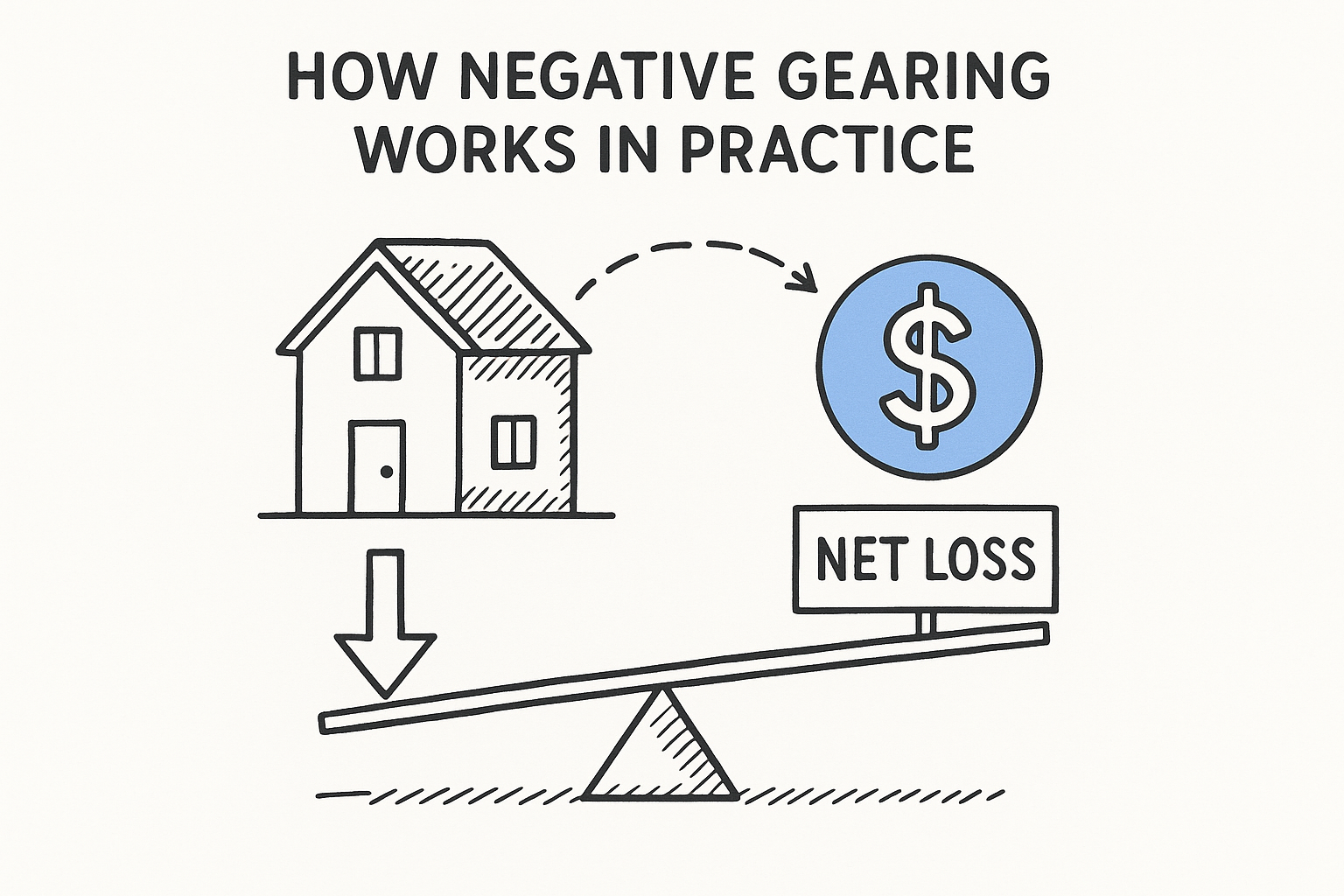
Picture a rental property earning $28,000 a year in rent, while the mortgage interest, agent fees, insurance, and depreciation add up to $34,000. That $6,000 shortfall is the negative gearing loss, and the Australian Taxation Office lets you subtract it from your taxable income for the year. Suddenly your salary, dividends, or other earnings are taxed as though you’d made $6,000 less, which can shift you into a lower bracket depending on your total income.
What actually gets claimed
Deductible costs go well beyond loan interest. You can generally claim property management fees, council rates, land tax, landlord insurance, repairs (not renovations), and depreciation on fixtures and the building itself under the relevant ATO rental property guidance. Capital improvements, like a new kitchen, aren’t an instant write-off; they’re depreciated over years instead.
A simple worked example
| Item | Amount |
|---|---|
| Rental income | $28,000 |
| Loan interest | $22,000 |
| Other deductible costs | $12,000 |
| Net loss (negative gearing) | $6,000 |
The loss itself isn’t the win, the tax deduction it triggers is.
Timing matters here too. Lenders assess these figures annually, so accurate record-keeping throughout the year makes tax time far less stressful and keeps your deductions defensible if the ATO ever asks questions.
Key changes to negative gearing from 2027
Talk of reforming negative gearing resurfaces almost every election cycle, and the current round is louder than most. In 2024, the federal government asked Treasury to model changes to negative gearing and the capital gains tax discount, and that modelling has fed into ongoing policy discussions about a possible shift from 2027. Nothing has passed into law yet, so treat any specific date as a signal to watch rather than a locked-in rule.
What’s on the table
The proposals circulating so far generally focus on limiting the benefit rather than scrapping it outright:
- Capping deductible interest expenses for newly purchased investment properties, while grandfathering existing loans
- Restricting negative gearing to newly built dwellings, to nudge investment towards housing supply
- Trimming the capital gains tax discount alongside any gearing changes, since the two work together in most investment strategies
- Introducing transitional rules so current investors aren’t caught out overnight
Whatever shape reform takes, the safest move is planning for change rather than betting against it.
What this means for investors now
Meanwhile, some states have already tightened land tax surcharges on investment properties, which bites into returns even without federal reform. Reviewing your portfolio structure now, rather than waiting for legislation, puts you ahead of whatever the final rules look like. Given how politically sensitive this area is, pairing your own reading of the news with advice from a chartered accountant who tracks these announcements closely is far more reliable than assuming today’s rules will still apply in a few years.
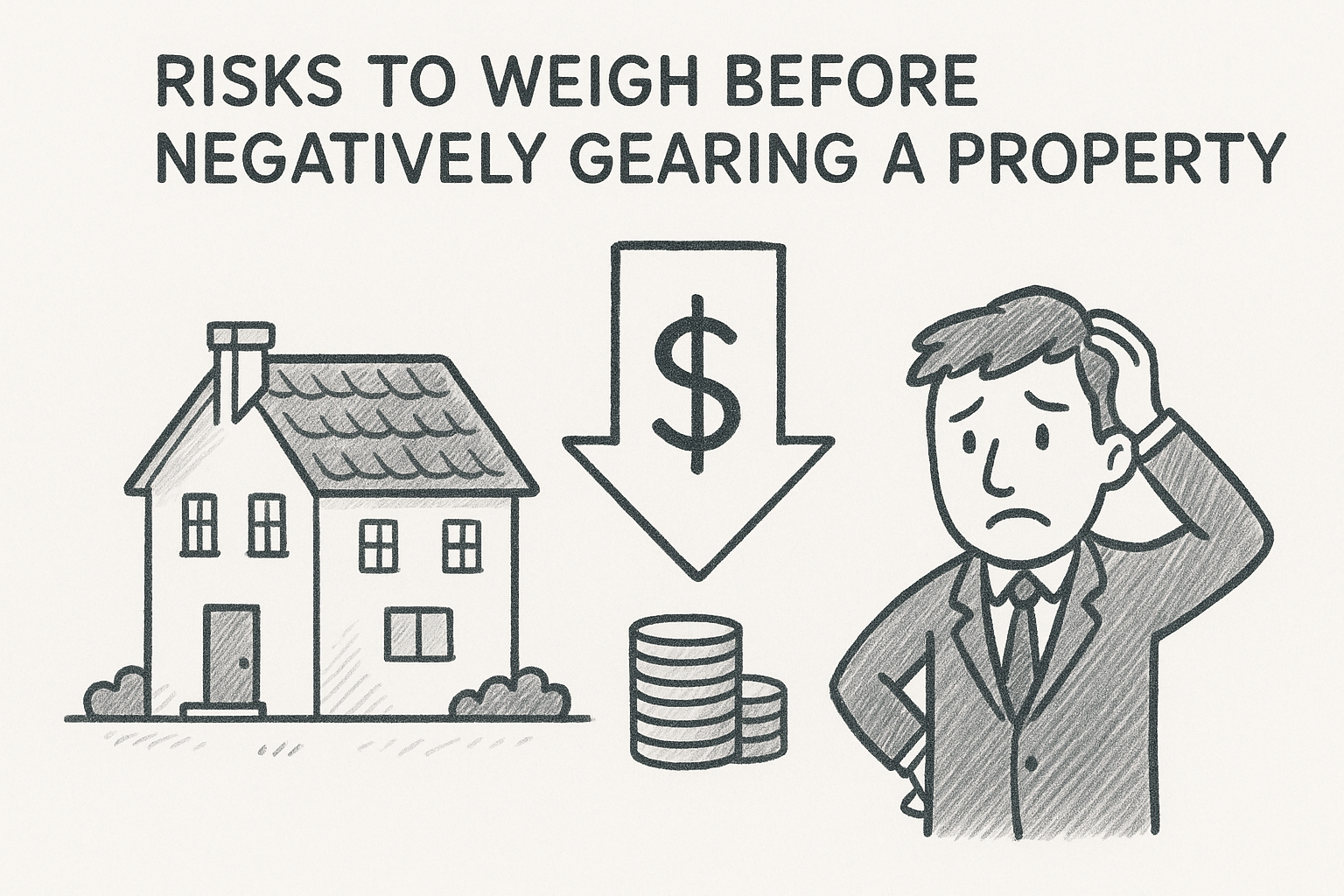
Risks to weigh before negatively gearing a property
Negative gearing only works if you can absorb the shortfall between rent and expenses every single year until the property turns a profit or you sell. That means cash flow pressure is real, not theoretical, especially if interest rates climb or a tenant leaves and the property sits vacant for months.
Interest rate and market exposure
Geared property strategies lean heavily on borrowing, so a rate rise of even one or two percent can turn a manageable loss into a genuine strain on your household budget. Values don’t move in a straight line either; if property prices stall or fall, the capital growth you were banking on to justify years of losses might not show up on your timeline.
A tax deduction only softens the loss, it never guarantees the profit you’re hoping for later.
Practical risks worth checking off
Before committing, run through these questions honestly:
- Can you cover the shortfall for three to five years without financial stress?
- Have you stress-tested the loan at rates two percent higher than today?
- Does the property’s location support genuine rental demand and long-term growth?
- Are you factoring in land tax, insurance, and maintenance blowouts, not just interest?
- Have you modelled what happens to your negative gearing benefit if proposed reforms land differently than expected?
Answering these properly, rather than assuming the tax office will always cushion the fall, is what separates a considered investment from a costly gamble.
Getting the right advice for your situation
Negative gearing isn’t a set-and-forget strategy. It’s a tool that only pays off when your numbers, your borrowing capacity, and your risk appetite line up with your long-term goals, and when you stay ahead of whatever reforms eventually land. Understanding what is negative gearing australia in theory is one thing; applying it to your actual tax position, property choice, and cash flow is another.
That’s where a second set of experienced eyes matters. Every investor’s situation looks different once you factor in income, loan structure, and future plans, so generic advice from forums or podcasts only gets you so far. Working through the detail with a chartered accountant who understands both property and tax law means you’re making decisions based on your figures, not assumptions.
If you want that clarity before your next purchase or tax return, get in touch with Gartly Advisory and talk through your situation with someone who’s done this for over 35 years.