

How to Choose the Right Small Business Accountant: A Complete Guide
As a small business owner, you wear many hats. But when it comes to your finances, the hat of ‘accountant’ can feel particularly heavy. The fear of missing a critical ATO deadline, the worry of hiring someone who just crunches numbers without offering real advice, or the confusion over complex fee structures can be overwhelming. The process of choosing a small business accountant is one of the most crucial decisions you’ll make-it’s not just about compliance, but about finding a true partner for your growth.
This comprehensive guide is designed to remove that uncertainty. We’ll provide a clear, step-by-step framework to help you identify what your business truly needs, vet potential candidates, and confidently select an accountant who goes beyond the numbers. Our goal is to empower you to find a trusted advisor who will provide the strategic support and guidance your business needs to succeed, turning financial management from a source of stress into a powerful asset for your journey.
Key Takeaways
- Understand the key business milestones that signal it’s time to move beyond DIY accounting and engage a professional partner.
- Learn the crucial difference between a bookkeeper and a registered Australian accountant to ensure you hire for the right level of strategic guidance.
- A structured approach is vital when choosing a small business accountant; start by clearly defining your specific needs and budget.
- Discover the essential questions to ask that go beyond fees to reveal an accountant’s expertise and potential as a long-term growth partner.
Why You Need an Accountant: Key Milestones for Your Small Business
In the early days of your business, managing the books yourself can seem like a practical way to save money. However, as your operations grow, so do the financial complexities and the stakes. Moving beyond DIY accounting isn’t an admission of defeat; it’s a strategic step toward sustainable growth. A great accountant is an investment in your future, providing guidance that protects you from risk and uncovers opportunities. Understanding their role at each stage is the first step in the process of choosing a small business accountant who can become a trusted partner on your journey.
To better understand the value an accountant brings at every stage, this video offers a clear overview:
An accountant’s support is crucial across the entire lifecycle of your business, from its first day to its last. Their role evolves to meet your changing needs at three key milestones.
Starting Your Business
Laying a solid financial foundation is critical. A proactive accountant provides essential guidance on the best business structure (sole trader, company, or trust) for your goals and liability. They ensure you are correctly registered for an ABN, GST, and TFN, and can help set up your cloud accounting software like Xero properly from day one, preventing costly mistakes down the line.
Growing Your Business
As your business gains momentum, managing its resources becomes more complex. An accountant transforms from a setup specialist into a strategic advisor. They provide support with cash flow management, create financial forecasts to guide decisions, and offer clarity on payroll obligations as you hire your first employees. This is where advice on scaling, seeking funding, and improving profitability becomes invaluable.
Exiting Your Business
Whether you plan to sell or pass your business on, a well-managed exit requires years of careful planning. An accountant is essential for conducting a thorough business valuation to determine its true worth. They can help you navigate complex Capital Gains Tax (CGT) concessions to maximise your return and provide structural advice for succession planning to ensure a smooth and profitable transition.
Beyond Tax Returns: The Difference Between a Bookkeeper, Accountant, and Advisor
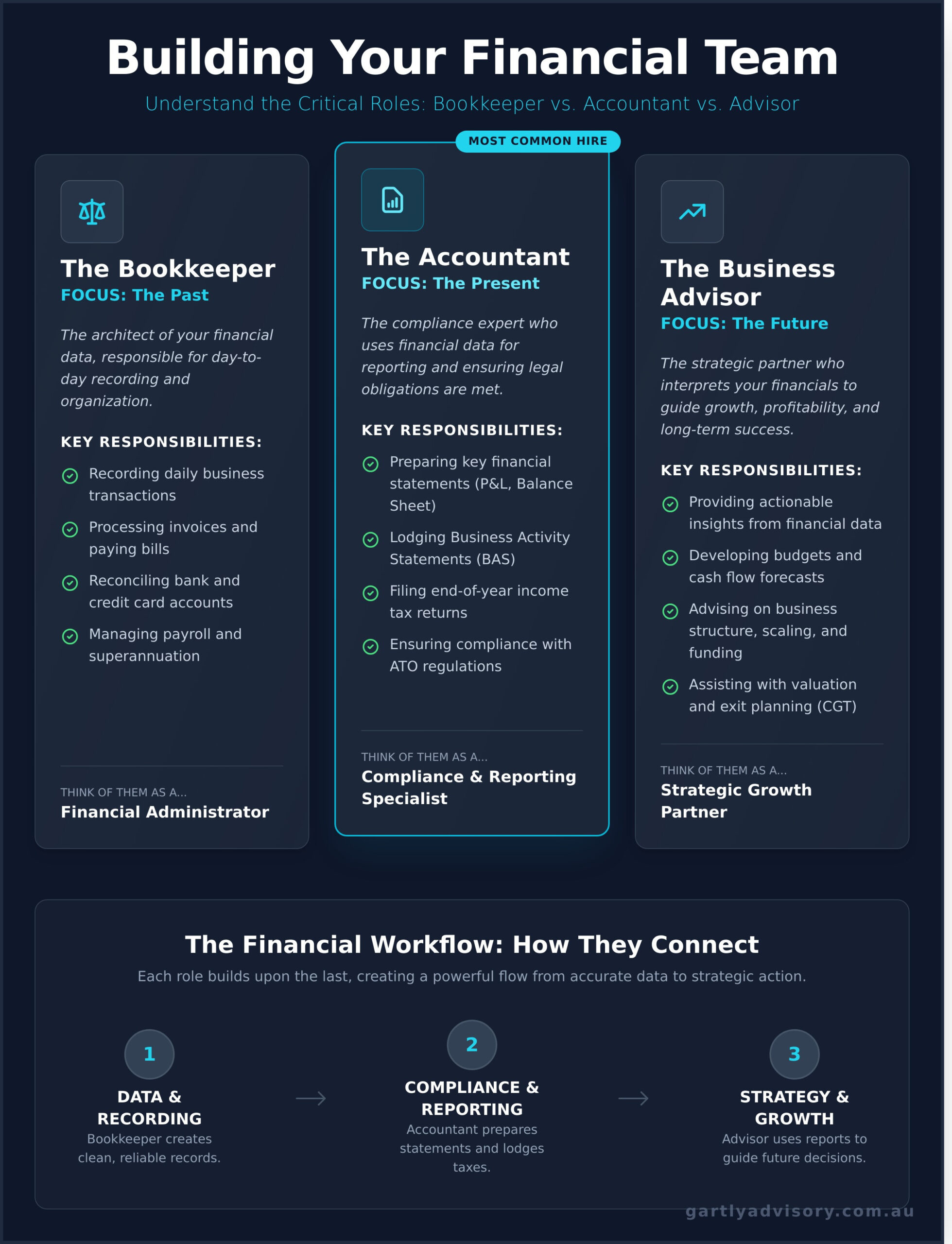
When you start the process of choosing a small business accountant, it’s easy to assume one professional can do it all. However, understanding the distinct roles of a bookkeeper, an accountant, and a business advisor is crucial for building a strong financial foundation. Each plays a unique part in your journey, and hiring for the right tasks ensures your business receives the precise support it needs to thrive. As outlined in resources like the SBA guide to managing finances, assigning the right responsibilities is fundamental to effective financial management.
The Role of a Bookkeeper
A bookkeeper is your financial administrator, responsible for the day-to-day recording of your business transactions. Their focus is on accuracy and organisation. They meticulously manage tasks like processing invoices, paying bills, reconciling bank accounts, and handling payroll. Think of them as the architects of your financial data; they build the clean, reliable records that your accountant will later use for reporting and analysis. Without precise bookkeeping, all other financial reporting becomes unreliable.
The Core Functions of an Accountant
An accountant takes the organised data from your bookkeeper and uses it for higher-level compliance and reporting. Their primary function is to ensure your business meets its legal and financial obligations. This includes preparing key financial statements like the Profit & Loss and Balance Sheet, lodging your Business Activity Statements (BAS), and filing your end-of-year income tax returns. A great accountant provides the peace of mind that you are fully compliant with all ATO regulations.
The Value of a Business Advisor
While an accountant helps you understand where your business has been, a business advisor helps you plan where it’s going. This role is strategic and forward-looking. A true advisor interprets your financial statements to provide actionable insights, helping you with budgeting, cash flow forecasting, and long-term business planning. They are your trusted partner in identifying opportunities for growth, improving profitability, and navigating complex business decisions. We go beyond the numbers to provide this strategic guidance. Learn about our business advisory services.
Decoding Qualifications: What to Look for in an Australian Accountant
When you’re in the process of choosing a small business accountant, it’s easy to assume all professionals offer the same level of expertise. However, the reality is that qualifications, registrations, and experience can vary significantly. Understanding these distinctions is the most effective way to verify an accountant’s competence and protect your business from costly, incorrect advice. Entrusting your finances to a properly accredited professional provides peace of mind and a solid foundation for growth.
Knowing what to look for ensures you partner with a professional who is held to the highest standards of ethics and ongoing education, providing you with reliable guidance you can count on.
Chartered Accountant (CA) or Certified Practising Accountant (CPA)
In Australia, these are the two premier professional accounting designations. Members of Chartered Accountants Australia & New Zealand (CA ANZ) or CPA Australia have completed a relevant degree, rigorous postgraduate studies, and mentored practical experience. They are bound by a strict code of ethics and must undertake continuous professional development to stay current. Seeing CA or CPA credentials is your assurance of working with a highly trained and accountable professional.
Registered Tax Agent
This qualification is non-negotiable. Under Australian law, any person or company that charges a fee to provide tax agent services, including lodging tax returns, must be registered with the Tax Practitioners Board (TPB). This registration requires specific qualifications and relevant experience. You can-and should-verify that your potential accountant is a registered agent by searching their name or business on the official TPB register online. This simple check is a critical step in your due diligence.
Industry Specialisations and Certifications
True value often comes from an accountant who understands the nuances of your specific world. Look for a firm with demonstrated experience in your industry, whether it’s construction, healthcare, retail, or property development. Furthermore, if you have a Self-Managed Super Fund (SMSF), it is crucial to work with an SMSF Specialist Advisor™. This level of detail is vital, and knowing the right questions to ask a potential CPA about their specific certifications in software like Xero or MYOB also demonstrates their technical proficiency and commitment to modern, efficient practices.
The Search Process: A Step-by-Step Guide to Finding Your Ideal Accountant
Finding the right financial partner for your business shouldn’t be left to chance. A structured search process not only saves you valuable time but also provides the clarity needed to make a confident decision. Before you begin your search, take a moment to define your specific needs-from tax compliance to strategic growth advice-and establish a realistic budget. This foundational step makes the entire process of choosing a small business accountant far more effective.
Step 1: Ask for Referrals and Research Online
Your professional network is an excellent starting point. Trusted advisors like your lawyer or banker, as well as fellow business owners in your industry, can provide valuable recommendations based on their direct experience. Alongside these referrals, conduct your own diligent online research.
- Search locally and specifically. Use targeted search terms like ‘small business accountant Melbourne’ or ‘accountant for creative agencies’ to find firms with relevant expertise.
- Read reviews and testimonials. Look for consistent positive feedback on platforms like Google that speaks to the firm’s reliability and proactive support.
- Verify their credentials. Check that the accountants are members of a professional body, such as Chartered Accountants Australia and New Zealand (CA ANZ) or CPA Australia.
Step 2: Review Their Website and Services
A firm’s website is its digital front door. It should give you a clear sense of their expertise, values, and who they serve. Look for a professional site that speaks directly to the challenges and opportunities faced by businesses like yours. Pay close attention to their services page to ensure they offer the specific guidance you need, whether it’s managing a Self-Managed Super Fund (SMSF), tax planning, or strategic business advisory. Case studies and clear team profiles provide further evidence of their experience and approach.
Step 3: Schedule an Initial Consultation
Once you have a shortlist of 3-5 promising firms, it’s time to connect. Most reputable accountants offer a complimentary initial meeting or phone call. This is not just a sales pitch; it is your opportunity to assess their communication style, ask critical questions, and determine if there is a good personality fit. This meeting is a crucial step in choosing a small business accountant who you can trust as a long-term partner on your journey. Use this time to discuss your business goals and listen to how they propose to help you achieve them.
10 Essential Questions to Ask Before You Hire an Accountant
Once you have a shortlist of potential candidates, the interview stage is your opportunity to look beyond their website and qualifications. Asking the right questions is the most critical step in choosing a small business accountant who will become a true partner in your success. The goal is to understand not just what they charge, but how they work, the value they provide, and their vision for your partnership. Listen for proactive, forward-thinking answers that demonstrate a genuine interest in helping your business thrive.
Questions About Fees and Services
Clarity on costs is essential to building a trusting relationship. Avoid future misunderstandings by asking direct questions about their financial arrangements.
- What is your fee structure and what services are included? Whether it’s a fixed monthly fee or an hourly rate, you need to know exactly what you’re paying for to budget effectively and avoid bill shock.
- How do you handle ad-hoc queries? Are quick phone calls and emails charged extra? A supportive partner won’t penalise you for seeking timely advice.
- Which team members will I be working with directly? Understand if you’ll have a dedicated contact or be dealing with multiple people within the firm.
Questions About Experience and Process
An accountant’s technical skills and communication style must align with your business needs. These questions reveal their practical expertise and how they manage client relationships.
- Do you have experience with other businesses in my industry? Industry-specific knowledge can provide invaluable insights into common challenges and opportunities.
- What accounting software do you specialise in? Ensure they are proficient with your preferred platform, such as Xero, MYOB, or QuickBooks.
- How will you communicate with me and how often? Establish clear expectations for regular check-ins, reports, and strategic updates.
- Can you provide references from current small business clients? Hearing from other business owners can offer powerful and reassuring social proof.
Questions About Strategic Value
The right accountant does more than just lodge your tax returns; they provide the guidance to help you grow. This is where you separate a compliance-focused bookkeeper from a strategic advisor.
- How do you help businesses grow beyond just handling compliance and tax? Look for answers that mention cash flow management, business planning, or growth strategy.
- What proactive advice can I expect from you during the year? A great advisor will reach out with opportunities and warnings, not just wait for you to ask.
- How will you help me understand my financial reports so I can make better decisions? They should be able to translate the numbers into a clear story about your business’s health.
The answers to these questions will reveal the true nature of the firm you’re considering. A proactive, client-focused accountant will provide clear, confident responses that go beyond simple compliance. They will demonstrate a genuine desire to become a trusted partner in your business, offering the support and guidance you need to navigate your journey towards success.
Making the Final Decision: Red Flags and Green Lights
You’ve done the research, conducted interviews, and narrowed down your options. The final step in choosing a small business accountant is about looking beyond the qualifications and assessing the potential for a genuine, long-term partnership. An accountant should be more than a number-cruncher; they should be a trusted advisor who provides guidance and support on your business journey. Pay close attention to both their technical answers and the rapport you build-both are critical for a successful relationship.
To help you make a confident choice, here are the key warning signs and positive indicators to look for.
Red Flags to Watch Out For
If you encounter any of these warning signs during your discussions, it’s wise to pause and reconsider. A poor fit now can lead to significant headaches later.
- Vague or confusing fee structures: If they can’t clearly explain how they charge for their services, you risk facing unexpected bills. A professional firm will be transparent about their pricing, whether it’s a fixed fee or an hourly rate.
- A purely reactive approach: An accountant who only focuses on lodging your BAS and end-of-year tax return is only doing half the job. Your business needs proactive advice to plan for the future, not just report on the past.
- Poor communication: Slow response times or unclear answers during the vetting process are often a preview of the service you’ll receive as a client. You need an advisor who is accessible and communicates clearly.
- Lack of interest in your goals: Do they ask about your vision for the business? If a candidate seems uninterested in your long-term goals, they are unlikely to provide the strategic advice needed to help you achieve them.
Green Lights of a Great Accountant
On the other hand, positive indicators suggest you’ve found a supportive and valuable partner. The right accountant will feel like an extension of your team.
- They ask insightful questions: A great accountant goes beyond the surface-level numbers. They show genuine curiosity about your operations, challenges, and opportunities, demonstrating their commitment to understanding your business.
- They explain complex concepts simply: They should be able to demystify tax law and financial reports, empowering you to make better decisions. They act as a translator, not someone who hides behind jargon.
- They are proactive and strategic: The best advisors are always looking ahead. They might suggest ways to improve cash flow, identify potential tax savings, or offer guidance on structuring for growth. This is the essence of getting advice beyond the numbers.
- You feel a sense of trust and confidence: Ultimately, choosing a small business accountant comes down to trust. You should feel comfortable being open with them and confident that their advice is in your best interest.
Ready to find a trusted partner who shows all the right signs? We love the opportunity to support business owners on their journey towards success. Schedule your complimentary consultation with us.
Find Your Financial Partner and Secure Your Business Future
Navigating the process of choosing a small business accountant is a significant investment in your company’s future. The right choice goes beyond tax returns; it’s about securing a strategic advisor who understands your vision and provides guidance at every milestone. By clarifying your needs, asking the right questions, and looking for proven expertise, you can confidently select a professional who will help drive your success.
At Gartly Advisory, we are dedicated to being that trusted partner. As Chartered Accountants with over 35 years of experience and the trust of our clients-reflected in 70+ 5-Star Google Reviews-we specialise in proactive business advisory and growth strategy. We don’t just manage your accounts; we help you seize opportunities and grow your dreams.
If you are ready for guidance that goes beyond the numbers, we invite you to connect with us. Let us be your trusted partner. Schedule a complimentary consultation today.
Frequently Asked Questions About Choosing a Small Business Accountant
How much does a small business accountant cost in Australia?
In Australia, accounting fees vary based on your needs. A simple annual tax return for a sole trader might cost A$400-A$800, while a company return is often A$1,500+. Quarterly BAS lodgements typically range from A$250-A$500 each. For ongoing advisory, bookkeeping, and strategic support, many firms offer monthly packages from A$300 to over A$2,000, depending on the complexity of your business. It is an investment in your financial clarity and growth.
Can I switch accountants if I’m not happy with my current one?
Yes, you can and should switch if your accountant isn’t the right partner for your business. The process is professional and straightforward. Once you have engaged a new accountant, they will send an ‘ethical clearance’ letter to your previous advisor to request your files. This ensures a smooth and complete handover of all necessary historical data. Your new advisor should manage this entire transition for you, making it a seamless experience.
What’s the difference between a tax agent and an accountant?
While the roles overlap, a Registered Tax Agent is specifically licensed by the Tax Practitioners Board to prepare and lodge tax returns. Many accountants are also registered tax agents. However, an accountant often provides broader strategic business advice, including cash flow management, business structuring, and performance analysis. They act as a trusted partner, offering guidance that goes beyond tax compliance to help your business grow and succeed.
Do I still need an accountant if I use software like Xero?
Absolutely. Software like Xero is a brilliant tool for organising your financial data, but it cannot replace the expertise of an accountant. A professional provides the strategic oversight to interpret that data, identify opportunities, ensure tax compliance, and offer forward-looking advice. We work with your software to provide guidance that is ‘beyond the numbers’, turning your financial records into a clear roadmap for success.
How often should I meet with my small business accountant?
At a minimum, you should meet annually for tax planning and to review year-end results. However, for growing businesses, we recommend quarterly meetings to align with BAS cycles. This allows for proactive advice on cash flow, profitability, and strategy. The process of choosing a small business accountant should involve finding a supportive partner who is available for these regular check-ins, ensuring they are actively involved in your journey.
Related Posts