
What Is BAS Lodgement? Due Dates, How It Works & ATO Tips
If you run a business in Australia, understanding what is BAS lodgement isn’t optional, it’s one of your core obligations to the Australian Taxation Office (ATO). A Business Activity Statement (BAS) is how you report and pay several tax obligations, including GST, PAYG withholding, and PAYG instalments, on a regular cycle.
Yet for many business owners, BAS lodgement sits somewhere between confusing and stressful. Due dates shift depending on your reporting period, lodgement methods vary, and the penalties for getting it wrong, or lodging late, can add up fast. The good news is that once you understand how the process works, it becomes far more manageable and predictable.
At Gartly Advisory, we’ve helped 500+ small and medium-sized businesses across Melbourne stay on top of their BAS obligations without the last-minute panic. In this guide, we break down exactly what a BAS is, what it covers, when it’s due, and how to lodge it correctly, along with practical tips to keep the ATO off your back.
Who needs to lodge a BAS
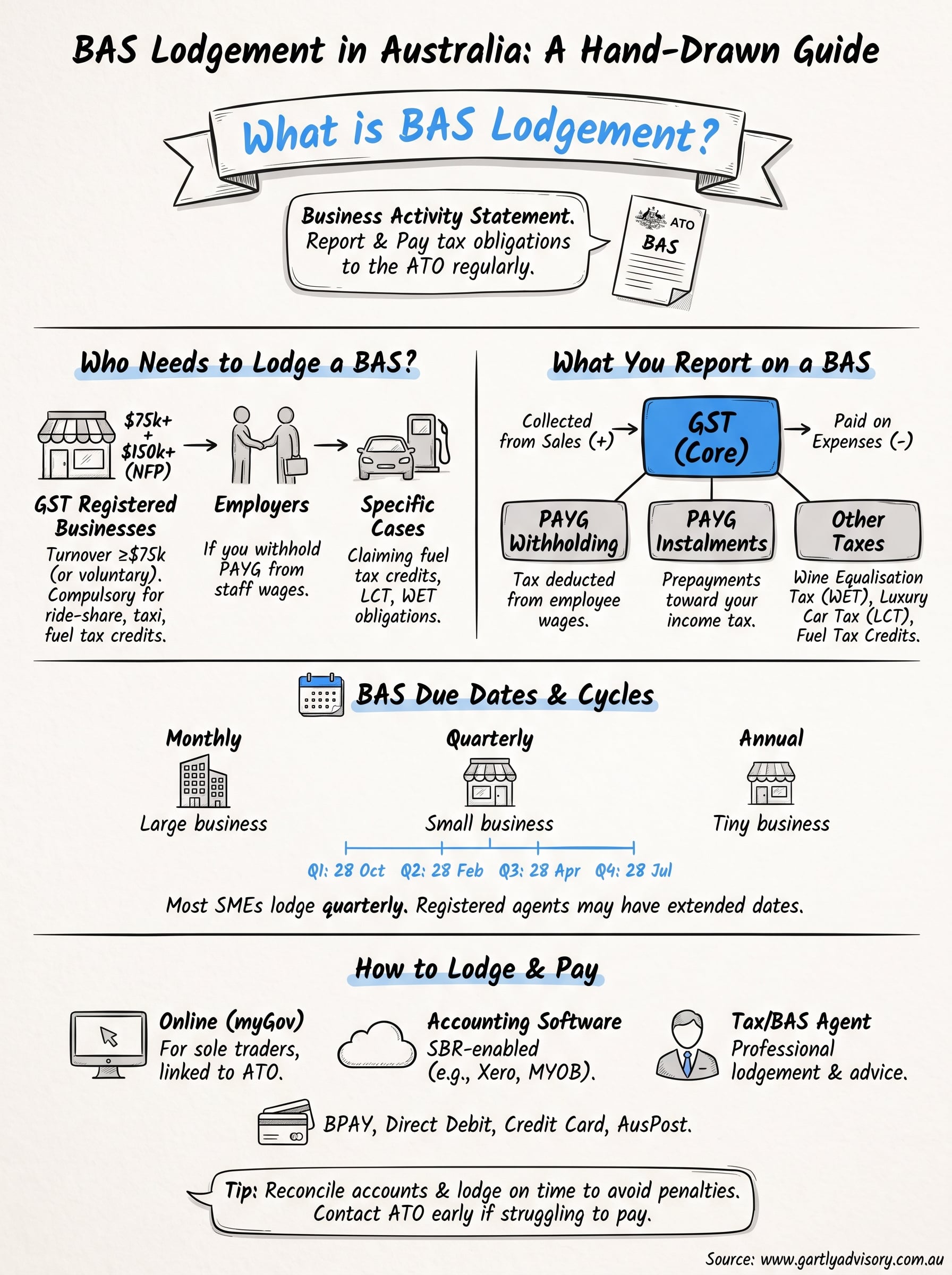
If your business is registered for GST, you need to lodge a BAS. That’s the core rule. The Australian Taxation Office requires every GST-registered entity, whether you operate as a sole trader, company, partnership, or trust, to complete and submit a BAS for each reporting period. Understanding what is BAS lodgement starts with knowing whether your business falls under this obligation in the first place, and the answer comes down to your turnover, your employee arrangements, and a few industry-specific rules.
The GST registration threshold
You must register for GST, and therefore lodge a BAS, when your annual business turnover reaches $75,000 or more (or $150,000 for not-for-profit organisations). Once you cross that mark, registration is compulsory, not a choice, and your BAS obligations begin from that point forward. Waiting until after you’ve already exceeded the threshold can result in backdated GST obligations and interest charges from the ATO.
Some businesses also choose to register for GST voluntarily before hitting that threshold. If you’ve done this, you still need to lodge a BAS on the same cycle as any other registered business. The ATO treats voluntary and mandatory registration identically when it comes to reporting requirements and payment deadlines, so the process looks the same either way.
If your turnover is approaching $75,000, register for GST proactively to avoid being caught with backdated obligations and unexpected penalties.
There are also situations where GST registration is required from day one, regardless of turnover:
- Ride-share and food delivery drivers must register for GST from their first dollar of income
- Taxi drivers face the same requirement before starting any paid driving work
- Businesses claiming fuel tax credits need a BAS even if turnover sits below the standard threshold
Other obligations that trigger a BAS
Even if your turnover sits below $75,000, you may still need to lodge a BAS if you withhold tax from employee wages under PAYG withholding. This obligation applies as soon as you take on staff, and it’s reported directly through your BAS rather than through a separate return to the ATO.
Your BAS also captures PAYG instalments, which are prepayments toward your end-of-year income tax liability. The ATO typically moves you into this system automatically once your taxable income reaches a certain level. If you have obligations like luxury car tax or wine equalisation tax, these flow through the BAS as well rather than requiring separate lodgements, which keeps your reporting in one place.
What you report on a BAS
A BAS is not just a GST return. Part of understanding what is BAS lodgement is recognising that the statement pulls together several different tax obligations into a single form. What you actually report depends on how your business is structured, whether you employ staff, and which taxes apply to your specific situation.
GST, PAYG withholding, and PAYG instalments
GST is the core of most BAS forms. You report the GST you collected from customers during the period, subtract the GST you paid on business expenses (your input tax credits), and either pay the difference to the ATO or receive a credit back. Keeping clean, accurate records throughout each reporting cycle makes this calculation straightforward rather than stressful.
If you employ staff, PAYG withholding is reported on the same form. This is the tax you deduct from employee wages and send to the ATO on their behalf. PAYG instalments, which are prepayments toward your own income tax bill, also appear here if the ATO has placed you into that system.
The ATO calculates your PAYG instalment amount automatically based on your prior-year tax return, but you can vary it if your income has changed significantly.
Other taxes that may appear on your BAS
Some businesses have additional reporting obligations beyond GST and PAYG. If you sell wine, wine equalisation tax (WET) is included on your BAS. Luxury car tax applies if you sell vehicles above the ATO’s cost threshold. Fuel tax credits, claimed by eligible businesses using fuel in certain machinery or vehicles, are also reported here rather than through a separate lodgement.
BAS due dates and reporting cycles
Your reporting cycle determines how often you lodge a BAS and when each one is due. Part of understanding what is BAS lodgement is knowing that the ATO assigns your cycle based on your business size and turnover, so due dates are not the same for every business.
Monthly, quarterly, and annual cycles
Most small businesses lodge quarterly, which means four BAS lodgements per year, one at the end of each quarter. Businesses with a GST turnover of $20 million or more must lodge monthly. A small number of very small businesses with simple affairs can lodge annually, but this only applies in limited circumstances and still requires a PAYG instalment to be paid during the year.
If you have employees, your PAYG withholding reporting frequency may differ from your GST cycle. The ATO sets this separately based on how much you withhold annually, so check your registration details if you are unsure which applies to you.
Key due dates to remember
For quarterly lodgers, the standard due date is 28 days after the end of each quarter. The exception is the December quarter, where the ATO extends the deadline to 28 February to account for the holiday period. Here is a quick reference:
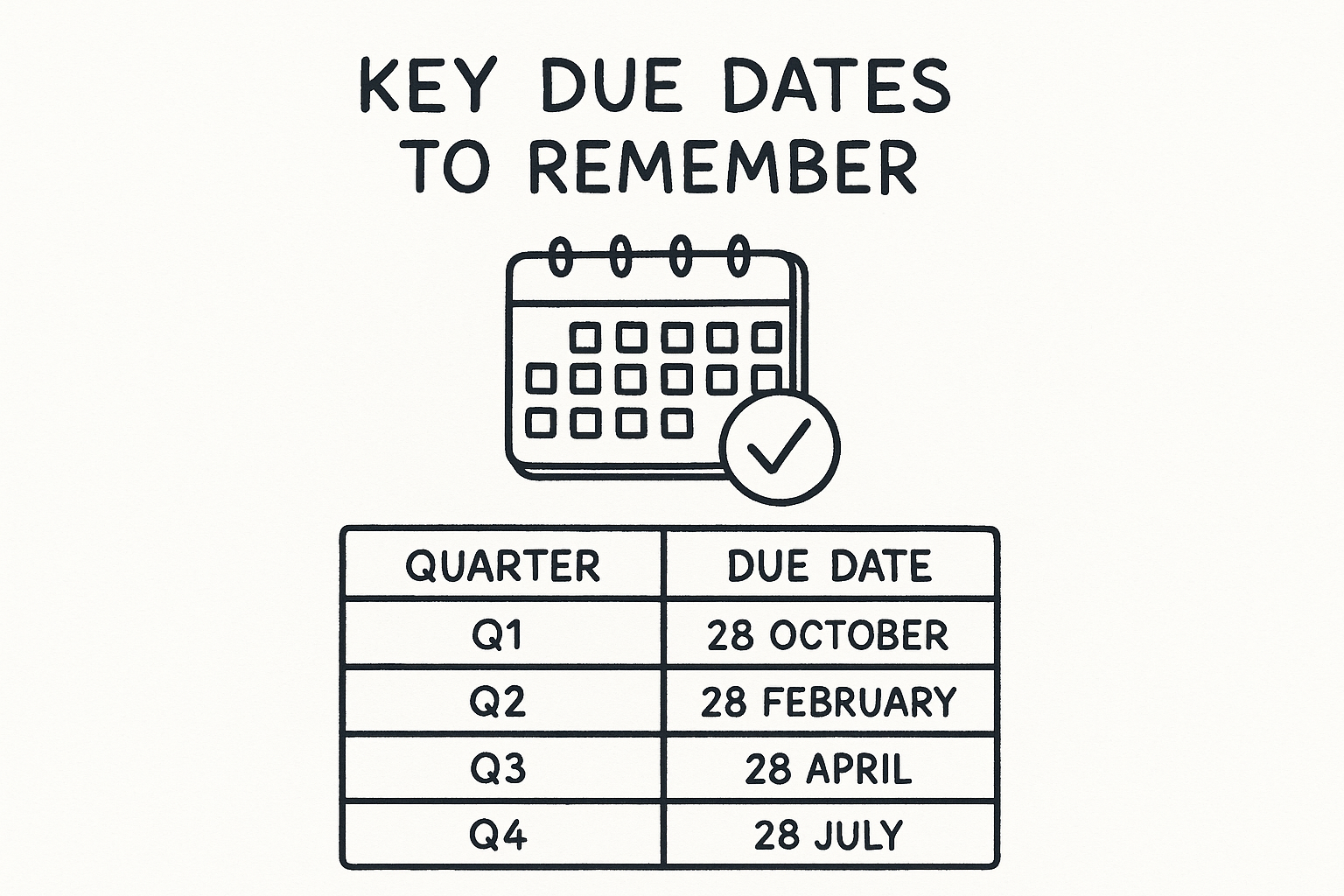
| Quarter | Period | Due Date |
|---|---|---|
| Q1 | 1 July to 30 September | 28 October |
| Q2 | 1 October to 31 December | 28 February |
| Q3 | 1 January to 31 March | 28 April |
| Q4 | 1 April to 30 June | 28 July |
Registering with a registered tax agent often gives you access to an extended lodgement schedule, which can provide additional weeks beyond the standard due dates.
How to lodge and pay your BAS
Once you understand what is BAS lodgement and what your reporting obligations are, the next step is actually getting the BAS submitted and any amount owing paid on time. The ATO offers several lodgement methods, and the right one for your business depends on how you manage your bookkeeping and whether you work with a registered tax agent.
Your lodgement options
You can lodge your BAS in three main ways. Online through myGov (linked to ATO online services) works well for sole traders managing their own affairs. Through accounting software such as Xero or MYOB, which connects directly to the ATO via Standard Business Reporting (SBR), is the most common option for businesses that keep digital records. Your registered tax agent or BAS agent can also lodge on your behalf, which gives you access to extended due dates and a professional review before submission.
Working with a registered BAS agent or accountant reduces the risk of errors and typically gives you more time to lodge each quarter.
Paying what you owe
After you lodge, payment is due on the same date as your lodgement unless the ATO advises otherwise. You can pay through BPAY, direct debit, credit card via the ATO’s online portal, or at Australia Post using a payment slip. If you cannot pay the full amount by the due date, contact the ATO before the deadline rather than after. The ATO can arrange payment plans in many cases, and approaching them proactively generally results in a better outcome than ignoring an overdue balance.
Common BAS mistakes and how to fix them
Even once you understand what is BAS lodgement and how the process works, errors can still slip through. The ATO actively reviews BAS submissions and follows up on discrepancies, so catching mistakes early, either before lodgement or immediately after, saves you time, money, and unnecessary stress.
Reporting incorrect figures
Claiming GST credits on purchases that don’t qualify is one of the most common errors the ATO flags. Not every business expense carries GST, and applying input tax credits to items like bank fees, residential rent, or wages creates an inaccurate return that may trigger a review or audit. Similarly, some businesses misclassify personal expenses as business costs, which inflates their claimed credits and understates the GST owed.
If you discover an error after lodgement, you can correct it on your next BAS if the amount is under $10,000, or lodge a separate amendment through the ATO’s online portal for larger adjustments.
The fix is straightforward: reconcile your accounts against your source documents before you lodge, and check that every GST credit you claim is linked to a legitimate, GST-bearing business expense.
Lodging or paying late
Late lodgement triggers a Failure to Lodge penalty, which the ATO calculates at one penalty unit for every 28 days the BAS remains overdue, up to a maximum of five units. Late payment adds General Interest Charge (GIC) on top of the outstanding amount, compounding daily until you clear the balance.
If you miss a deadline, contact the ATO immediately and request a payment plan rather than waiting for them to come to you. Acting first consistently leads to better outcomes.
Next steps for your next BAS
Now that you understand what is BAS lodgement, the practical step is putting that knowledge to work before your next due date arrives. Start by confirming your reporting cycle with the ATO and marking your due dates in your calendar now, not when the quarter ends. Check that your accounting software captures GST correctly on every transaction, and reconcile your records throughout the quarter rather than scrambling in the final days before lodgement.
If your BAS has been stressful, inconsistent, or left to the last minute, working with an experienced accountant makes a measurable difference. At Gartly Advisory, we help Melbourne business owners stay ahead of their obligations, lodge accurately, and avoid costly penalties. Our team manages the detail so you can focus on running your business with confidence. Talk to the team at Gartly Advisory about keeping your BAS obligations on track from here.