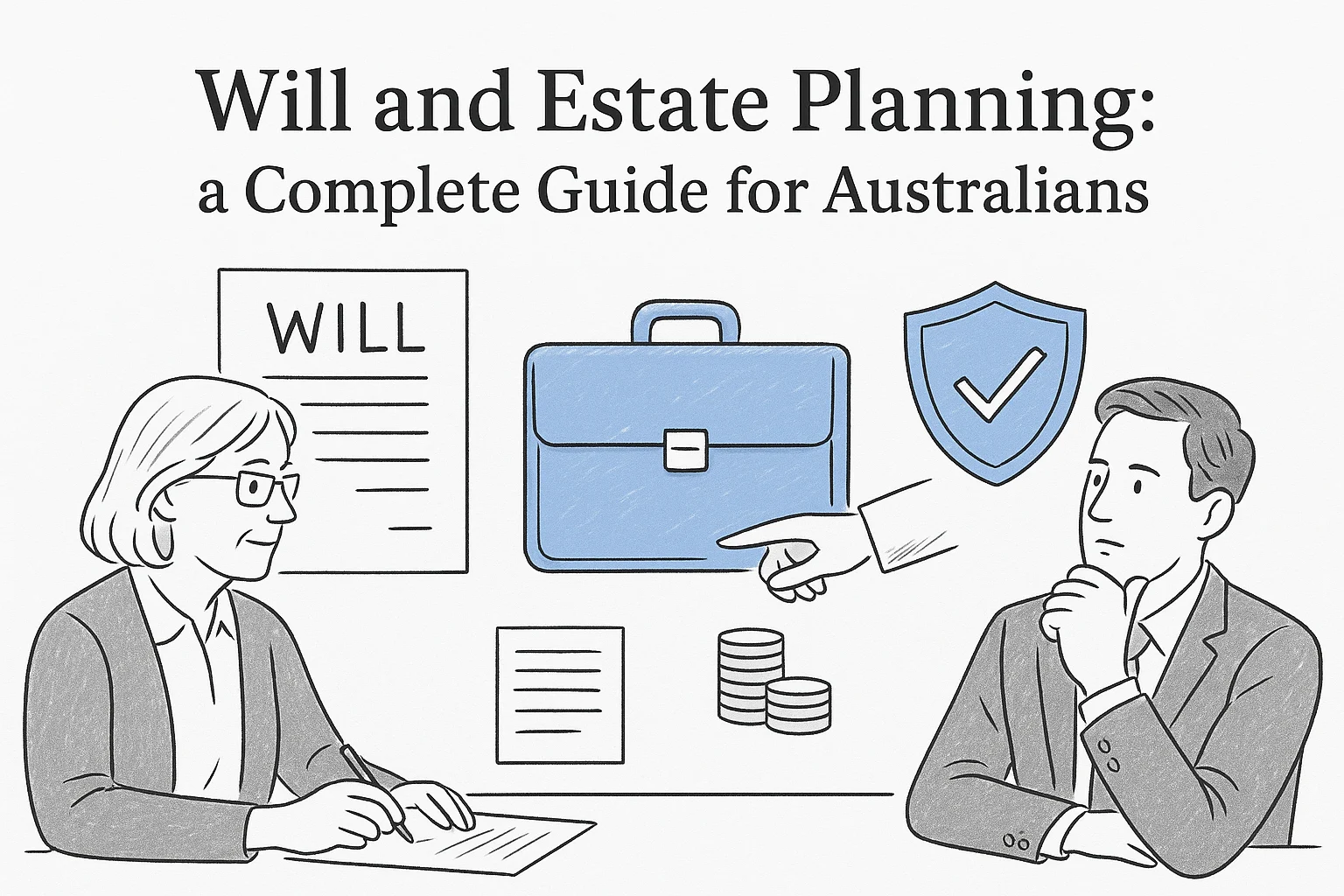
Will and Estate Planning: a Complete Guide for Australians
Most Australians put off will and estate planning until something forces the issue: a health scare, a new grandchild, or a friend’s messy probate battle. By then, you’re making decisions under pressure instead of with a clear head, and that’s when mistakes creep into a document meant to protect the people you care about.
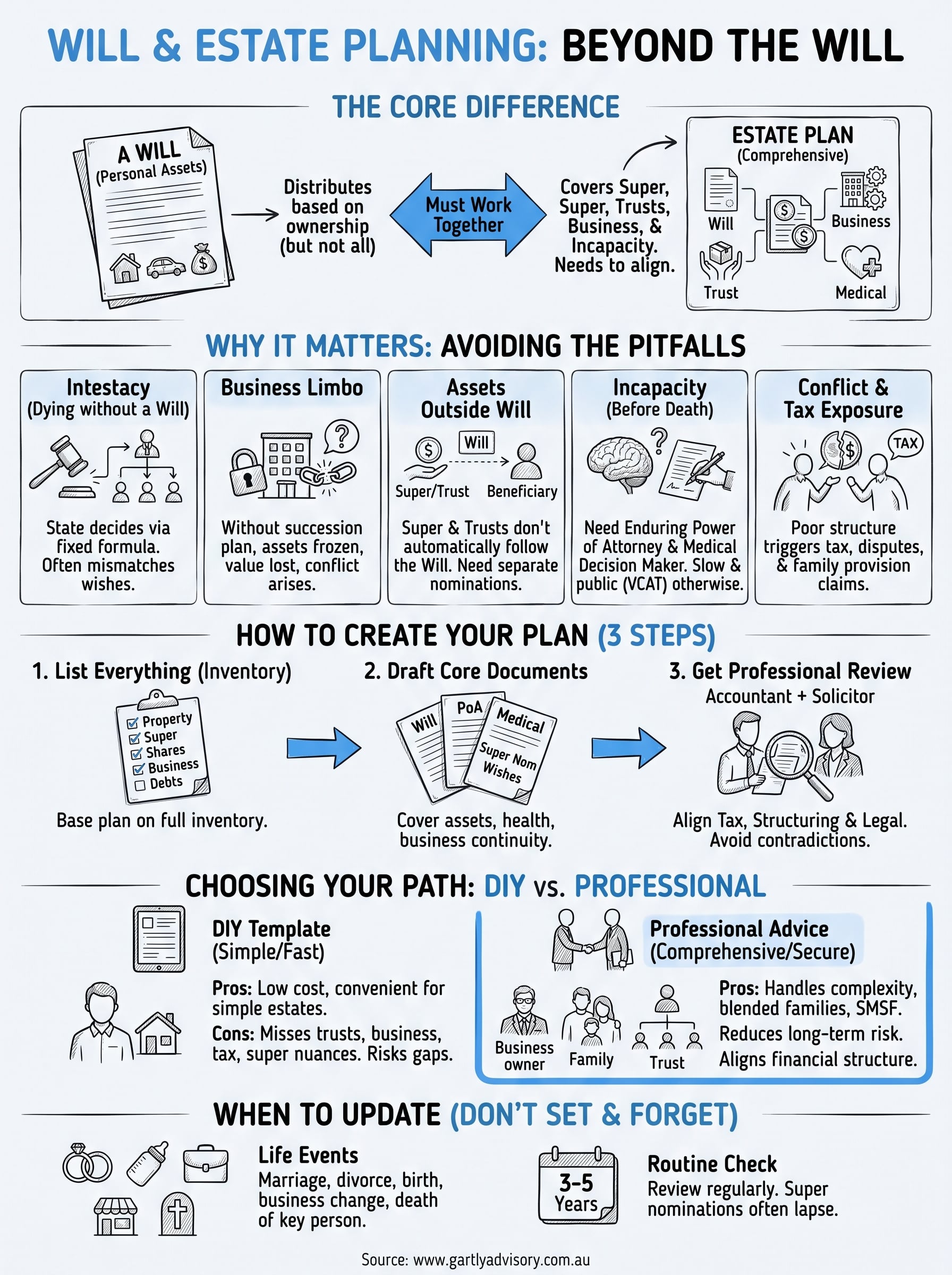
A will and an estate plan aren’t the same thing, and mixing them up leaves gaps that cost your family time and money later. A will simply says who gets what. Estate and will planning goes further, covering your super, trusts, business assets, tax position, and what happens if you lose capacity before you die. Whether you’re comparing a will and estate planning template, weighing up online estate planning Australia services against a solicitor, or just trying to understand where to start, you need both pieces working together.
This guide walks through what each part involves, how will writing and estate planning actually differ in practice, and the realistic steps for making a will and estate planning decisions that hold up legally and reflect what you actually want for your family and your business.
Why will and estate planning matters
Dying without a valid will means the state decides who inherits your assets, not you. In Victoria, intestacy rules follow a fixed formula based on marriage status and children, and it rarely matches what someone would have chosen for a blended family, a business partner, or a de facto relationship that started after the last time anyone updated the paperwork. Proper will and estate planning removes that guesswork and puts you back in control of who gets what, and when.
A missing or outdated will doesn’t just delay an inheritance, it hands the decision to a formula that has never met your family.
The real cost for business owners
If you run a business, the stakes climb higher. Without clear succession instructions, a company or trust can sit in limbo for months while executors, co-owners, and family members argue over control, wages, and who’s actually allowed to sign cheques. Gartly Advisory sees this constantly with clients who built something valuable but never connected their business succession planning to their personal estate documents. The business itself can lose customers, staff, and value simply because nobody had authority to make decisions during probate.
Super and assets that sit outside your will
Here’s something many Australians get wrong: superannuation doesn’t automatically form part of your estate. It’s held in trust and paid out as a superannuation death benefit according to a binding death benefit nomination, or at the trustee’s discretion if there isn’t one. The same goes for assets held in a family trust or jointly owned property with rights of survivorship. Skip these and your will might say one thing while your actual assets go somewhere else entirely. This is precisely why estate and will planning needs to sit alongside your SMSF strategy, not separate from it.

Protecting yourself while you’re still alive
Estate planning also covers what happens if you lose capacity before death, through illness, injury, or dementia. Without an enduring power of attorney and a medical treatment decision maker appointed, your family may need to apply to VCAT just to pay your bills or make medical calls on your behalf. That process is slow, public, and stressful at exactly the moment your family needs speed and privacy.
Reducing conflict and tax exposure
Finally, good planning reduces disputes and unnecessary tax. Poorly structured inheritances can trigger capital gains tax events, push beneficiaries into higher tax brackets, or leave assets exposed to a family provision claim from someone who feels overlooked, which is one reason many families set up a testamentary trust. Clear documentation, sensible structuring, and honest conversations with your accountant well before you need them cut that risk substantially, and they’re far cheaper than a contested estate.
How to create a will and estate plan in Australia
Building a proper estate plan isn’t a single afternoon task, but it doesn’t need to be overwhelming either. The process breaks down into a handful of concrete steps, and knowing the order helps you avoid backtracking once you’ve already signed documents.
Step 1: List everything you own and owe
Start with a full inventory: property, super, shares, business interests, debts, and anything held in trust. This becomes the backbone of your plan, because you can’t decide who gets what until you know what’s actually there. Many people underestimate how much sits outside their personal name, particularly superannuation and assets held inside a family trust, which need separate nominations rather than a mention in the will itself.
Step 2: Draft the core documents
A complete Australian estate plan generally includes:
- A valid will, signed and witnessed correctly under Victorian law
- An enduring power of attorney for financial decisions
- A medical treatment decision maker appointment
- A binding death benefit nomination for super
- A letter of wishes for guardianship, funeral preferences, or business succession
A will covers your assets. A full estate plan covers your assets, your health decisions, and your business continuity together.
Step 3: Get the structuring right, then have it reviewed
Here is where a will and estate planning template can help you organise your thinking, but it rarely handles trust structures, blended families, or business succession properly on its own. Talk to your accountant before you finalise anything, especially if you own a company, run an SMSF, or hold property across multiple entities, since estate planning for business owners has extra moving parts. Gartly Advisory works alongside your solicitor at this stage, checking that the tax and structuring side matches what the legal documents say, so nothing contradicts itself later. Once drafted, sign everything correctly, store originals somewhere your executor can actually access, and tell your family where to find them.
Online wills and estate planning templates: pros and cons
Searching for online estate planning Australia options turns up dozens of DIY template services, and they’ve genuinely improved over the past few years. For a simple estate, a single person with no business interests, no blended family, and straightforward assets, a template can produce a legally valid document at a fraction of the cost of a solicitor. Convenience matters too: you fill it in at midnight in your own lounge room instead of booking an appointment weeks out.
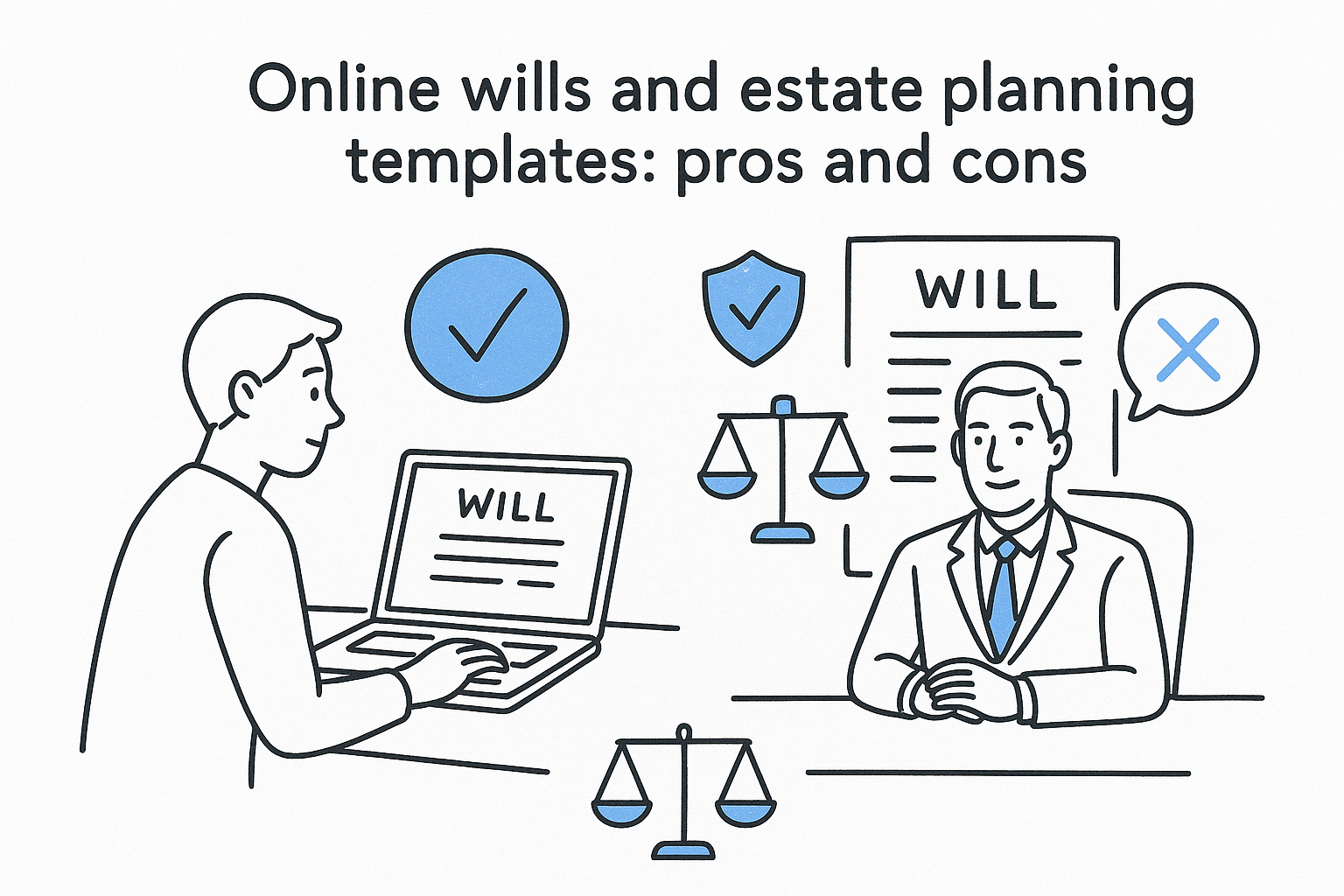
Gaps appear quickly once your situation has any complexity. Templates rarely flag superannuation nominations, capital gains tax on inherited assets, or the family provision claims that blended families and business partnerships tend to attract. Executors also discover the problems only after death, when there’s no easy way to fix a poorly worded clause.
A template can produce a valid will, but it can’t tell you when your situation needs more than a will.
Weighing up the two paths
Before choosing, compare what each option actually covers rather than just the upfront price.
| Factor | Online template | Accountant and solicitor combined |
|---|---|---|
| Cost | Low, often under $200 | Higher, but scaled to complexity |
| Speed | Immediate | Days to weeks |
| Handles trusts and business assets | Rarely | Yes |
| Reviews super nominations | No | Yes |
| Catches tax exposure | No | Yes |
Ultimately, the right call depends on how much you own and how many people have a stake in it. If you’re a business owner, run an SMSF, or have children from more than one relationship, treat a template as a starting draft, not a finished plan, and bring in professional advice before you sign.
When to review and update your estate plan
Life moves faster than paperwork, and an estate plan drafted five years ago rarely matches your circumstances today. Regular reviews catch the gaps before they matter, not after someone has died and the family discovers the will still names an ex-partner as executor.
Life events that trigger an update
Certain events should send you straight back to your accountant and solicitor rather than waiting for an annual check-in:
- Marriage, divorce, or a new de facto relationship
- The birth or adoption of a child or grandchild
- Buying or selling a business, or bringing on a new business partner
- Setting up or restructuring a family trust or SMSF
- A significant change in asset value, such as selling a property or receiving an inheritance
- The death of an executor, guardian, or beneficiary named in your documents
An estate plan that ignores a divorce or a new business partner isn’t out of date, it’s actively wrong.
Routine checks even without a major event
Even without a big life change, set a reminder to revisit your will and estate plan every three to five years. Super fund rules shift, tax law changes, and binding death benefit nominations can lapse without you noticing, since many funds require renewal every three years. Nominations that quietly expire leave the trustee to decide who receives your super, which defeats the purpose of having one at all.
Keep your advisers in the loop together
Updating a will in isolation, without telling your accountant, is how contradictions creep in between your legal documents and your actual financial structure. Gartly Advisory reviews the tax and structuring side of any changes so your solicitor’s paperwork and your business or SMSF strategy stay aligned, rather than drifting apart year after year until something breaks.
Planning ahead for peace of mind
Getting your will and estate planning sorted isn’t about expecting the worst, it’s about making sure the people you love aren’t left guessing during an already difficult time. A valid will handles the basics, but a proper estate plan ties together your super, your business, your tax position, and your health decisions so nothing falls through the cracks. Templates and online tools have their place, but once trusts, business succession, or blended families enter the picture, professional advice pays for itself many times over.
Start with the inventory, draft the core documents, and review them every few years or whenever life changes. Waiting for a crisis to force the issue almost always costs more than doing it properly now. If you’d rather have someone check the structuring and tax side before you sign anything, talk to the Gartly Advisory team about estate planning services and get your plan right the first time.