Negative Gearing Explained Simply (No Jargon, Just Facts)
Every property investor hears the term at some point, usually from a mate at a barbecue who swears it saved them thousands on tax. But ask that same person to explain how it actually works and you’ll often get a blank stare. Negative gearing explained simply means cutting through that confusion and giving you the actual mechanics, not just the buzzword.
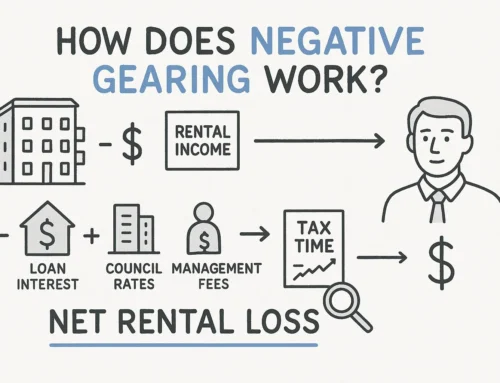
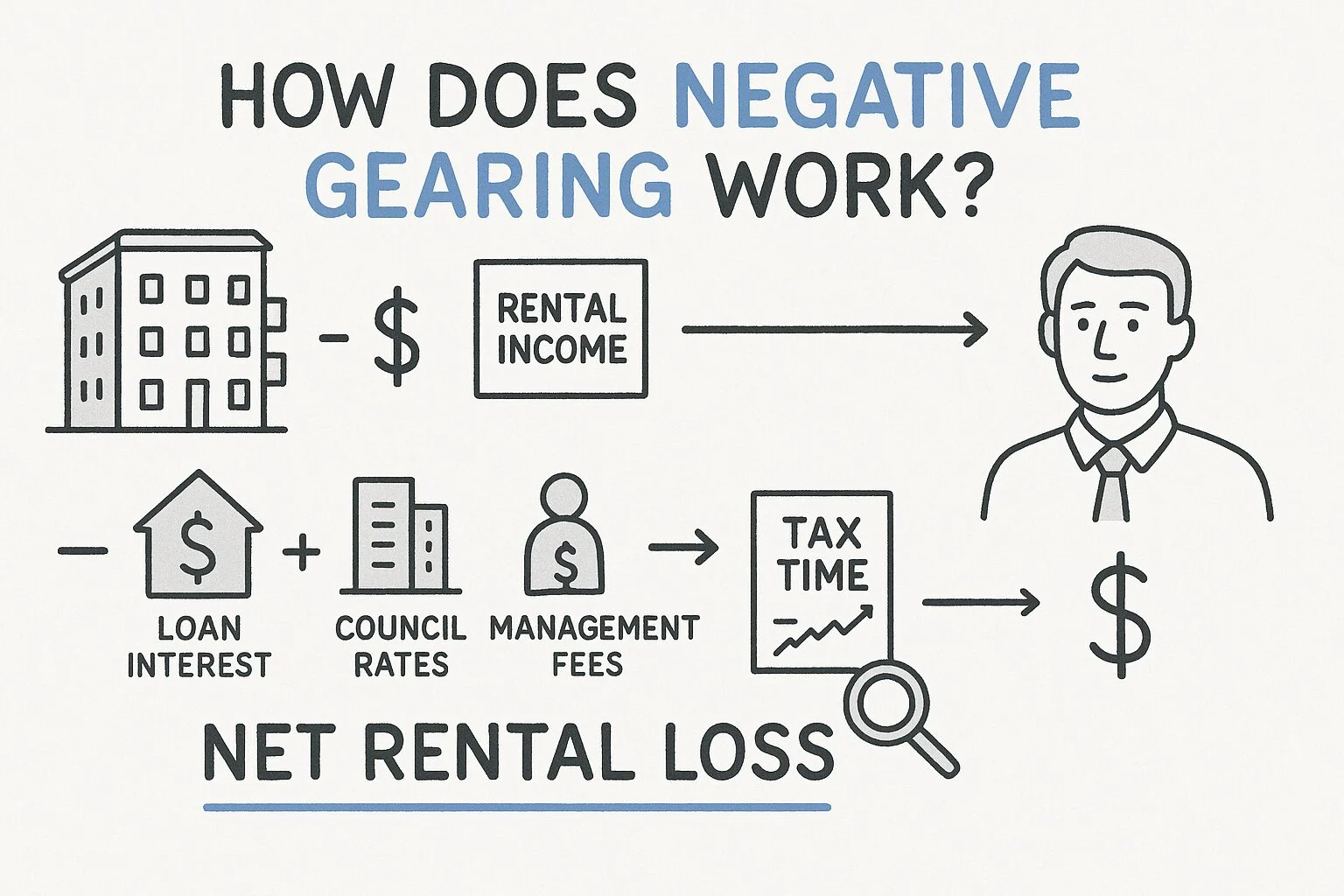
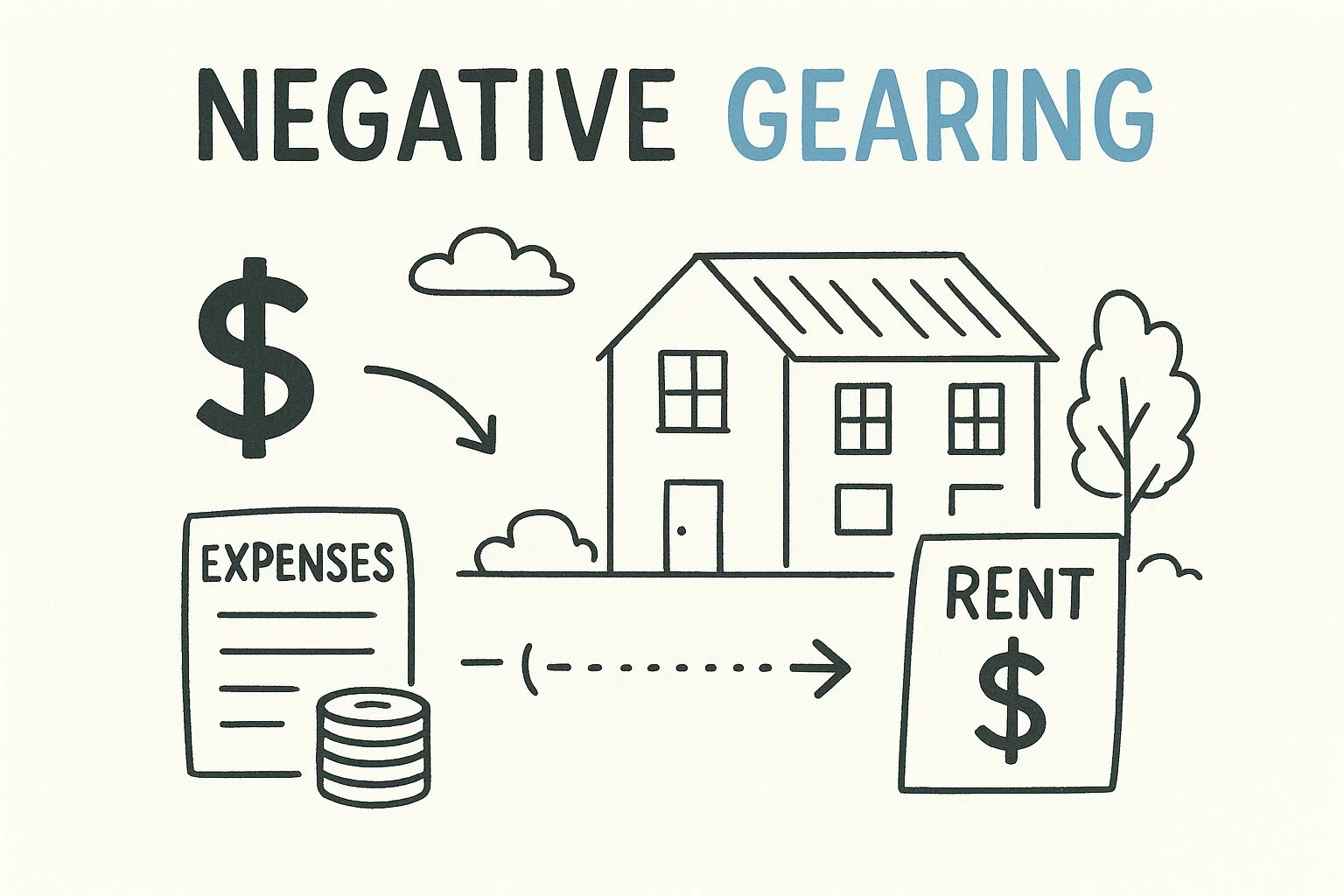
At its core, negative gearing happens when your rental property costs you more to hold than it earns you in rent, and you use that shortfall to reduce your taxable income. It’s not a loophole and it’s not automatic wealth creation. It’s a tax mechanism tied directly to how much interest, repairs, and other costs you’re paying versus what’s coming in, and whether the numbers actually stack up for your situation depends on your income, your loan, and your long term goals for the property.
In this article, we’ll walk through exactly how the calculation works, show you a real example with actual figures, and explain when negative gearing makes sense as a strategy versus when it’s just costing you money for no good reason. No jargon, just the facts you need to make an informed decision.
Why negative gearing matters for property investors
Negative gearing shapes how thousands of Australians build their property portfolios, and it’s one of the few tax strategies baked directly into the tax system rather than something you need a clever accountant to invent. The Australian Taxation Office allows you to claim a loss on a rental property against your other income, which means your investment can be working for you on two fronts at once: growing in value while also trimming your tax bill. That combination is why so many investors treat negative gearing as a core part of their wealth-building plan rather than a side benefit.
Understanding this properly matters because the numbers only work in your favour under the right conditions. If you’re on a higher marginal tax rate, the deduction you claim against a rental loss is worth more to you than it would be to someone earning less. A business owner or professional earning $150,000 a year gets a bigger tax benefit from the same $10,000 loss than someone earning $70,000. That’s not a technicality, it’s the entire reason negative gearing appeals more to high income earners than to first home buyers scraping together a deposit.
Negative gearing only pays off when the property’s long-term growth outweighs the short-term cash you’re losing each year.
Melbourne investors in particular need to think about this in the context of where property values are heading, because negative gearing is a bet on capital growth, not on rental yield. You’re accepting a loss today in exchange for a bigger gain when you sell. If the property doesn’t grow in value, you’ve simply handed money to the bank and the tax office got a small cut back to you. That’s the trade-off that gets glossed over at barbecues.
This is exactly where the strategy connects to bigger financial decisions, things like how a property purchase affects your borrowing capacity for future deals, how it interacts with your super contributions, or whether it makes more sense inside an SMSF structure. Getting this wrong isn’t just an inconvenience, it can lock you into a property that drains your cash flow for years without delivering the growth you were counting on. That’s why understanding the mechanics before you sign anything matters more than chasing a tax deduction for its own sake.
How negative gearing works in practice
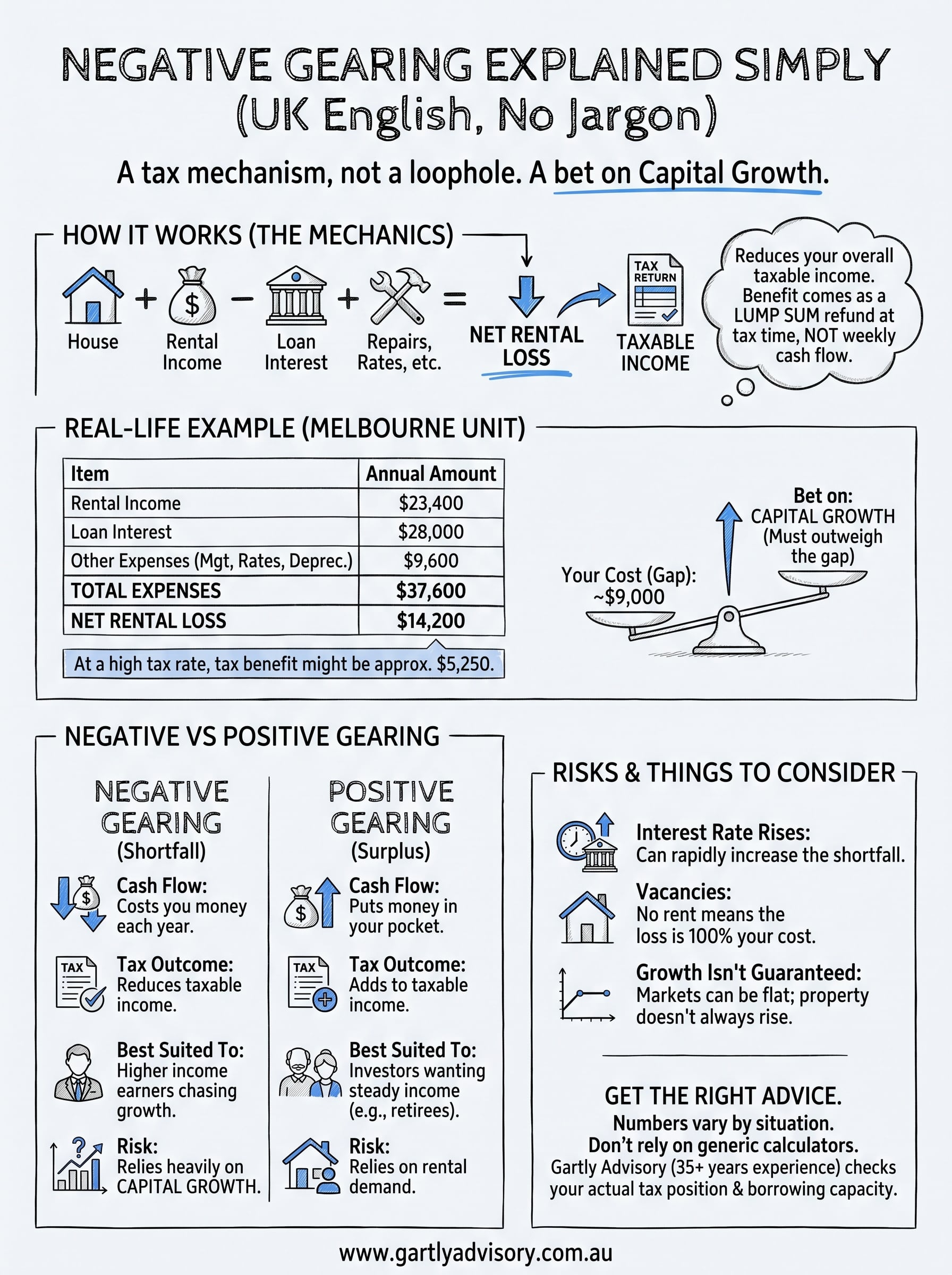
The mechanics are simpler than most people expect. You take the total rent your property earns for the year, then subtract every legitimate expense tied to owning that property. If the expenses come out higher than the rent, you’re left with a net rental loss, and that loss gets deducted from your total taxable income before the Australian Taxation Office works out how much tax you owe. It’s the same principle as any other tax deduction, just applied to property.
What expenses count
Not every cost you incur qualifies, so it pays to know what you’re actually claiming.
- Loan interest on the investment property
- Property management fees
- Council rates and water charges
- Insurance premiums
- Repairs and maintenance (not renovations)
- Depreciation on eligible fixtures and fittings
How the loss offsets your tax
Once you’ve added up those deductions and subtracted your rental income, that shortfall reduces your assessable income for the year. Say your salary is $120,000 and your rental loss is $8,000. Your taxable income drops to $112,000, and you’re taxed accordingly. Your refund comes through at tax time, not as cash in your pocket each week, which is a distinction plenty of investors overlook when they’re budgeting for the year ahead.
The tax benefit only shows up once a year, so your cash flow still needs to survive the other eleven months.
That gap between the deduction and the actual cash relief is exactly why the numbers need checking before you commit.
A simple negative gearing example
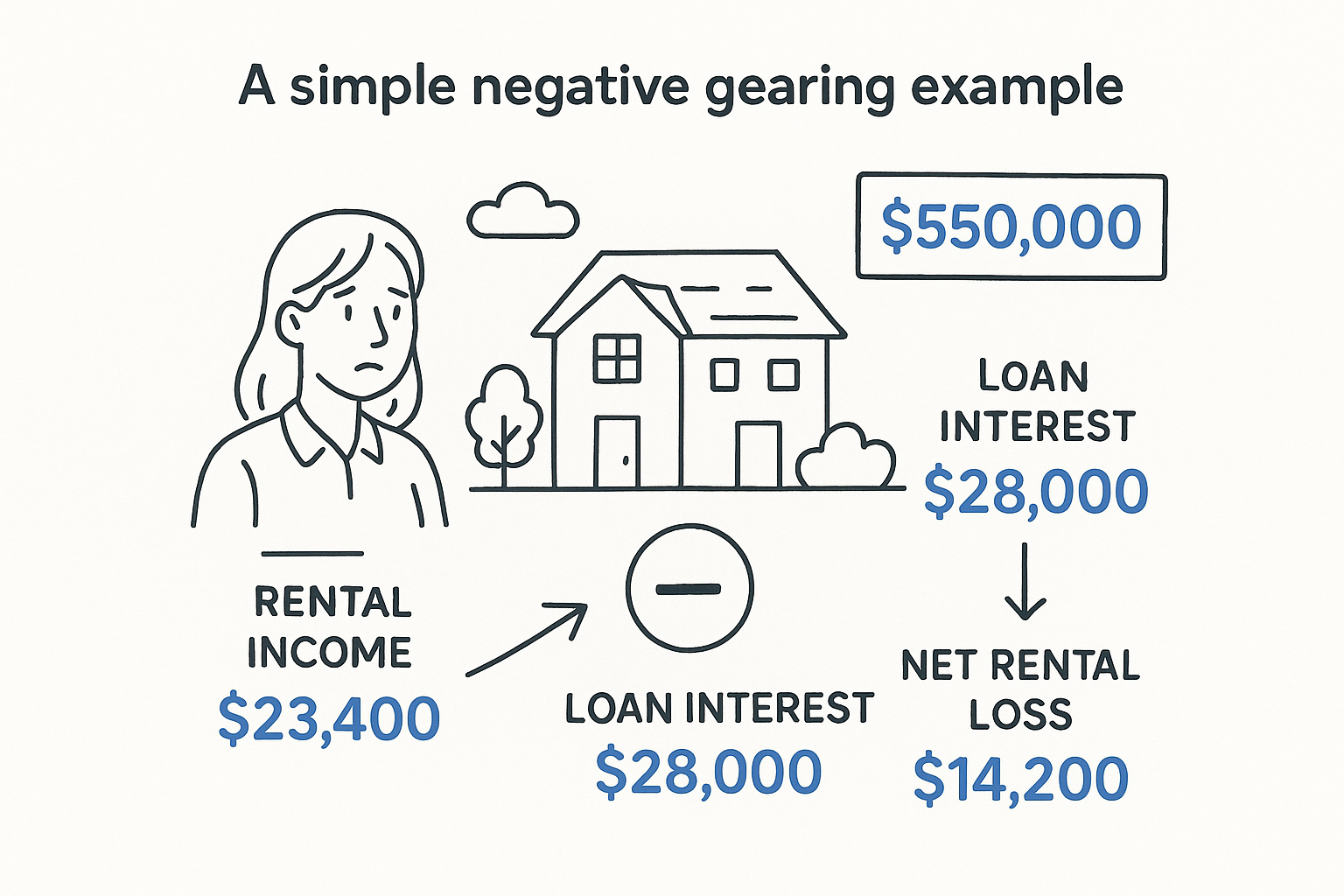
Numbers make this easier to grasp than any theory ever will. Picture a Melbourne investor, Sarah, who buys a two-bedroom unit for $550,000 and rents it out for $450 a week, bringing in $23,400 in annual rental income. Her loan, at current interest rates, costs her $28,000 a year in interest alone, before you even add rates, insurance, agent fees, and depreciation on the kitchen and carpets.
The numbers in black and white
Laying out every figure side by side shows exactly where the shortfall comes from.
| Item | Annual amount |
|---|---|
| Rental income | $23,400 |
| Loan interest | $28,000 |
| Property management (8%) | $1,900 |
| Council rates & insurance | $3,100 |
| Repairs & depreciation | $4,600 |
| Total expenses | $37,600 |
| Net rental loss | $14,200 |
What happens at tax time
Once that $14,200 loss gets applied, Sarah’s taxable income drops from $130,000 to $115,800. At her marginal tax rate, that translates to roughly $5,250 back in her pocket when she lodges her return, not weekly relief, but a lump sum months after the money left her account.
A $14,200 loss might only return $5,250 in tax, leaving Sarah nearly $9,000 out of pocket for the year.
That gap between what she lost and what she got back only makes sense if the property’s value climbs enough to cover it over time.
Negative gearing vs positive gearing
Positive gearing flips the equation entirely. Instead of your rental income falling short of expenses, it covers them with money left over, and that surplus gets added to your taxable income rather than subtracted from it. A property earning $30,000 in rent against $24,000 in costs hands you a $6,000 profit, and you’ll pay tax on that profit just like any other income. Positive gearing builds cash flow from day one, which is exactly what negative gearing sacrifices in exchange for a bigger tax deduction and a bet on future growth.
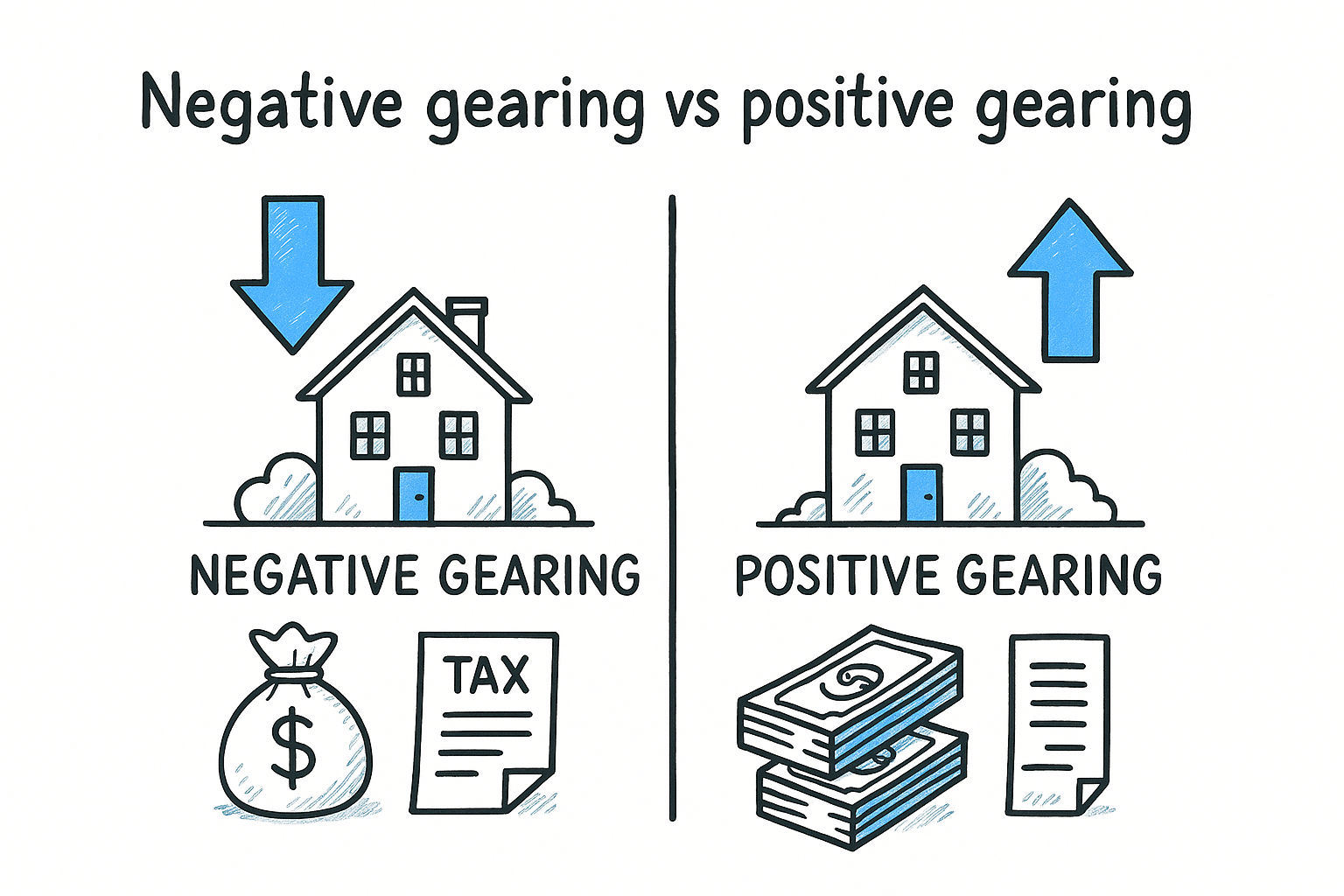
Negative gearing trades cash flow today for a tax break and a growth bet, while positive gearing pays you now and taxes you on the profit.
Which one suits your situation
Neither approach is universally better, it depends on what you need the property to do for you right now.
| Factor | Negative gearing | Positive gearing |
|---|---|---|
| Cash flow | Costs you money each year | Puts money in your pocket |
| Tax outcome | Reduces taxable income | Adds to taxable income |
| Best suited to | Higher income earners chasing growth | Investors wanting steady income |
| Risk profile | Relies on capital growth | Relies on rental demand |
Retirees and investors nearing the end of their working life often prefer positive gearing because the income supports their lifestyle without adding financial pressure. Younger investors still earning a strong salary, and with years left to ride out property cycles, tend to lean towards negative gearing because the tax deduction is worth more to them and they can absorb the shortfall. There’s no rule saying you have to pick one structure for every property you own either, plenty of seasoned investors run a mix of both across their portfolio.
Risks and things to consider before negative gearing
Before you sign up for years of topping up a shortfall, look hard at the assumptions underpinning the strategy. Interest rate rises can turn a manageable loss into a genuine cash flow squeeze almost overnight. If your loan repricing pushes your annual interest bill up by even a few thousand dollars, the shortfall you budgeted for can balloon, and that’s before you factor in a vacancy period between tenants or an unexpected repair bill.
Growth isn’t guaranteed
Capital growth is the whole justification for accepting a loss today, yet property markets don’t move in a straight line. Melbourne has had flat stretches lasting several years, and if you’re relying on a sale price that never materialises, you’ve simply funded the bank’s profit with your own after tax income.
Negative gearing without capital growth is just a slow leak in your bank account, not an investment strategy.
Practical checks worth running
- Can your household absorb the shortfall if interest rates climb another 1 to 2 percent?
- What happens to your cash flow during a vacancy of two or three months?
- Does your exit timeline line up with when you’ll actually need the capital gain?
- Have you modelled the property’s performance under a flat or falling market, not just a rising one?
Policy settings around negative gearing also get debated in federal parliament regularly, so relying on the tax treatment staying identical for the next twenty years is optimistic rather than strategic.
Getting the right advice for your situation
Negative gearing isn’t good or bad on its own, it’s a tool that suits some investors and drains others. The mechanics are straightforward once you’ve seen the numbers, but whether the strategy fits your household budget, your income, and your growth expectations is a different question entirely, and it’s one that generic online calculators can’t answer for you.
Geoff Gartly and the team at Gartly Advisory have spent over 35 years helping Melbourne property investors run these numbers properly before they sign a contract, not after. We look at your actual tax position, your borrowing capacity, and how a rental loss fits into your broader financial plan, rather than just repeating what worked for someone else’s portfolio.
If you’re weighing up an investment property and want the figures checked against your real circumstances, book a consultation with Gartly Advisory and get clarity before you commit.