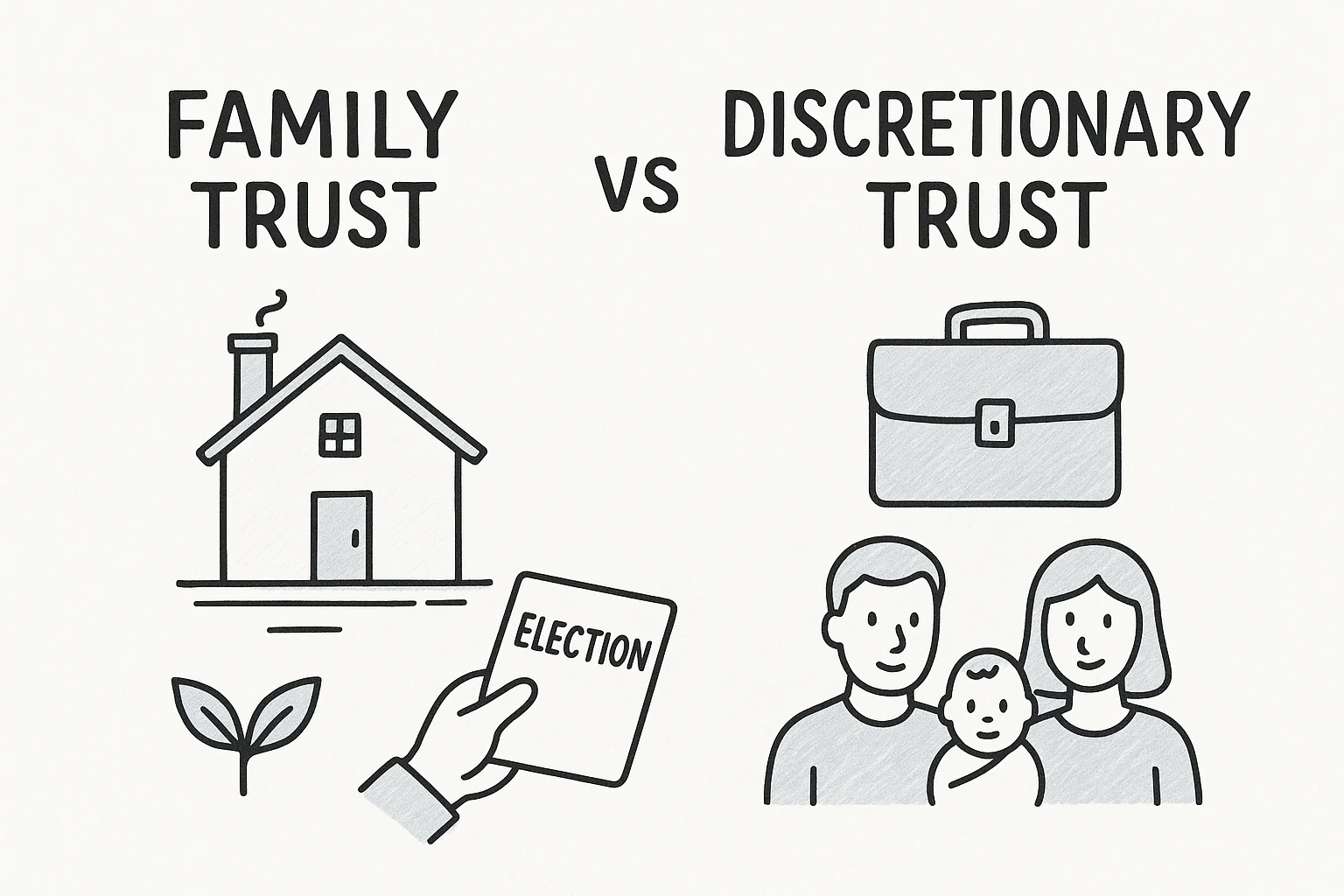
Family Trust vs Discretionary Trust: What Is the Difference?
If you’ve been asking your accountant about a family trust vs discretionary trust and got a confusing answer, you’re not alone. Business owners come to us all the time thinking these are two separate structures they need to choose between, when the reality is simpler than the terminology suggests. That confusion costs time and, occasionally, leads to the wrong structure being set up.
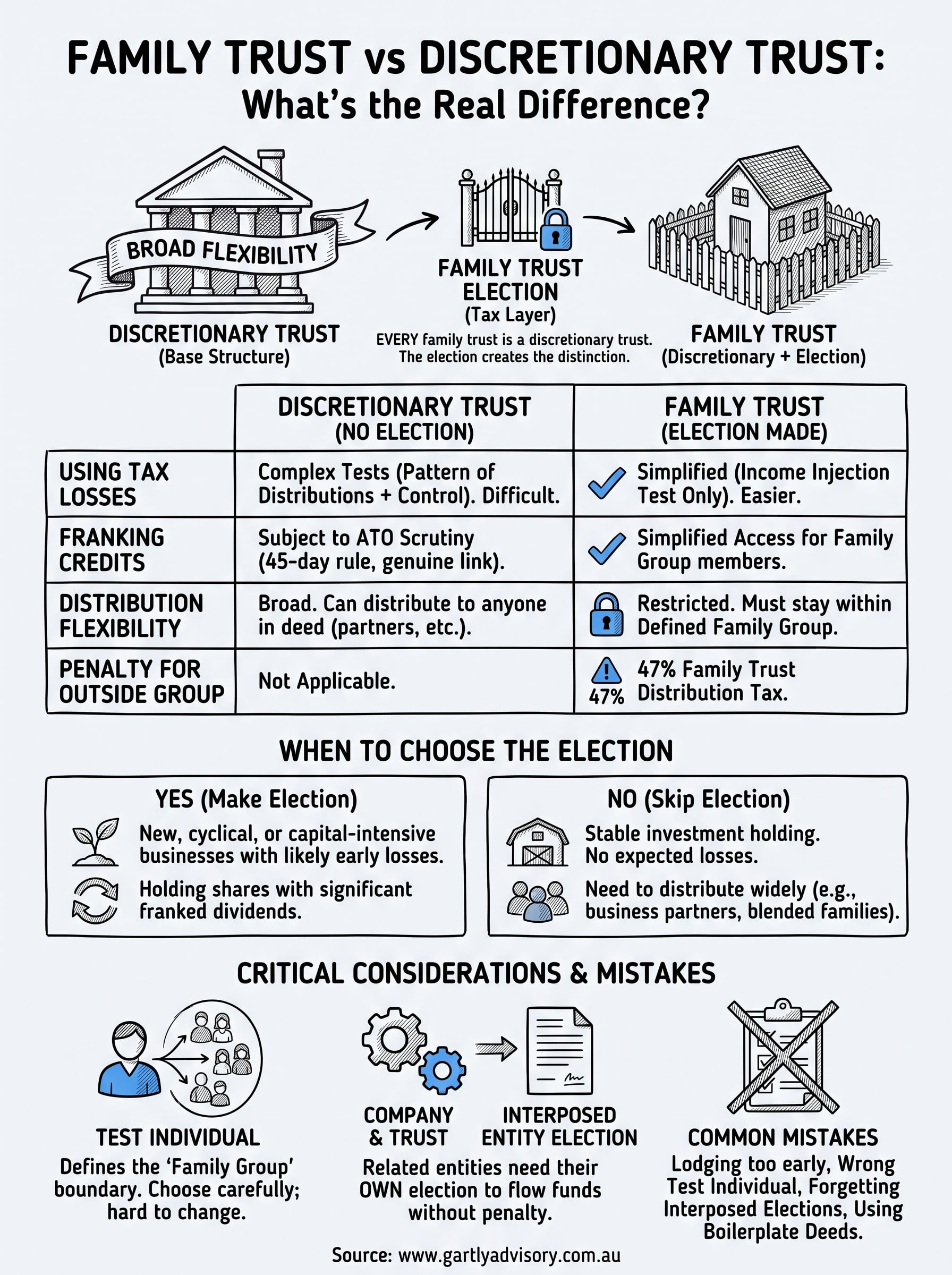
Here’s the short answer: what a family trust actually is in Australia is a type of discretionary trust with an added tax election attached to it. Every family trust is discretionary, but not every discretionary trust qualifies as a family trust. The distinction comes down to the family trust election, a specific document lodged with the ATO, and what that election unlocks or restricts for tax purposes.
In this article, we’ll walk through what actually separates the two, when a family trust election makes sense for your business, and where getting this wrong can create real tax headaches. We work with trust structures for clients across Melbourne every week, so we’ll keep this practical rather than theoretical.
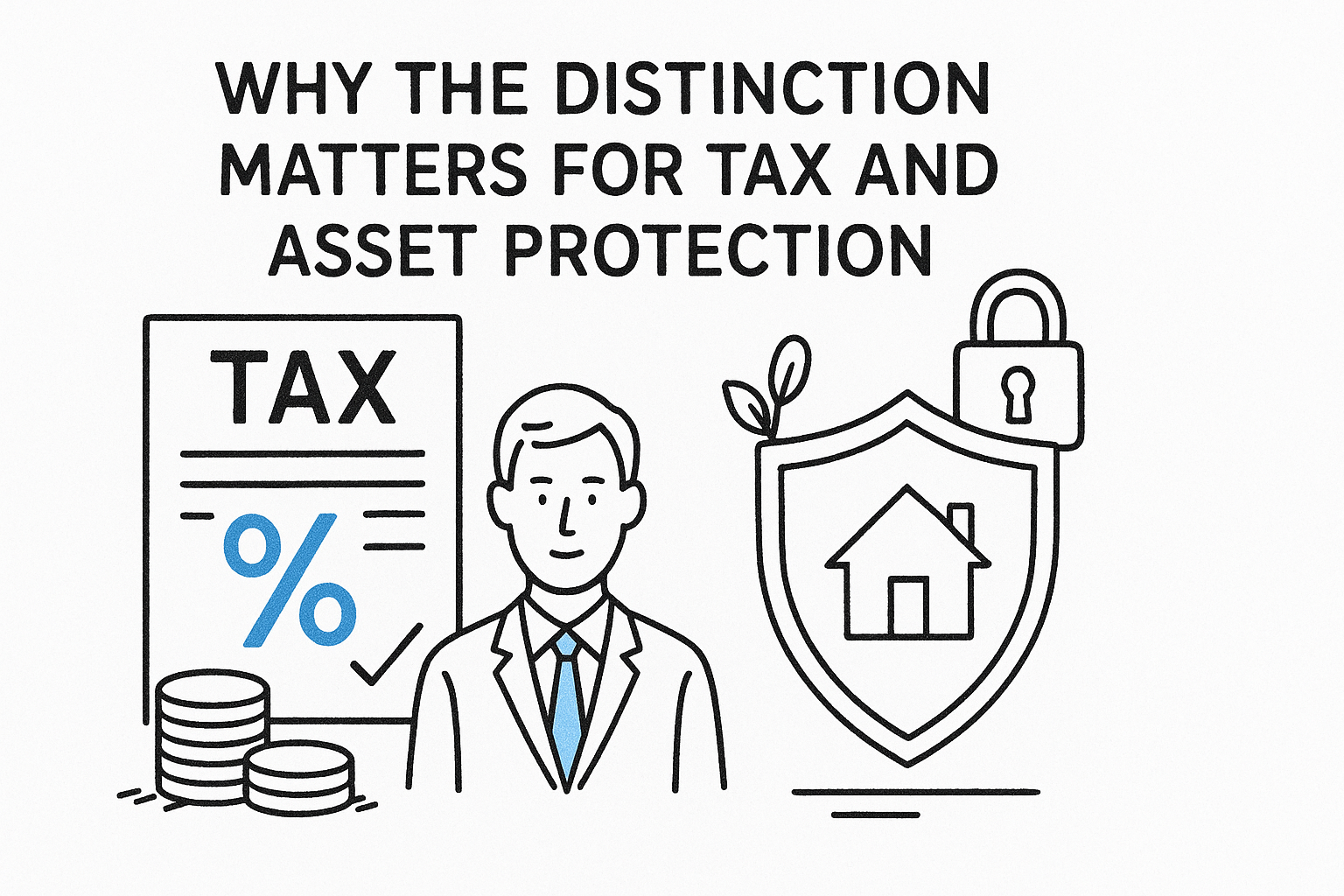
Why the distinction matters for tax and asset protection
Here’s why this isn’t just semantics. Whether your discretionary trust carries a family trust election changes three practical things: how tax losses get used, how franking credits flow through to beneficiaries, and how much flexibility you keep over who receives distributions. Get the election wrong, or skip it when you needed it, and you either pay more tax than necessary or lose flexibility you thought you still had.
Losses and franking credits without the election
A plain discretionary trust that hasn’t lodged a family trust election has to clear two hurdles before it can carry forward prior year tax losses: the pattern of distributions test and the control test. Both are fiddly to satisfy year after year, especially if your distributions shift with the business’s cash flow. The same trust also risks losing the benefit of franking credits above $5,000 unless it meets the 45-day holding rule and can show a genuine link between the trust and its beneficiaries, something the Australian Taxation Office scrutinises closely.
What the election simplifies
Once you lodge a family trust election, the trust only needs to pass the income injection test to use prior year losses, a considerably easier bar for most family-run businesses to clear. Franking credits also flow more reliably to beneficiaries within the defined family group. This is the main reason accountants recommend the election for businesses that expect to make losses in early years or that receive franked dividends from related companies.
The family trust election trades some distribution flexibility for a much simpler path to using tax losses and franking credits.
The flexibility trade-off
Here’s the catch nobody mentions upfront: once the election is in place, distributing income or capital outside the defined family group triggers family trust distribution tax at the top marginal rate, currently 47%, on the whole amount distributed. A standard discretionary trust without the election can distribute to any beneficiary named in the deed, business partners, in-laws, related companies, without that penalty. So the family trust election isn’t free flexibility on top of what a discretionary trust already offers, it’s a deliberate narrowing in exchange for tax simplicity.
| Feature | Discretionary trust (no election) | Family trust (election made) |
|---|---|---|
| Loss recoupment test | Pattern of distributions + control test | Income injection test only |
| Franking credit access | Subject to closer ATO scrutiny | Simplified for family group members |
| Distribution flexibility | Broad, per trust deed | Restricted to family group |
| Penalty for distributing outside group | Not applicable | Family trust distribution tax (47%) |
Asset protection stays much the same
Asset protection is where people expect a difference and don’t find one. A discretionary trust already protects assets because no beneficiary holds a fixed entitlement, unlike a unit trust with fixed unit holdings, which matters if a family member faces bankruptcy or a relationship breakdown. Making a family trust election doesn’t add or remove this protection. It’s a tax mechanism layered on top of a structure that was already doing the asset protection work. If protecting assets is your main goal, the discretionary structure itself, not the election, is what’s doing the heavy lifting.
How to decide which structure suits your situation
Deciding between a plain discretionary trust and one with a family trust election isn’t really a choice between two different vehicles, it’s a decision about whether the election helps or hinders your specific circumstances. Most business owners get this wrong because they ask the wrong question. Instead of asking "family trust vs discretionary trust, which is better", ask what you actually need the structure to do for the next five to ten years.
When a plain discretionary trust is enough
Skip the election if your trust won’t carry forward losses, won’t hold franked shares, and needs to distribute widely across a business partnership or blended family arrangement. A trust used purely to hold an investment property or split income among a stable group of adult beneficiaries often doesn’t need the added restriction. Consider staying without an election if:
- You expect to distribute to people outside a tight family group, business partners, in-laws, or related entities
- The trust rarely, if ever, records a tax loss
- You don’t hold shares that generate significant franked dividends
When the election earns its keep
Make the election if your business is new, cyclical, or capital-intensive enough that early losses are likely, or if the trust holds shares in a related company paying franked dividends above the $5,000 threshold. Trading businesses that expect a few lean years before turning a profit almost always benefit.
If your trust will ever need to use a prior year loss or claim meaningful franking credits, the election usually pays for itself.
Questions worth asking before you commit
Running through a short checklist before lodging saves you from reversing course later, which isn’t always straightforward once distributions have started flowing under one regime or the other.
- Who realistically needs to receive distributions, now and in five years?
- Does the trust hold or plan to hold shares paying franked dividends?
- Is there a real chance of tax losses in the near term?
- Would a 47% penalty on out-of-group distributions ever be a live risk?
Speaking with an adviser who understands both your trust deed and your business trajectory beats guessing. We walk clients through this exact checklist as part of our business advisory work in Melbourne, because the right answer depends entirely on what the trust is actually for.
What changes once a family trust election is made
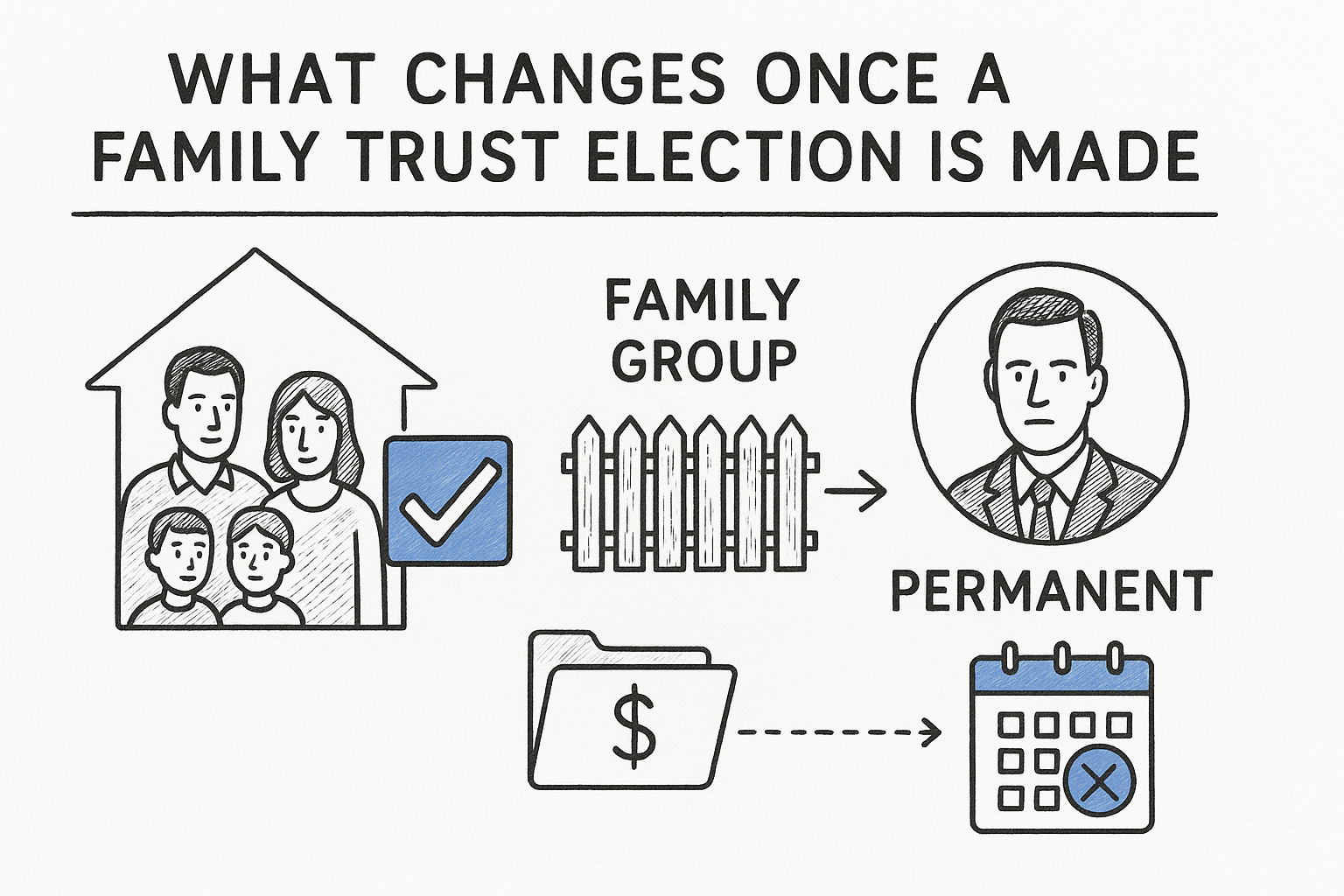
Once you lodge the election, the trust needs a test individual, a person whose family relationships define the boundaries of who can receive distributions without triggering penalty tax. Choosing this person isn’t a formality. Their spouse, parents, grandparents, siblings, nieces, nephews, and lineal descendants all fall inside the family group, but in-laws only qualify while the marriage or relationship with the test individual’s relative continues. Get the test individual wrong and you can lock the trust out of distributing to people you assumed were covered.
The family group becomes the boundary
Everything the trust does after the election gets measured against that family group definition. Distributions to companies or other trusts are still possible, but only if those entities themselves make an interposed entity election, otherwise money flowing through them counts as leaving the family group even if it eventually lands with a genuine family member, which is worth weighing when you compare holding a business in a trust or a company. This catches out plenty of business owners who restructure years after the original election and forget the flow-on paperwork.
Once the test individual is set, the family group definition becomes the fence around every distribution the trust makes.
The election is effectively permanent
The ATO treats a family trust election as one-way in most circumstances. You can vary the test individual once, within a narrow set of conditions, generally where control of the trust has genuinely changed hands to another family member. Outside that narrow window, revoking the election is only possible in specific years and specific circumstances, not simply because your distribution plans have changed. Treat the decision as long-term from day one rather than something to revisit casually.
Reporting obligations increase slightly
The trust also picks up extra reporting duties once elected, including disclosing any distributions made outside the family group on the trust’s tax return so the ATO can apply family trust distribution tax where relevant. It’s not a heavy administrative burden, but it’s one more thing your bookkeeper or accountant needs to track each year, particularly if the trust structure involves related companies or a family group business chain that shifts distributions between entities.
Common mistakes to avoid when setting up your trust
We see the same handful of errors repeated across the family trust vs discretionary trust conversation, and most of them are avoidable with a bit of forward planning. None of these mistakes are exotic, and they sit alongside the other small business tax mistakes worth avoiding. They’re the kind of thing that gets missed when a trust deed is drafted from a template and nobody checks it against the client’s actual family situation and business plans, which is why it helps to follow the step-by-step process for setting up a family trust.
Lodging the election before you need it
Some accountants lodge a family trust election automatically as part of a standard setup, without checking whether the client will ever carry a loss or hold franked shares. Locking in the family group restriction for no real benefit just removes flexibility you might have wanted later, say, to bring a business partner in as a beneficiary.
Lodging the election out of habit, rather than need, is the most common and most avoidable mistake we see.
Choosing the wrong test individual
Picking the test individual without mapping out the extended family first is a close second. Grandparents, in-laws, and adult children can all fall in or out of the family group depending on who’s named, and reversing that choice later is restricted to narrow circumstances.
Forgetting interposed entity elections
Owners who restructure and add a company or second trust into the mix often forget that entity needs its own interposed entity election to stay inside the family group. Without it, distributions passing through that entity are treated as leaving the group entirely, even if a genuine family member receives the money at the end.
Treating the trust deed as boilerplate
Finally, plenty of trust deeds get signed without anyone checking that the beneficiary definitions actually match the family and business relationships in play. A generic template rarely fits a blended family, a franchise arrangement, or a multi-entity trading structure without amendment.
Quick checklist before you sign anything:
- Confirm whether the trust will actually need the election before lodging it
- Map the extended family before naming a test individual
- Check every related company or trust for its own interposed entity election
- Read the deed against your real beneficiaries, not a generic template
- Get a second opinion from an adviser who’s seen this go wrong before
Getting your trust structure right
So the family trust vs discretionary trust question isn’t really a fork in the road. Every family trust starts life as a discretionary trust, and the election you layer on top is a tax decision, not a different legal structure. Get the test individual right, only lodge the election when losses or franking credits actually justify it, and check your deed reflects your real family and business setup rather than a template.
What trips people up isn’t the concept, it’s the timing and the paperwork attached to it. A trust set up without checking these details can cost you flexibility or trigger tax you never needed to pay. That’s not something you want to discover after distributions have already gone out under the wrong regime.
If you’re weighing up a new trust or reviewing one that’s been running for years, talk to our team about advisory services for business owners and get your trust structured properly before you lodge anything with the ATO.