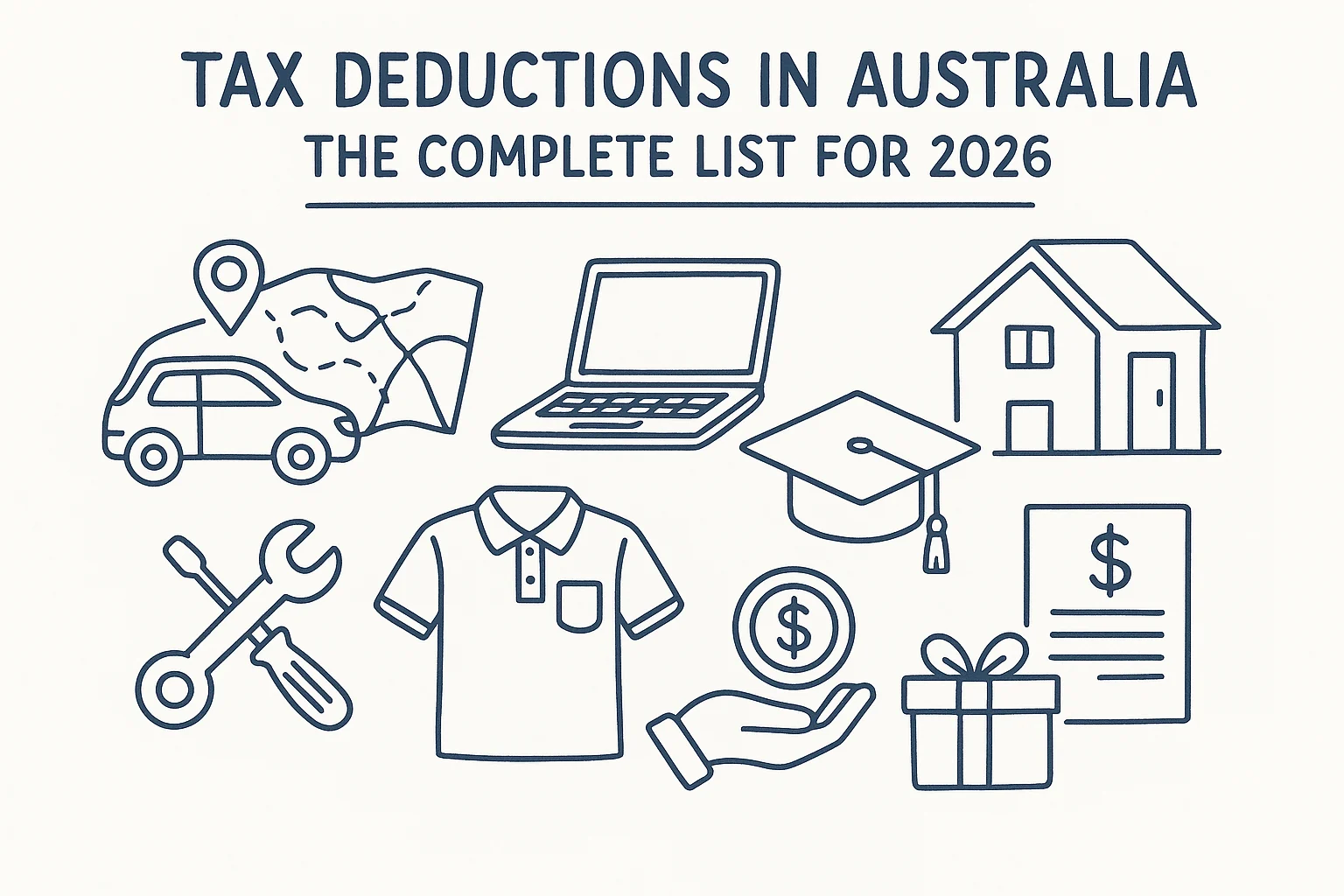
Tax Deductions in Australia: The Complete List for 2026
Every tax season, business owners and everyday taxpayers leave money on the table simply because they don’t know what they’re entitled to claim. Understanding deductions tax Australia rules properly is the difference between a refund that reflects your real financial position and one that shortchanges you by hundreds or thousands of dollars.
So what exactly counts? A tax deduction reduces your taxable income, which lowers the amount of tax you pay for the year. If you’ve spent money earning your income, whether that’s a tool for your trade, a home office setup, or professional fees, there’s a good chance it qualifies. This guide sets out the full list of tax deductions available for the 2026 financial year, covering work-related expenses, investment costs, and self-employment claims most people overlook.
We’ve built this list from real client questions we hear every day at Gartly Advisory, working across trades, franchises, and small businesses throughout Melbourne. Whether you’re after easy tax deductions to boost a straightforward return or need clarity on more complex business claims covered in our small business deductions checklist for 2026, you’ll find practical answers here, plus guidance on how to substantiate each one properly with the ATO.
1. Vehicle and travel expenses
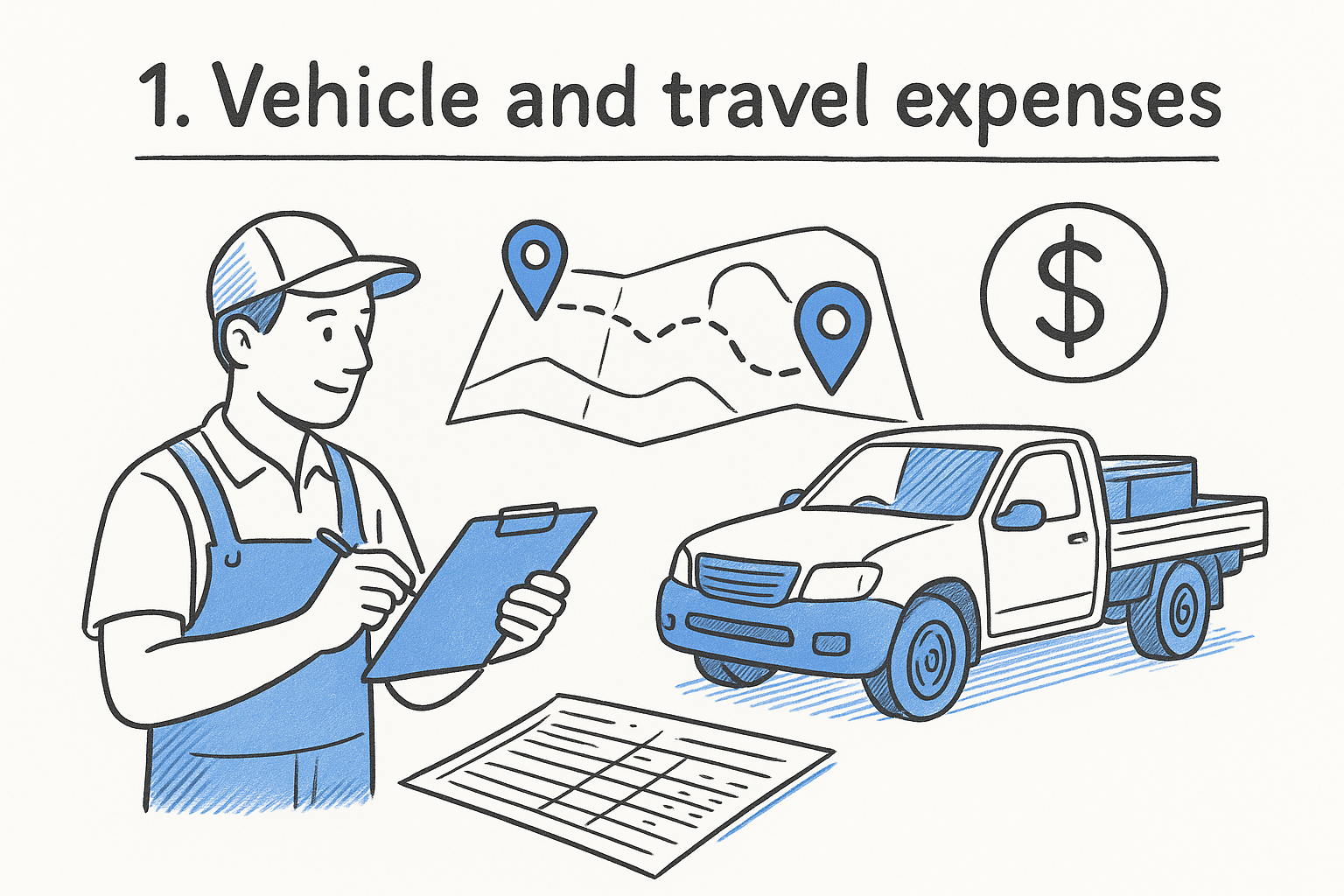
Most Australians who use their own car for work assume the commute counts, but it doesn’t. What you can claim covers travel between job sites, client visits, carrying bulky tools between locations, or driving to a second workplace on the same day. Trade professionals and property managers on our books at Gartly Advisory are often surprised by how much this category adds up over a financial year, especially when they’ve never tracked it properly before.
What you can claim
The ATO gives you two ways to work out your vehicle deduction, and picking the right one depends on your driving pattern.
- Cents per kilometre method: a flat 88 cents per kilometre for 2025-26, capped at 5,000 kilometres, no receipts required beyond a reasonable basis for your estimate
- Logbook method: claim the business-use percentage of actual running costs (fuel, servicing, insurance, registration, depreciation) based on a 12-week logbook that stays valid for five years
Heavier vehicles used purely for business, like tradies’ utes carrying equipment, often work out better under the logbook method because running costs are higher.
Eligibility rules
Eligibility hinges on the purpose of the trip, not the distance. Travel from home to your regular workplace is private and never deductible, even if you check emails along the way. Genuine work travel, including trips between offices, to training courses, or to see clients, qualifies. If you’re self-employed and running your business from a home office, trips from home to client sites can count as business travel rather than commuting.
If the trip wouldn’t happen without your job, it’s probably deductible; if it’s just getting you to work, it isn’t.
Records to keep
Records make or break this claim under ATO scrutiny. Keep a compliant ATO logbook covering a continuous 12-week period that reflects a typical work pattern, plus receipts or statements for every running cost you’re claiming under that method. Should you use the cents-per-kilometre method, jot down a diary of trips, dates, and purposes rather than relying on memory come July. Odometer readings at the start and end of each financial year support both methods and take five minutes to record.
2. Working from home expenses
Remote and hybrid work has made working from home deductions one of the most common claims we see at Gartly Advisory, yet also one of the most botched. Business owners and employees alike often either overclaim personal costs or under-claim because they think a spare room isn’t a "proper" home office. Neither approach serves you well come tax time.
What you can claim
Australia’s income tax deductions rules give you two options for working out this claim:
- Fixed rate method: 70 cents per hour for 2025-26, covering electricity, gas, phone, internet, and stationery, on top of separate claims for depreciating assets like a laptop or monitor
- Actual cost method: claim the exact work-related portion of every running expense, which suits people with a dedicated home office and higher-than-average bills
Most casual home workers find the fixed rate simpler, while those running a business from home often come out ahead with actual costs, and may also need to weigh claiming occupancy expenses and the capital gains tax impact.
Eligibility rules
Genuine additional running costs are the test here, not simply the fact you sometimes answer emails from the couch. You need a consistent pattern of working from home, whether that’s two days a week or full-time, and the expenses must relate directly to that work.
A home office claim stands or falls on your ability to show the hours actually worked, not the hours you were technically available.
Records to keep
Diary entries or timesheets recording hours worked from home across the year are essential under the fixed rate method. Keep at least one bill for each expense type to show you incurred the cost, and retain receipts for any equipment you’re depreciating separately.
3. Work clothing and laundry expenses
Clothing is one of the most misunderstood categories in Australia’s tax deductions list, because most everyday work attire simply doesn’t qualify. A suit you wear to the office, even if your boss insists on it, stays private and non-deductible under ATO rules. Uniforms, protective gear and clearly branded items are a different story entirely.
What you can claim
Occupation-specific clothing that the public would recognise as tied to your job, compulsory uniforms with your employer’s logo, and protective items like steel-capped boots, hi-vis vests or sun-protection gear all count. You can also claim the cost of laundering, dry-cleaning and repairing these items, which many tradies and hospitality workers overlook year after year.
Eligibility rules
Generic clothing, even if you only wear it to work, fails the test because it has everyday use outside your job. The item needs to be either compulsory, protective, or occupation-specific to survive an ATO review, since overstated clothing claims are among the better-known tax return audit red flags.
If a stranger couldn’t guess your job from the clothing alone, it’s probably not deductible.
Records to keep
Hold onto receipts for purchases and repairs, and keep a simple laundry diary if you’re claiming washing costs without exact receipts, since the ATO accepts a reasonable estimate based on loads per week up to a set threshold. Photos of branded uniforms or protective gear also help substantiate genuine common tax deductions Australia claims if questioned later.
4. Self-education and professional development
Keeping your skills current costs money, and the ATO recognises that through one of the more generous income tax deductions Australia offers. Courses, conferences and qualifications that maintain or improve skills used in your current role are fair game, even when they push you toward a promotion within the same field.
What you can claim
Course fees, textbooks, stationery, student union fees and travel to attend classes all count, provided the study connects to your existing job. You can also claim depreciation on a laptop bought mainly for study, plus internet costs apportioned to coursework. Conference registration, workshop fees and even accommodation for a multi-day industry event fall under this tax deductions list category too.
Eligibility rules
The connection to your current employment is what matters most here, not your career ambitions. Study that qualifies you for a brand new profession, like an electrician starting a law degree, won’t pass the test, because it’s building a new skill set rather than sharpening an existing one.
Self-education only pays off at tax time when it makes you better at the job you already have, not the one you want next.
Records to keep
Hold onto enrolment confirmations, tax invoices from the institution, and a diary noting study hours if you’re apportioning a shared device or internet plan. Bank statements showing course payments back up your claim if receipts go missing, and a simple note explaining how the study relates to your role strengthens the case during any ATO review, alongside our wider reading on self-education expenses deductions.
5. Tools, equipment and technology
Tradies, contractors and office workers alike rely on gear that wears out or goes obsolete, and the ATO lets you claim for it. This category covers everything from a carpenter’s power drill to an accountant’s second monitor, making it one of the broadest tax deductions Australia offers to working people across every industry.
What you can claim
Anything you buy to do your job, from hand tools and safety equipment to laptops, phones and software subscriptions, qualifies if the work-related use is genuine. Items costing $300 or less get claimed outright in the year you buy them. Pricier purchases get depreciated over their effective life, spread across several tax returns rather than claimed in one hit.
- Items under $300: claim the full cost immediately
- Items over $300: depreciate using the ATO’s effective life tables
- Repairs and maintenance on work equipment: claim in full, regardless of the item’s value
Eligibility rules
Mixed-use items need an honest split between work and personal use, since a laptop used for gaming half the time only earns a partial claim. Genuine business necessity drives eligibility here, not convenience or preference for a nicer model than the job strictly requires, the same principle behind most common business tax deductions in Australia.
Claim the percentage you actually use for work, because the ATO checks usage patterns far more often than receipts.
Records to keep
Keep every tax invoice showing the purchase date, cost and item description, plus a diary noting the split between work and private use for shared equipment. Depreciation schedules from your accountant document the declining value each year, so hold onto these alongside the original receipts for the item’s full effective life.
6. Investment, interest and insurance deductions
Property investors and share market participants carry a distinct set of investment tax deductions that salaried employees rarely encounter. Interest on loans, ongoing insurance premiums and account-keeping fees all chip away at your taxable income, provided the underlying asset is genuinely producing assessable income rather than sitting idle for personal use.
What you can claim
Loan interest on an investment property or margin loan, landlord insurance, income protection premiums, and fees charged by your broker or fund manager all qualify, as set out in our complete Australian guide to property investor claims. Self-managed super fund trustees can also claim administration costs and audit fees tied to running the fund, an area where our SMSF advisory service helps clients keep every eligible cost on the table, particularly where the SMSF property rules apply.
- Investment loan interest and bank fees
- Landlord and income protection insurance premiums
- Account-keeping and adviser fees
- SMSF administration, audit and actuarial costs
Eligibility rules
Generating assessable income is the non-negotiable test behind every claim in this category. A rental property sitting vacant for personal holidays during the year forces you to apportion interest and insurance between deductible and private periods.
An investment deduction only survives scrutiny if the asset behind it is actually earning you income.
Records to keep
Bank statements showing interest charged, insurance renewal notices, and annual statements from your fund manager or broker cover most of this ground. Keep a diary noting any private use of an investment property, since apportioned claims need that split clearly documented for the ATO.
7. Gifts, donations and professional fees
Rounding out our tax deductions list is a category that catches out even seasoned taxpayers: gifts, donations and the fees you pay to manage your own tax affairs. Many business owners we work with at Gartly Advisory assume any charitable gift qualifies, when the rules are actually quite specific about what the ATO will accept.
What you can claim
Donations of $2 or more to a deductible gift recipient (DGR) count, provided you receive nothing in return, such as raffle tickets or auction items. Accounting and tax agent fees, including what you pay Gartly Advisory to prepare your return, are also deductible in the year you pay them. ATO interest charges on late payments, and income protection insurance premiums not already claimed elsewhere, round out this group.
Eligibility rules
Genuine gift character is essential here. A donation only qualifies if it’s freely given with no material benefit flowing back to you, which rules out charity dinner tickets, an area governed by the entertainment tax deduction rules, or sponsorship packages that include advertising space.
A donation only reduces your tax bill when you get nothing tangible back for giving it.
This is one of the more accessible easy tax deductions Australia offers, since most receipts arrive automatically by email.
Records to keep
Hold onto the receipt issued by the DGR, which should state the organisation’s ABN and confirm its deductible status. Keep invoices from your accountant and any correspondence showing ATO interest charges, since these often slip past taxpayers preparing their own return.
Making sense of your deductions this tax time
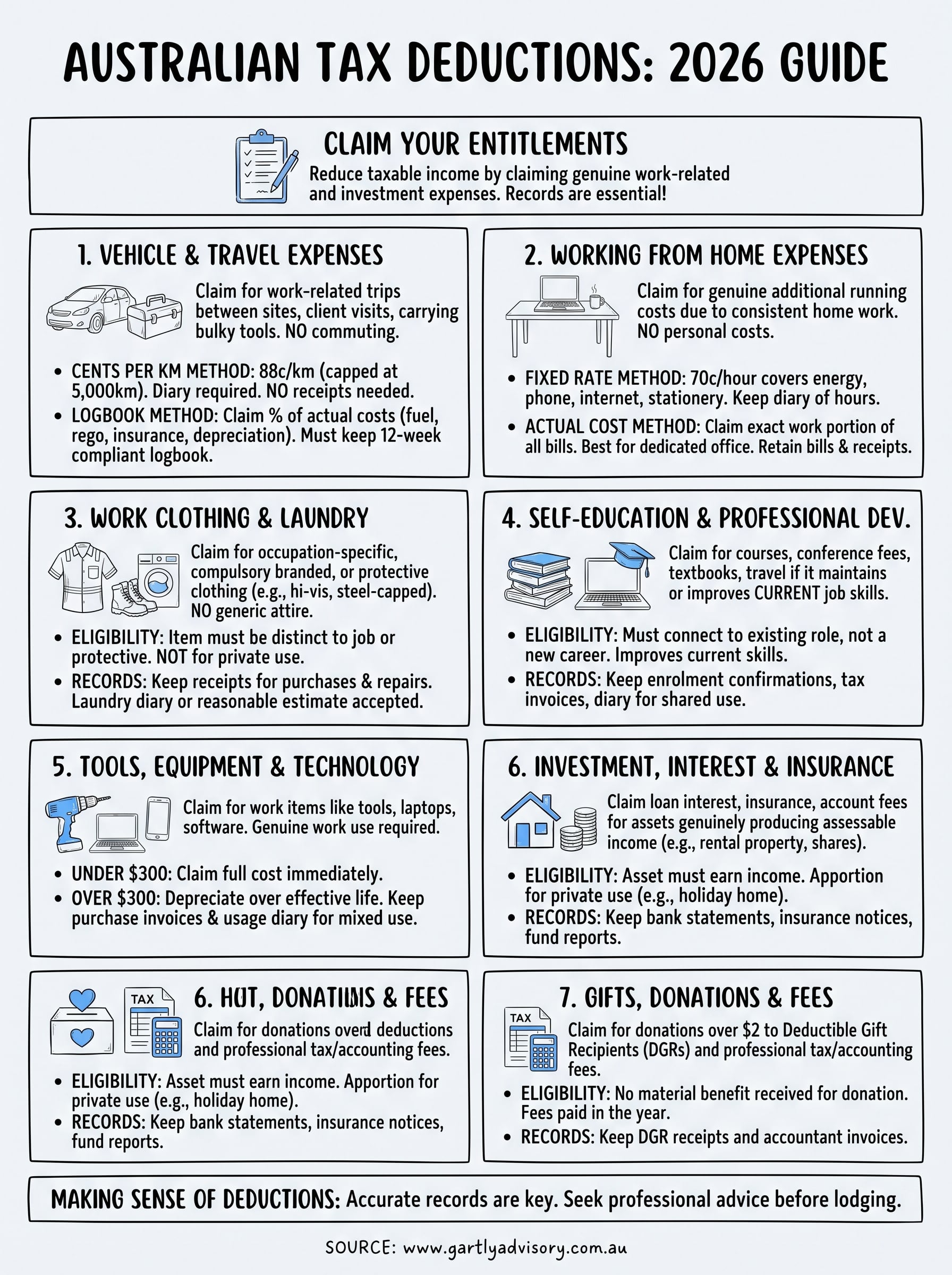
Seven categories, dozens of individual claims, and one common thread: the ATO rewards taxpayers who can back up every dollar with genuine records. Getting your tax deductions Australia claims right isn’t about pushing the boundaries of what’s allowed, it’s about knowing the rules well enough to claim everything you’re genuinely entitled to, no more and no less. Vehicle logs, home office diaries, receipts for tools and courses, they all add up to a return that reflects your real financial year rather than a rushed guess.
Getting this wrong costs you twice, once through missed refunds and again through the stress of an ATO review. Speaking with an experienced adviser before you lodge means every eligible claim gets captured properly and nothing triggers unwanted attention. If you’d rather have a Chartered Accountant handle the detail than second-guess your own return, see why Gartly Advisory is a trusted Melbourne tax accountant for personal and business tax returns and book a consultation to get this tax season sorted properly.